


Little Italy’s Stone Heart Beats Again, Whispering Tales of Economic Flux
POLICY WIRE — New York City, USA — It’s not just a coat of fresh paint, you know. And it’s certainly more than a mere steeple getting a spruce-up. When the doors of the historic Shrine of Our Lady of...

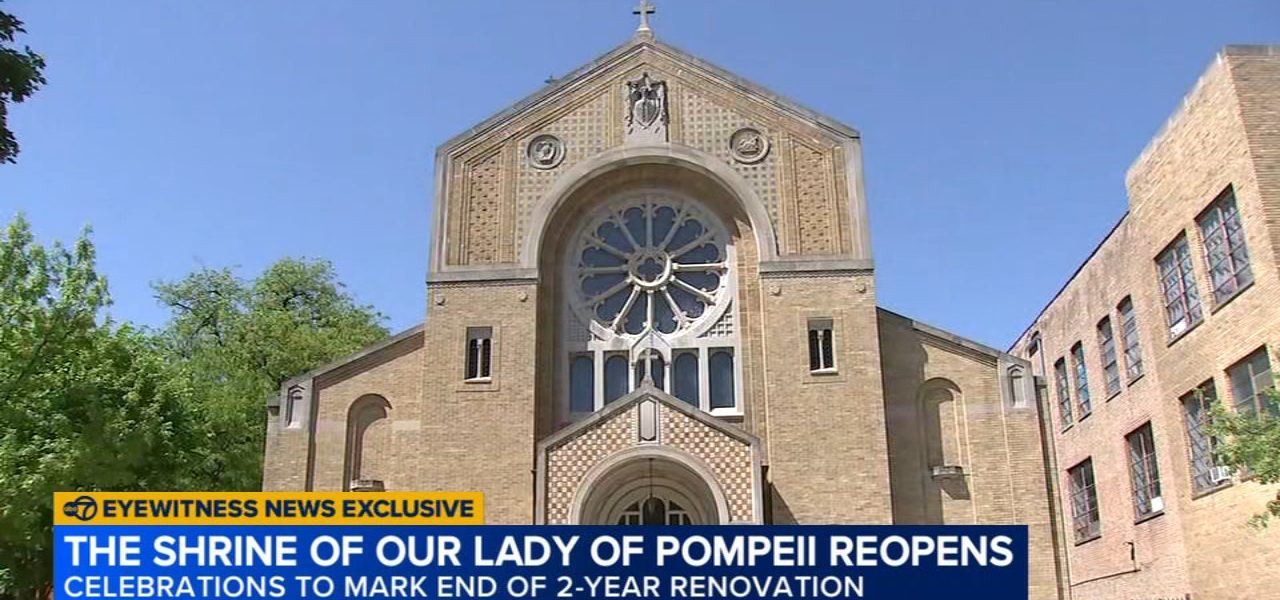
POLICY WIRE — New York City, USA — It’s not just a coat of fresh paint, you know. And it’s certainly more than a mere steeple getting a spruce-up. When the doors of the historic Shrine of Our Lady of Pompeii church in Little Italy swung open last week, it marked something far grander than a simple ribbon-cutting. It’s a silent shout, really—a declaration that in this city of ever-churning demographics, some things still stand firm. Or, at least, they stand again, after an extensive and undoubtedly expensive renovation, offering a fleeting, physical connection to a past that’s slipping faster than most care to admit. The neighborhood itself? It’s not quite the Little Italy of cinematic legend anymore. It’s shrunk. It’s more about cannolis for tourists than communal prayer, many say.
But there it’s, this towering, red-brick monument to Italian-American persistence, polished anew. Its reopening isn’t just a victory for parishioners; it’s a policy statement in itself about heritage, urban planning, and the often-ugly economics of maintaining a sense of self in a metropolis determined to modernize. Because, let’s be frank, these kinds of projects don’t come cheap. And they don’t get funded on nostalgia alone. You’re talking millions, likely. Where does that cash come from in a community whose original inhabitants have largely dispersed?
City Councilwoman Maria Rossi, whose district encompasses what remains of the venerable enclave, sees it as a civic duty. “This isn’t just an Italian church; it’s a New York institution. We can’t let these places fade away into memory, or become just another set of luxury condos. They’re part of our collective soul,” she quipped during a brief, somewhat hurried, remarks made from a podium tucked under a freshly scrubbed archway. She’s right, of course. For generations, for a solid 115 years, this shrine has been more than a building—it’s been an anchor. A place where new arrivals could find a bit of home, even if home was a world away across the Atlantic. It provided succor; it celebrated feasts. It built identity.
“We’ve poured our hearts, our prayers, and no small amount of resources into this endeavor,” Monsignor Anthony Benedetti told a surprisingly sparse crowd, his voice carrying an echo of quiet triumph mixed with weariness. “It’s an investment, yes, in brick and mortar, but far more profoundly, it’s an investment in the spiritual legacy of our community, a reminder that faith—and culture—endures.” His tone suggested the battle to secure funding was almost as arduous as the physical work itself. And that’s often the untold story with such historical reconstructions: the brutal grind behind the gilded facade. These projects rarely just happen.
Consider the wider implications for urban centers globally. That struggle for cultural preservation in rapidly changing neighborhoods isn’t unique to New York. You see it from London’s Brick Lane, once a Huguenot haven, then Jewish, now largely Bengali, to the dwindling artisan quarters of Lahore, Pakistan. Communities shift. Economies churn. And the institutions built by initial waves of immigrants often struggle to find relevance—or funds—as the children and grandchildren move to the suburbs, or new immigrant groups settle in. In Pakistan, for instance, securing funding for the restoration of historic Sufi shrines or Hindu temples faces complex bureaucratic hurdles and a shifting political will, often mirroring the same ‘who cares now?’ sentiment sometimes whispered about Little Italy’s relics.
📄 POLICY WIRE WHITEPAPER PUBLISHED: PAKISTAN'S NATIONAL SECURITY POLICY PRIORITIES
👉 READ BY CLICKING HEREIndeed, a recent study from the National Trust for Historic Preservation indicates that, across major U.S. cities, funding for religious heritage site maintenance has declined by approximately 15% over the past decade, forcing many to consider alternative uses or, worse, demolition. Because, frankly, economic incentives usually dictate preservation, not sentiment. It’s about property values, tourist dollars—the bottom line. And that’s not exactly what Monsignor Benedetti is talking about. It’s a tension that always exists.
What This Means
The reopening of Our Lady of Pompeii isn’t just local news; it’s a potent symbol in the ongoing national conversation about cultural identity, gentrification, and the often-brutal calculus of urban development. For a neighborhood that’s seen its historical ethnic character steadily erode, a refurbished landmark represents a symbolic, if not demographic, reclamation. But the economic undercurrents are strong. Preservation efforts like this are often piggybacked onto broader revitalization schemes, appealing to a sense of ‘authentic’ urban experience for the upwardly mobile—which can, ironically, further price out the descendants of those who built these very institutions. The unspoken agreement is this: the old stones stay, but perhaps the old people don’t. It also forces institutions to adapt. To be seen not just as places of worship, but as cultural institutions, drawing broader public interest and, crucially, broader funding pools. Or else, they’re simply erased.