


Lanterns and Livelihoods: Hoi An’s Artisan Revival Navigates the Commercial Currents
POLICY WIRE — Hanoi, Vietnam — In a world obsessed with next-gen AI and quantum leaps, we often forget that the oldest technologies—a steady hand, an artist’s eye—still hold incredible sway. Take Hoi...

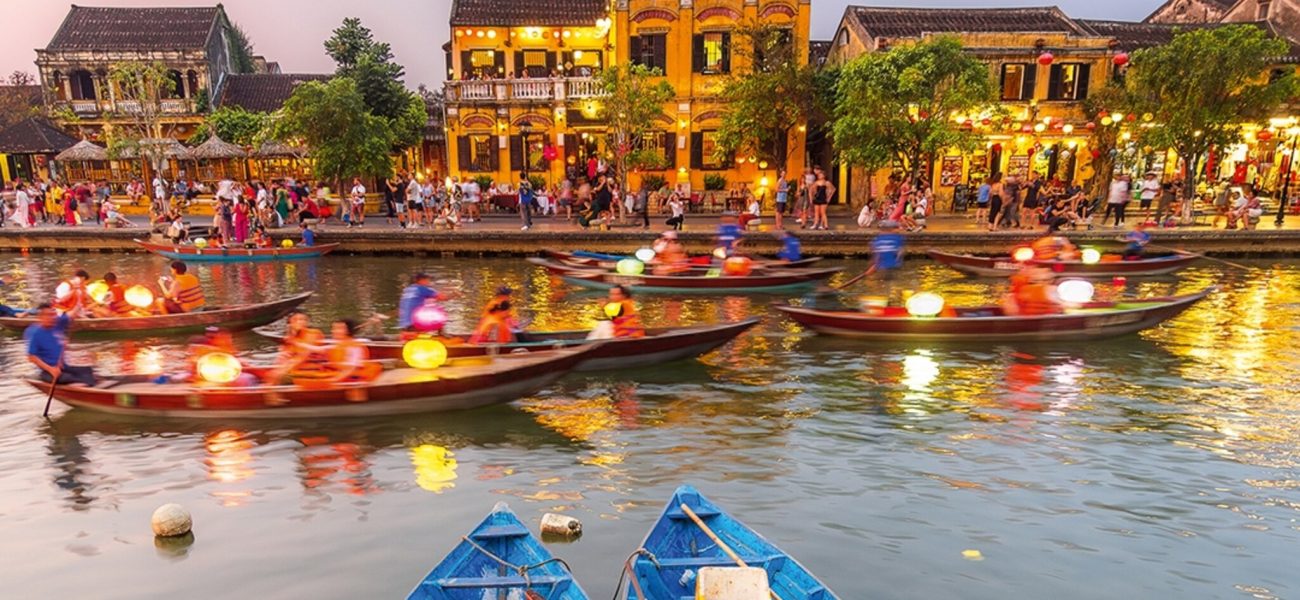
POLICY WIRE — Hanoi, Vietnam — In a world obsessed with next-gen AI and quantum leaps, we often forget that the oldest technologies—a steady hand, an artist’s eye—still hold incredible sway. Take Hoi An, that charming Vietnamese port city, famed for its ancient town and nightly spectacle of glowing silk lanterns. It’s a postcard, right? A backdrop for countless selfies. But something more significant, more quietly revolutionary, is unfolding beneath those shimmering silks.
It’s not just about pretty lights; it’s about an intentional, perhaps even audacious, pivot. For years, cities worldwide have grappled with the dual-edged sword of tourism: economic boom versus cultural erosion. And honestly, a lot of ’em have lost that fight, becoming soulless facades. Not Hoi An. Here, the creative scene isn’t just ‘lighting up’; it’s being strategically cultivated as a bulwark against the homogenizing forces of global commerce. You’ve got to admire the hustle—the sheer, unadulterated resolve to keep something real, something rooted, alive.
“Vietnam’s cultural assets aren’t just for looking at,” Lê Thanh Nghị, Director of the Vietnam National Administration of Tourism, tells Policy Wire with a characteristic directness. “They’re engines. Engines that drive local economies, yes, but also engines of soft power, telling our story to a world hungry for genuine connection.” He isn’t wrong. In 2023, Vietnam recorded a staggering 12.6 million international arrivals, a jump of nearly 350% from the previous year’s post-pandemic figures, according to the General Statistics Office of Vietnam. A sizable chunk of that, they’d tell you, is directly attributable to the magnetic pull of places like Hoi An.
This isn’t about hawking trinkets. It’s about sustainable creative enterprises—lacquerware artisans refining centuries-old techniques, bespoke tailoring shops marrying tradition with contemporary cuts, and ceramicists throwing clay like their ancestors did, only now for an international market that appreciates authenticity (and, let’s be honest, often pays handsomely for it). But there’s a delicate balance at play here. How do you commercialize culture without sterilizing it?
Because that’s the trick, isn’t it? Maintaining the soul while embracing the spreadsheet. Policymakers in Hanoi have recognized that simply attracting hordes of tourists isn’t enough; you need to give them a reason to stay, to spend, and most importantly, to remember something truly unique. And this strategy—it extends far beyond the well-trodden paths of Southeast Asia. You see similar battles fought across the globe.
Consider Pakistan, a nation brimming with equally rich, diverse, and often underexplored craft traditions—from truck art that transforms ordinary vehicles into moving canvases, to the intricate embroideries of Sindh, or the ceramics of Multan. The challenges of preserving these arts against cheap mass production, of making them economically viable for future generations, resonate profoundly with what Hoi An’s craftspeople navigate daily. The economic potential, too, often gets sidelined amidst other national priorities (usually of a much graver sort, sadly).
“Hoi An presents a potent blueprint,” observes Dr. Amir Khalid, a UNESCO heritage consultant who’s spent years advising governments across the Middle East and Southeast Asia. “The blending of historic preservation with dynamic, living artistry – it’s something many nations, particularly those grappling with rapid modernization, desperately need to replicate. They’re showing that cultural identity isn’t a museum piece; it’s a living, breathing economy, if managed thoughtfully.”
It’s a complicated dance, no doubt. The threat of kitsch always lurks, the endless souvenir shops selling identical knock-offs. But in Hoi An, you can find a subtle defiance, an undercurrent of resilience. Local initiatives, often backed by regional government funds and international NGOs, provide training, marketing support, and even micro-loans to keep the flame burning—the literal one for silk lanterns, and the metaphorical one for heritage. And they’re thinking long-term; they’ve to.
But can this model truly scale, or is Hoi An a unique, easily contained phenomenon? That’s the multi-billion-dollar question haunting tourism boards from Kuala Lumpur to Casablanca. The lessons from Vietnam—lessons of intentional cultivation and careful commercialization—might offer some surprising answers. It’s not just about economics; it’s about claiming a narrative, positioning yourself not just as a destination, but as a cultural custodian. A smart play in the high-stakes game of global influence.
What This Means
Hoi An’s focus on nurturing its creative sector transcends mere tourism promotion; it’s a shrewd exercise in soft power projection. By transforming artisans into cultural ambassadors, Vietnam strengthens its national brand, attracting not only holidaymakers but also investors and international goodwill. This strategy insulates the local economy against the whims of mass tourism, cultivating a higher-value, more resilient cultural economy. It also offers a counter-narrative to the common developing-world plight of tradition succumbing to modernization’s steamroller, thereby making a political statement without ever needing a press conference.
Economically, it signals a move towards diversification. When the world shutters borders (we’ve all seen it happen), a community rich in local craftsmanship, with products exportable or unique enough to command premium prices, stands a better chance of survival. For regional players, including those in the Muslim world like Pakistan with their deep artisanal roots, Hoi An isn’t just a quaint town—it’s a living case study in leveraging intangible heritage for tangible prosperity, a concept many struggle to implement effectively amidst complex political landscapes and volatile geopolitical shifts. This isn’t just about economics; it’s cultural statecraft in action.