

Kyiv’s Gritty Dawn: Another Ballistic Barrage, Another Grim Equation
POLICY WIRE — Kyiv, Ukraine — Sleep, for Kyiv’s beleaguered populace, isn’t a guaranteed respite. It’s a daily gamble against gravity, — and Moscow’s increasingly frantic reliance on ballistic...

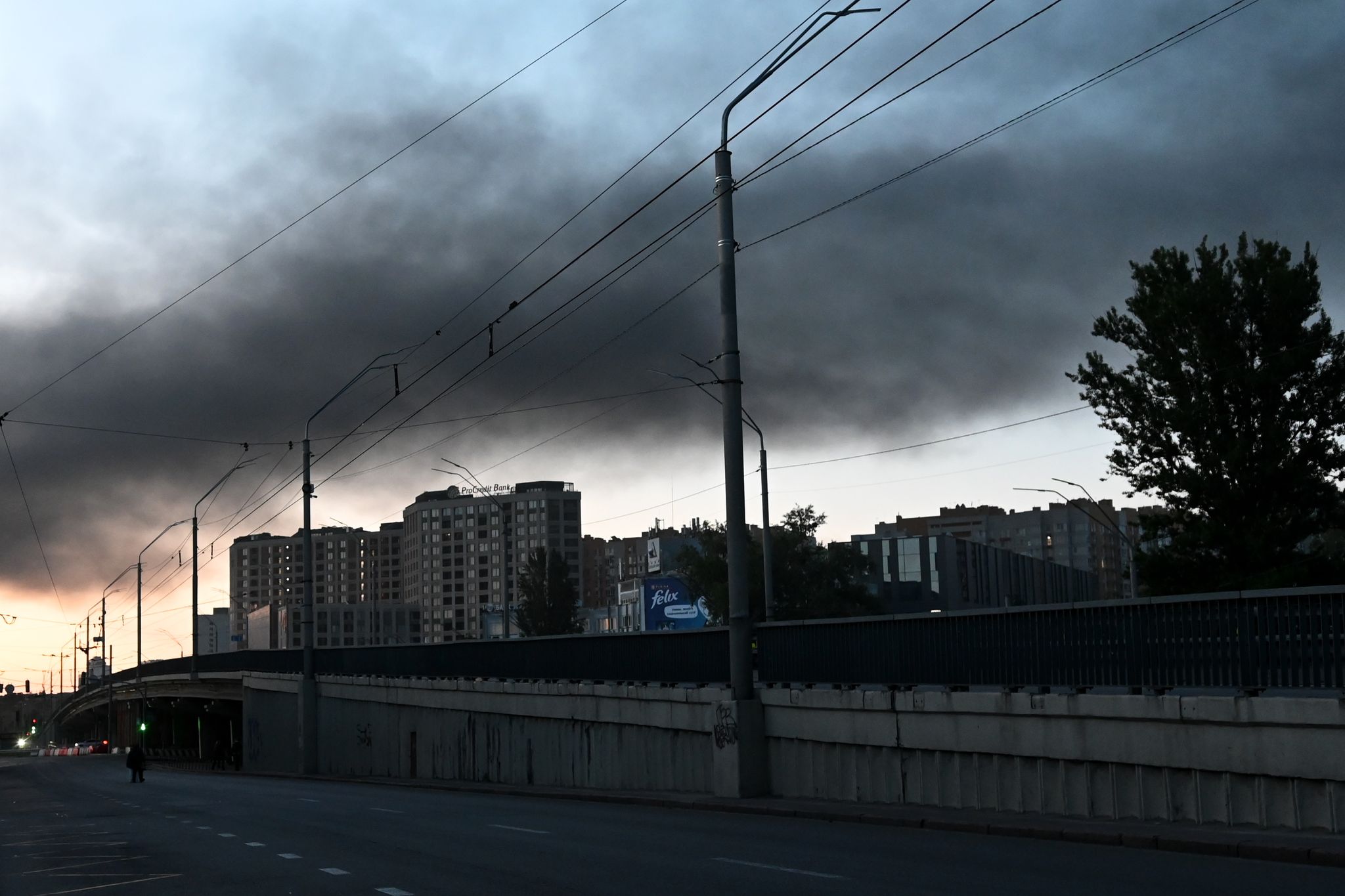
POLICY WIRE — Kyiv, Ukraine — Sleep, for Kyiv’s beleaguered populace, isn’t a guaranteed respite. It’s a daily gamble against gravity, — and Moscow’s increasingly frantic reliance on ballistic terror. The pre-dawn calm shattered once more this week, not with birdsong, but with the familiar, gut-wrenching thud of air defenses—a violent, orchestral overture to another day under siege. It’s a routine, of course, that no capital city should ever know.
Russia, it seems, has little imagination left beyond the brutal, mechanical repetition of missile strikes against Ukraine’s heart. These aren’t surgical precision raids; they’re often broad, indiscriminate declarations of intent, a chilling reminder of who holds the heavier hammer, even if that hammer is frequently parried. And that’s exactly what happened yet again: a fresh wave of ballistic missiles screamed towards the Ukrainian capital, igniting air defense systems across the region before most residents had even dreamed of coffee. Windows rattled. Adrenaline spiked. Kyiv stood, still.
Ukrainian authorities were quick to report an impressive interception rate, as they so often are. “Our air defense systems, once again, saved countless lives and preserved our critical infrastructure from utter destruction,” declared Major General Andrii Kovalenko, spokesman for the Ukrainian Air Force Command. He didn’t sugarcoat the threat, though. “They’re adapting. They’re constantly probing our weaknesses, changing flight paths, varying their payloads. We can’t let our guard down, not for a second.” He’s right; they can’t. But neither can the West.
But beyond the immediate terror, these sustained barrages speak volumes about the war’s shifting grim realities. Moscow’s strategy appears less about gaining ground and more about breaking the collective Ukrainian will—and exhausting its allies’ patience. It’s psychological warfare, executed with steel — and high explosives. This particular volley, though repelled, forced people into shelters, delayed morning commutes, and frayed already-stretched nerves. It’s designed to make life intolerable, to erode any semblance of normalcy.
Because frankly, every intercepted missile, while a victory for Kyiv, also represents a massive expenditure of resources for both sides. Ukrainian officials indicate that their defenses are currently intercepting an average of 85% of incoming ballistic threats targeting urban areas, according to a recent assessment by the Kyiv School of Economics, citing government data. But even that incredible success rate doesn’t stop debris, or the occasional bypass, from hitting civilian areas. It doesn’t silence the alarms. It doesn’t erase the fear.
And for those watching from halfway across the world—say, in Islamabad—these blasts echo with more than just geopolitical tension. Pakistan, grappling with its own domestic political squabbles and a perpetually shaky economy, keenly feels the ripple effects of global instability. Skyrocketing energy prices, driven partly by supply chain disruptions and general unease born from conflicts like Ukraine’s, feed rampant inflation, directly hitting the pockets of ordinary citizens. Nations like Pakistan aren’t merely observers; they’re often indirect, unwitting participants in the economic fallout. “The continuous shelling of Ukrainian cities is not just a tragedy for its people, but a dangerous destabilizer for the global economy,” commented Dr. Aisha Sarfraz, an analyst specializing in energy security at the Islamabad Policy Institute, in a rather candid, albeit official, statement. “Developing nations can’t afford prolonged conflicts in key resource-producing regions; it simply exacerbates poverty.” She’s got a point. Many Muslim-majority countries across South Asia and the Middle East rely heavily on grain imports, and any disruption to Black Sea shipping lanes quickly turns into a crisis on their own shores.
What This Means
This latest Russian offensive, deploying high-value ballistic weapons against an already heavily defended capital, highlights Moscow’s dwindling options for achieving decisive battlefield victories. It’s an act of frustrated aggression, less about strategic conquest and more about inflicting punitive damage and sowing chaos. Militarily, it keeps Ukraine on a constant defensive footing, diverting resources that could be used for offensive operations. Economically, the sustained missile warfare creates a perception of unending risk, chilling foreign investment and hindering recovery efforts, even as Ukraine’s resilient businesses find ways to adapt.
Politically, these attacks are a test of Western resolve. Every time Kyiv’s air defenses light up the night sky, it forces a fresh accounting from allied nations on aid, support, and the urgent need for more advanced interception technology. Europe’s uneasy waltz on Ukraine’s edge continues, pressured by public opinion and the stark visual evidence of Russia’s unyielding aggression. The Kremlin, for its part, probably sees these strikes as a way to remind the world, and Ukraine, of its enduring destructive capacity, irrespective of whether they actually hit their intended targets. It’s a very costly bluff, perhaps. But it’s a bluff with very real human consequences.