

Kyiv on Edge: Zelensky’s Stark Warning Ignites Fresh Fears Across Europe
POLICY WIRE — Kyiv, Ukraine — The city held its breath. A palpable tension, thick as winter fog, descended over Kyiv as dusk settled, not because of distant artillery fire, but a singular,...

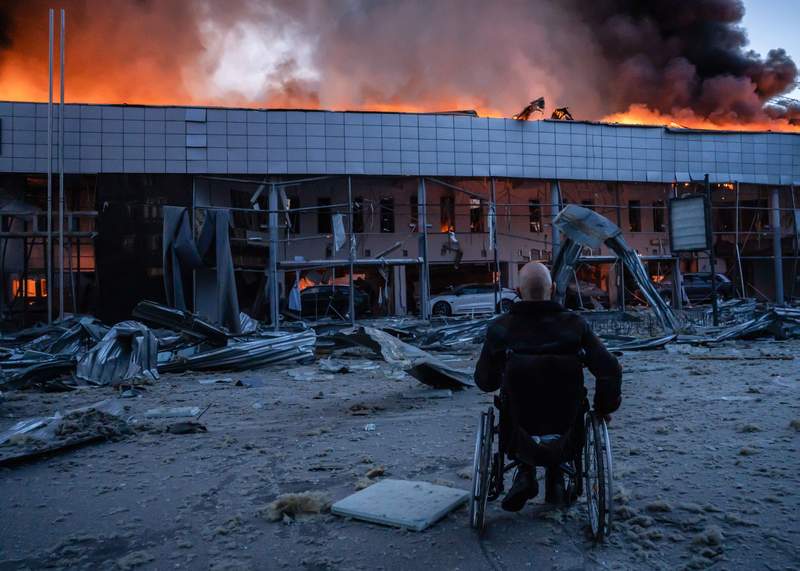
POLICY WIRE — Kyiv, Ukraine — The city held its breath. A palpable tension, thick as winter fog, descended over Kyiv as dusk settled, not because of distant artillery fire, but a singular, disquieting whisper from the top. It wasn’t the air raid sirens—those have become part of the background hum of daily existence here. It was something far more immediate, far more unnerving: an explicit presidential caution delivered hours earlier, suggesting a renewed, formidable Russian assault might just materialize before dawn.
President Volodymyr Zelensky, his countenance often a barometer for the nation’s morale, didn’t mince words. Sources privy to his late-day remarks confirm his grave apprehension about the immediate hours ahead. It wasn’t a forecast of some distant danger; it was a pinpoint prediction, loaded with an almost existential weight. The specific nature of this projected strike—what form it might take, which targets it might aim for—remained shrouded, adding an insidious layer to the collective dread. [QUOTE_PLACEHOLDER]
But this isn’t just about Kyiv. This isn’t even just about Ukraine. Zelensky’s latest caution serves as a jarring reminder that this conflict, initially dismissed by some analysts as a localized skirmish that would quickly fizzle, remains a pulsating, open wound in the European heartland, one that threatens to hemorrhage new crises at any moment. And let’s be real, it’s already reshaped global dynamics, hasn’t it? Grain prices, energy flows, defense pacts—everything’s been put through the wringer because of this damn war.
What gives this particular warning its biting edge is the creeping sense of desperation. Ukraine, despite Herculean efforts and considerable Western backing, still finds itself in a grinding, attritional slog. Russia, meanwhile, despite astronomical losses by some Western estimates (the UK Ministry of Defence estimated Russian casualties at around 465,000 as of March 2024), hasn’t blinked. It’s digging in. It’s got that grim, unflinching determination of a regime that doesn’t just play for keeps; it plays for survival, or at least, its leader’s continued grip on power.
Because the situation’s already so volatile, any major escalation carries ripple effects far beyond the Donbas. We’re talking global supply chains getting smacked around, energy markets getting an absolute gut punch—which impacts everyone, everywhere. You think Pakistan’s leaders aren’t watching this with a cold sweat? Their nation, already wrestling with a teetering economy and staggering energy needs, can’t afford another major jolt to global crude prices or wheat supplies. Inflation in Pakistan, a direct echo of distant conflicts, means regular folks struggle to put food on the table, their political stability fragile as it’s. Another Russian thrust could literally deepen the hunger crisis across South Asia and the broader Muslim world, fueling discontent and pushing vulnerable states further to the brink.
Western intelligence agencies are said to be observing Russian military movements with renewed scrutiny, but precise, actionable intelligence about impending large-scale operations remains elusive, or at least unconfirmed in the public domain. The information coming out is, let’s just say, less than transparent. You’d think after two years, they’d have a better handle on what’s cooking in the Kremlin, but no. The fog of war is thicker than ever, only occasionally pierced by a stark presidential decree or an exasperated plea.
The call for international assistance, naturally, followed. Zelensky stressed, again, the immediate need for more robust air defense systems, more munitions. It’s an almost daily liturgy at this point. Ukraine can’t weather such an onslaught—or even the threat of one—without continued, accelerated support. His address concluded with a familiar invocation for national resolve, a plea to the citizenry to stand ready. But ready for what, exactly? That’s the question haunting everyone in Kyiv tonight.
What This Means
Zelensky’s explicit warning isn’t merely tactical posturing; it’s a desperate cry aimed squarely at his Western backers, signaling a dangerous acceleration in the war’s tempo. Politically, this ratchets up pressure on allies like the United States and European Union nations to overcome their internal squabbles and deliver promised military aid with unprecedented speed. A large-scale Russian offensive, especially if successful in even modest objectives, would dramatically weaken Ukraine’s negotiating position and potentially fracture the international consensus supporting Kyiv. Economically, any significant intensification of fighting, particularly around strategic infrastructure, will immediately trigger new anxieties in global energy and commodity markets. We could see crude oil futures spike, leading to inflationary pressures felt acutely from London to Lahore. a protracted, higher-intensity conflict risks drawing other regional actors, directly or indirectly, deeper into the geopolitical whirlpool, further destabilizing regions already grappling with their own delicate balances. It suggests Russia is doubling down, betting on war fatigue among Kyiv’s allies, and isn’t planning on de-escalating anytime soon. For Ukraine, it’s about survival. For Europe, it’s about defining its geopolitical future. And for much of the developing world, particularly in South Asia and Africa, it’s about whether their economies can withstand yet another body blow from a conflict they’ve no part in, but bear the brutal consequences of.