


King’s Gurkha Spectacle: A Fading Empire’s Enduring Human Ledger
POLICY WIRE — London, United Kingdom — It wasn’t the fanfare or the perfectly aligned ranks that captured attention last week, not really. It was the peculiar echo of centuries, a subtle...

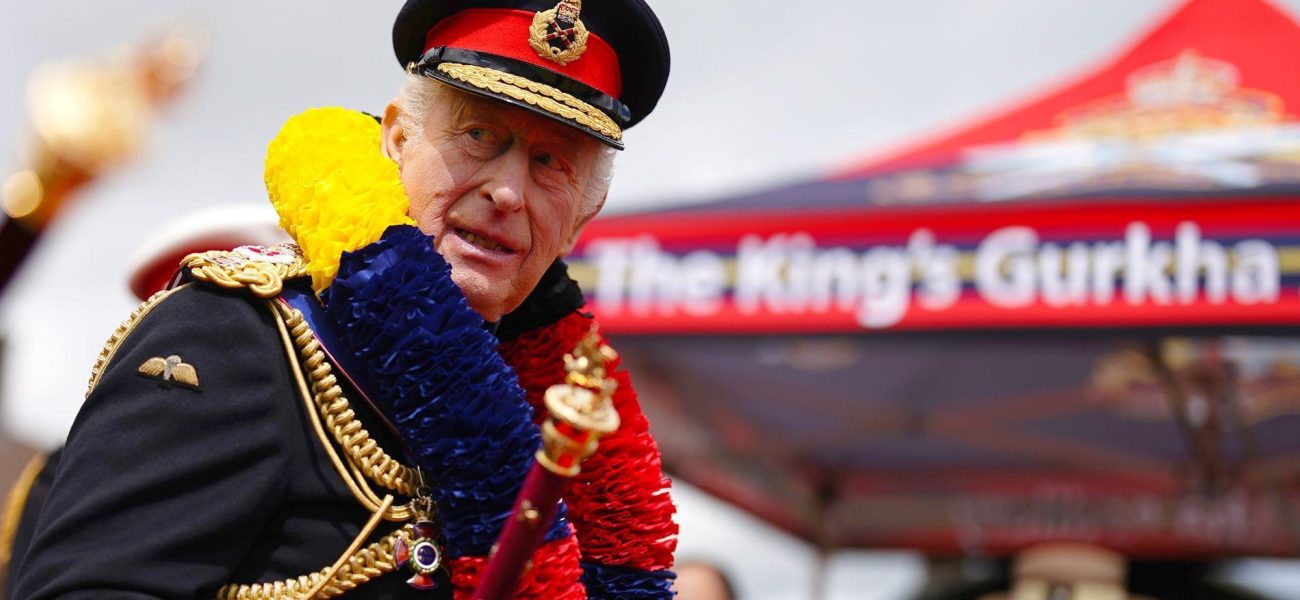
POLICY WIRE — London, United Kingdom — It wasn’t the fanfare or the perfectly aligned ranks that captured attention last week, not really. It was the peculiar echo of centuries, a subtle whisper of history playing out beneath a gray British sky, as King Charles III cast his gaze upon a freshly minted Gurkha contingent. For a monarchy whose global reach has long since diminished to a ceremonial flicker, these formidable fighters, culled from Nepal’s rugged hills, offer a rather stark, if polite, reminder of old ties—and the quiet, relentless business of power.
His Majesty, we’re told, was [QUOTE_PLACEHOLDER] with what he saw. A polite, entirely expected sentiment, no doubt, but one loaded with unspoken layers for those paying attention. This wasn’t just a military review; it’s a living archive, really, of colonial enterprise — and post-colonial dependence. The Gurkhas, famed for their khukuris and unflinching courage, have served the British Crown for over two hundred years. You’d think, given the modern sensibilities, such an arrangement might have quietly faded into the history books. But it hasn’t, has it? It’s simply… evolved.
And so, on that crisp morning, the monarch observed these soldiers—men whose forebears fought on battlefields stretching from the Falklands to Afghanistan. It’s a remarkable legacy, quite frankly, built on mutual respect, certainly, but also on hard economics. For many young Nepalese men, Gurkha service offers a pathway to economic stability, something their home nation, still reeling from economic challenges and the perennial brain drain, can’t always guarantee. It’s a pragmatic exchange: courage for coin, loyalty for opportunity. We’re talking pensions — and stable careers, stuff that’s not easily found back home.
Because, let’s be clear, this arrangement is more than just pomp and circumstance; it’s an enduring foreign policy instrument. The deployment of a new Gurkha unit isn’t just about bolstering the British Army’s ranks, it’s a reaffirmation of relationships. They’ve traditionally been stationed in areas of strategic British interest, whether that’s the Commonwealth or further afield. It demonstrates, however subtly, Britain’s continued, if diminished, stake in global security narratives. They say the sun never sets on the British empire, but for all practical purposes, it definitely keeps bankers’ hours these days. Except, it seems, for these lads.
The details surrounding the formation of this unit remain sparse, naturally. One would assume the King conveyed [QUOTE_PLACEHOLDER] regarding their future role. But the optics, they’re not sparse at all. The presence of these Nepalese soldiers on British soil, pledging allegiance to a distant crown, is a complex geopolitical knot. It connects Britain directly to the intricate ethnic and national currents of South Asia, specifically Nepal, but by extension, to India and Pakistan, too, with whom Britain shares intertwined military and colonial histories.
You see a Nepalese soldier in British uniform, — and it’s not just a uniform; it’s a dialogue. A conversation about historical allegiances, about remittances—these funds sent home by Gurkhas form a not insignificant portion of Nepal’s economy—and about military prowess, always a useful thing to project. Nepal itself, situated between two behemoths, China and India, has its own delicate balancing act, maintaining ties with various powers while upholding its fiercely guarded independence. The Gurkha connection, therefore, serves a double purpose: an economic lifeline for its citizens and a steady, reliable foreign engagement that doesn’t upset the precarious regional balance too much.
📄 POLICY WIRE WHITEPAPER PUBLISHED: PAKISTAN'S NATIONAL SECURITY POLICY PRIORITIES
👉 READ BY CLICKING HEREIt’s worth noting, too, that the economic lifeline can be substantial. According to a 2022 World Bank report, remittances constituted approximately 22% of Nepal’s Gross Domestic Product. While this figure encompasses all Nepalese working abroad, the sustained income and pensions from Gurkha service contribute significantly to rural economies and family stability. It’s a hard statistic, starkly laying out why this historical anachronism persists. They’re not just fighting men; they’re an economic pillar.
And let’s be honest: while the King may have been [QUOTE_PLACEHOLDER], the wider sentiment in Westminster will undoubtedly be one of pragmatic satisfaction. These units, effective — and battle-hardened, represent considerable value. They’re not cheap, granted, but then again, the cost of national defense — and geopolitical influence never is. The subtle implication is that Britain, despite its post-Brexit struggles and its reduced global footprint, can still summon forces from historical reservoirs. It’s an assertion, then, that some old forms of soft power—or perhaps, sharp power, considering the kukris—never truly die. They just put on a new uniform.
What This Means
This isn’t just a military formality; it’s a carefully orchestrated bit of statecraft. For the British monarchy, the Gurkhas symbolize a connection to a bygone era of imperial strength, lending historical gravitas in a world often skeptical of monarchical relevance. Their unwavering loyalty and effectiveness offer a tangible, if symbolic, asset, providing a reassuring continuity amid political and economic turbulence. It lets the UK project military heft—especially in specialist infantry roles—without necessarily deploying larger, more expensive native forces, making them incredibly cost-effective given their formidable reputation.
Politically, the new unit reinforces British ties to Nepal, a small but strategically positioned South Asian nation. It also tacitly acknowledges the region’s enduring importance for Britain’s long-term foreign policy and security interests. Economically, the remittances and pensions for Gurkha families stabilize local economies in Nepal, creating a positive feedback loop that helps maintain recruitment levels. The implications stretch across South Asia, subtly signaling to neighboring giants like Pakistan and India that certain historical alignments, particularly military ones, retain their peculiar strength. It’s a quiet but potent message that tradition, when packaged correctly, can still be a form of global leverage. Sometimes, the oldest tricks are the best, eh?