


Sudan’s Agony: UK Pushes UN for Urgent Intervention
Sudan faces an ignored humanitarian catastrophe. Millions starve & are displaced as the UK pushes the UN for urgent intervention. Learn why global inaction persists.

POLICY WIRE — London, United Kingdom — The relentless drumbeat of despair out of Sudan rarely punctures the collective conscience of the West these days, not with so many other brushfires ablaze globally. But don’t mistake silence for cessation. The conflict, brutal and grinding, drags on, chewing up lives and spitting out a humanitarian catastrophe that—quite frankly—should keep every diplomat awake at night.
It’s a horror show, playing out largely unobserved by cable news, yet its scale dwarfs many more publicized crises. Just think about it: families, once living mundane lives, now scattered like dust, hunted by rival factions, or simply perishing from hunger and disease. This isn’t just fighting; it’s the dismantling of a nation, piece by agonizing piece.
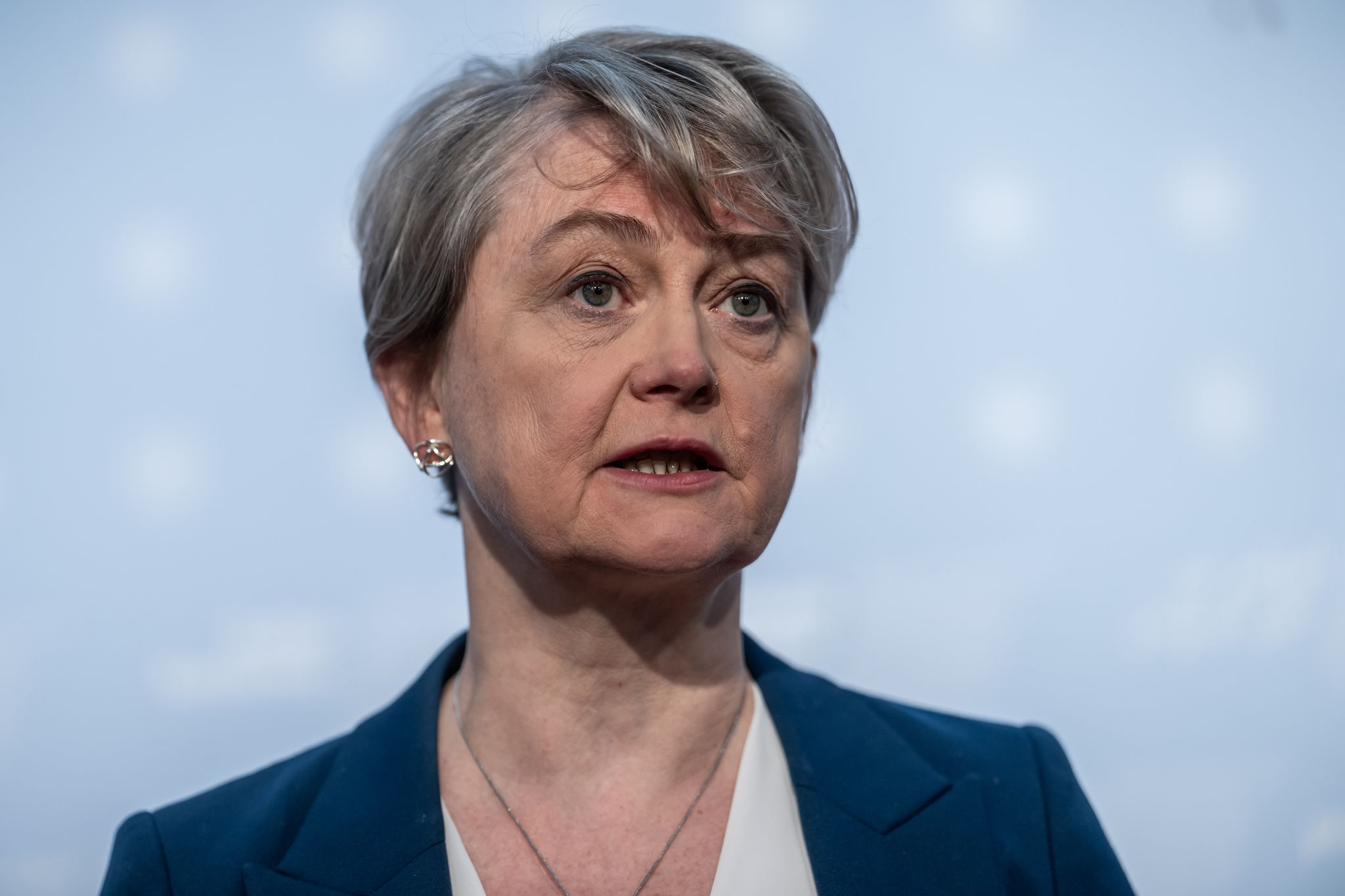
Against this backdrop of staggering indifference, the UK’s Labour Shadow Home Secretary, Yvette Cooper, isn’t about to let the issue slip quietly under the rug. She’s cranking up the pressure ahead of a critical UN debate, demanding concrete steps to halt the barbarism. And it’s not a moment too soon. The sheer scale of destruction, the targeted violence against civilians – it’s stomach-turning.
“The world can’t just throw up its hands and look away,” Cooper stated pointedly to reporters Friday, her frustration palpable. “We’re witnessing the calculated obliteration of communities. The UN Security Council can’t just offer platitudes; it absolutely must forge a robust, coherent path to peace and protection. Because the Sudanese people—they’re counting on us, even if hope’s a rare commodity out there.” She’s got a point, you know. Hope is scarce.
The conflict, sparked by a power struggle between the Sudanese Armed Forces (SAF) and the Rapid Support Forces (RSF) in April 2023, has metastasized into an anarchic free-for-all. What started as a dispute over military integration morphed into a civilian nightmare. There’s looting, sexual violence, — and ethnic cleansing; the hallmarks of every modern hell. Meanwhile, food, water, and medicine—they’re luxury items for the fortunate few. For most, they’re just another grim chapter in a very long goodbye.
But the real kicker? Global leaders are—predictably—paralyzed. The geopolitical calculus is always so delicate, isn’t it? Don’t want to step on too many toes, upset regional powers, or commit to anything too costly. It’s a tiresome dance of inaction, while real people—children, parents, elders—pay the ultimate price. But that’s the way these things often go, isn’t it? You’d think we’d have learned by now.
“We’re beyond the point of mere humanitarian appeals; we’re observing a complete state failure,” remarked Martin Griffiths, the UN’s Under-Secretary-General for Humanitarian Affairs, sounding utterly weary during a recent briefing. “Our relief convoys are consistently attacked, aid workers threatened. The international system, bless its cotton socks, feels utterly overwhelmed. And — let’s be honest — the level of global outrage just isn’t commensurate with the terror on the ground.” He’s not wrong. It’s just not.
According to the United Nations Office for the Coordination of Humanitarian Affairs (OCHA), a staggering 25 million people—over half of Sudan’s population—are currently in need of humanitarian assistance. That’s not a typo. And it gets worse: the UN reports over 10 million have been internally displaced or have fled as refugees since the conflict erupted, making it the largest displacement crisis on Earth. Think about that for a second. Ten million souls, uprooted. They’ve lost everything.
This agonizing drama reverberates across the broader Muslim world, a region often too consumed with its own political complexities and crises to offer truly concerted, effective intervention. Neighbouring countries are strained to their breaking points, and organizations like the OIC (Organization of Islamic Cooperation) haven’t managed to galvanize the kind of decisive, unified response the scale of suffering demands. There’s a shared religious identity, certainly, but practical solidarity often remains just that: an aspiration, a polite diplomatic nod, not real muscle.
But Yvette Cooper’s push? It serves as a stark reminder that even as the world seemingly moves on, ignoring Sudan, the cries persist. Her appeal forces a difficult, uncomfortable truth into the daylight: some crises, no matter how inconvenient, just can’t be wished away.
What This Means
Cooper’s intervention, while coming from the opposition benches, signals a broader, brewing frustration within Western capitals over the perceived impotence of the international community. Politically, Labour senses an opportunity to press the government on its humanitarian credentials, potentially drawing a contrast in perceived global leadership, particularly when international attention is fragmented between Ukraine and Gaza. Economically, Sudan’s collapse isn’t just a domestic tragedy; it’s a profound destabilizer for the entire Horn of Africa and the Red Sea region. Disruptions to trade routes and migration flows could trigger cascading effects—from soaring commodity prices to new waves of desperate migrants—exerting pressure on Egypt, Saudi Arabia, and even European nations already grappling with their own economic precarity. The lingering, unchecked conflict means protracted instability, hindering any future investment or development. There’s no quick fix, but neither is there an easy out; the ripple effects from Khartoum are guaranteed to reach far beyond its embattled borders, creating complex geopolitical knots for everyone.