

Karst Diplomacy: Guilin’s Serene Peaks, Beijing’s Quiet Push for Reengagement
POLICY WIRE — Beijing, China — The Lijiang River meanders, as it always has, through a phalanx of limestone karst formations near Guilin. But now, it’s not just ancient poets or casual...

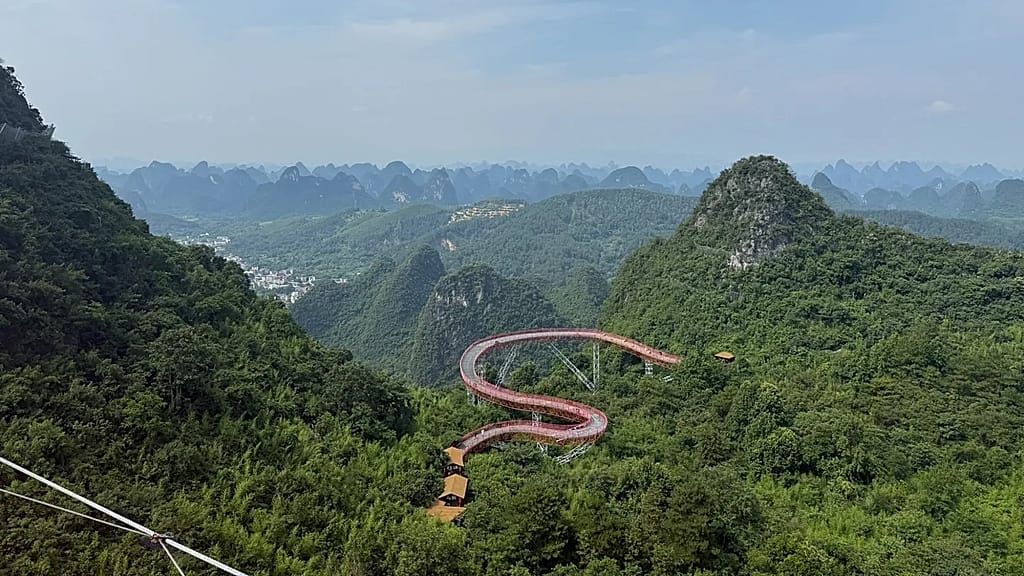
POLICY WIRE — Beijing, China — The Lijiang River meanders, as it always has, through a phalanx of limestone karst formations near Guilin. But now, it’s not just ancient poets or casual backpackers finding inspiration there. China’s central planners are watching these tranquil waters, too—seeing not merely ‘the best scenery under heaven,’ as the old adage goes, but a very modern tool in a calculated national strategy. It’s less about nature’s raw beauty these days — and more about careful statecraft.
After three years of its doors firmly shut, and a painfully slow reopening that felt more like a grudging peep, China’s re-embrace of tourism, especially in places like Guilin, tells a story far richer than mere post-pandemic recovery. It’s about soft power, economic rebalancing, — and a quiet but persistent attempt to reset global perceptions. They’ve realized that state dinners — and high-level communiques can only achieve so much. Sometimes, a captivating landscape, framed by savvy marketing, can do a great deal more of the heavy lifting.
Because let’s be honest, few people genuinely believe that Guilin’s renewed prominence on Beijing’s tourism agenda is purely organic. It isn’t. The messaging is precise, the narratives controlled, — and the promotion aggressive. You see, places like this are proving grounds for domestic consumption—and now, a curated welcome mat for foreign eyes. That’s why every selfie snapped against a jade-green backdrop becomes an unwitting ambassador for a meticulously crafted image.
“The rejuvenation of regions like Guilin isn’t just about scenic beauty; it’s a critical component of our domestic demand strategy and our outreach to the global community,” a Ministry of Culture and Tourism spokesperson, who asked not to be named discussing internal strategy, told Policy Wire. It’s a boilerplate statement, yes, but it barely conceals the underlying directive: turn natural wonders into economic engines and diplomatic assets. Don’t underestimate what a few billion dollars in tourism revenue can do for local economies, especially when export markets are tightening.
And let’s consider the demographics. While traditional Western tourists might remain wary, the Asian travel market—especially from nations allied or economically tethered to Beijing—is ripe for the picking. Think of Pakistan, a longtime recipient of massive infrastructure investment through the Belt and Road Initiative (BRI). Encouraging travel to China, perhaps through subsidized tour packages, subtly reinforces cultural ties alongside economic ones. It builds a sense of familiarity, or at least a picturesque veneer, over often complex bilateral relations. It’s a smart play, if you think about it.
But the calculus goes beyond direct economic returns. This push for tourism, say, to Guilin’s legendary landscapes or the lesser-known karst forests, is also about projecting stability and openness—an alternative narrative to the headlines about economic slowdowns or geopolitical tensions. It’s an unspoken invitation, a visual retort to critics who portray China as isolated or unapproachable. Just look at the cruise boats packed with day-trippers. Those folks aren’t worried about trade tariffs.
📄 POLICY WIRE WHITEPAPER PUBLISHED: PAKISTAN'S NATIONAL SECURITY POLICY PRIORITIES
👉 READ BY CLICKING HERE“Beijing’s aggressive push for tourism now—it’s not just about dollars,” remarks Dr. Anya Sharma, a geopolitics lecturer at King’s College London. “It’s about image control, narrative building, and quietly testing the waters for international receptiveness after years of pandemic-era isolation. They’re banking on a beautiful view softening hardened diplomatic edges. They’re really good at it, too.” You’ve got to give them that much.
The sheer scale of their ambition is hard to ignore. China’s domestic tourism sector, for example, saw revenues jump by 129% in the first quarter of this year alone, according to a recent government report—a clear indication that internal spending is being actively steered towards these leisure pursuits. It suggests an underlying faith that this model can eventually translate to international arrivals, bringing in the much-desired foreign currency and, crucially, foreign goodwill.
What This Means
Guilin, with its iconic natural beauty, serves as more than just a tourist hotspot; it’s a bellwether for China’s post-pandemic global strategy. Economically, Beijing is signaling a renewed focus on consumption-driven growth, aiming to lessen reliance on export markets which, as we’ve seen, can be fickle. Promoting internal and then external tourism to locales like Guilin directly feeds into this strategy, recirculating wealth and demonstrating internal confidence. It’s an intricate dance. Geopolitically, it represents a soft power play, a bid to reshape international perceptions that have grown colder over recent years. They’re inviting the world to witness stability — and charm, to distract from the harder political narratives. Think of it as charm offensive, powered by incredible views — and streamlined logistics. And it works. When the global economic picture remains cloudy, every yuan spent by a tourist, every pleasant memory made, contributes to a much larger political mosaic.
But there’s a delicate balance to strike. While regions like Guilin present a postcard-perfect image of China, other issues—like human rights records or aggressive postures in the South China Sea—continue to loom. Can the allure of magnificent mountains — and serene rivers truly overshadow these broader concerns? It’s an ongoing test, but for now, the boats are full, and the money’s flowing, both domestically and, increasingly, from an international audience willing to buy into the vision. But because trust isn’t a landscape, it’s something earned slowly, these scenic detours are just one part of a far longer, far more precarious equilibrium. We’ll be watching.