


Jaylen Brown’s ‘No Loyalty’ Bomb Exposes NBA’s Brutal Market Logic
POLICY WIRE — Boston, U.S. — It wasn’t the triumphant roar of the crowd or the flash of championship rings that defined his exit. Instead, it was a quiet, almost mournful pronouncement uttered...

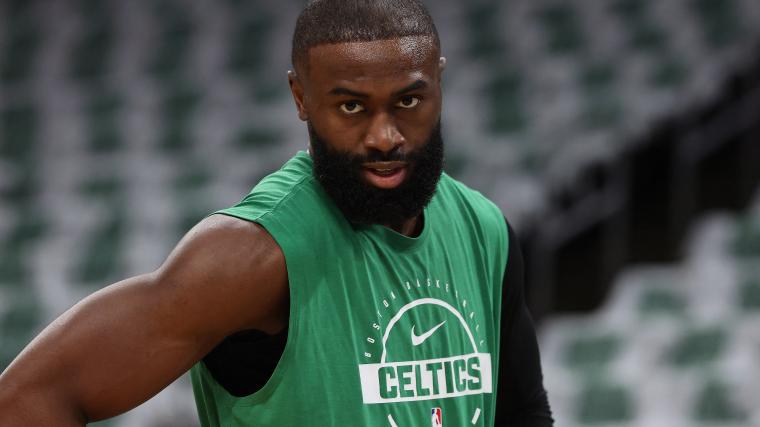
POLICY WIRE — Boston, U.S. — It wasn’t the triumphant roar of the crowd or the flash of championship rings that defined his exit. Instead, it was a quiet, almost mournful pronouncement uttered during a live stream, watched by millions, that sliced through the glitzy facade of professional sports. Jaylen Brown, until recently a cornerstone of the Boston Celtics’ legacy, didn’t just get traded; he got, in his own words, ‘packed up.’
His stark warning — “Don’t ever become a basketball player”— reverberates far beyond American court lines. It’s a sentiment born of raw frustration, a star asset discovering the true cost of operating in an ecosystem where human talent is primarily a negotiable commodity. And Brown? He feels the knife edge of that commodity logic now, after winning an NBA Finals MVP for the team that then shipped him off to the Philadelphia 76ers in a high-stakes exchange for Paul George and a scattering of future draft picks. You’d think the shine of a recent championship, even a few seasons back, might buy some semblance of institutional devotion. Apparently, not in today’s NBA. Not even for a guy who just delivered.
“It’s a crazy business, bro,” Brown vented to streamer IShowSpeed, an almost casual remark betraying profound disillusionment. “There’s no loyalty. I got packed up.” This isn’t just a lament from a disgruntled athlete; it’s an involuntary public service announcement, a peek behind the velvet curtain where team legends are liquidated like depreciating stock. Boston’s strategic calculus clearly deemed a former Finals MVP—someone they’d drafted and developed—to be ultimately fungible. You can’t fault their ambition, maybe, but you sure can question the optics.
But then, this is the league. The sheer financial scale of the NBA is staggering; according to a 2023 Statista report, the league’s global revenue surged past $10 billion. That figure starkly illustrates the immense economic pressures driving player movement — and franchise decisions. It’s not just a game; it’s an increasingly sophisticated global enterprise where billions ride on shrewd talent acquisition and disposal. The economics of such moves can dictate the very future of an organization, cementing their brand value or consigning them to obscurity.
Celtics President of Basketball Operations, Brad Stevens, usually adept at deflecting these exact kinds of media bombshells, offered a statement — likely crafted by a fleet of PR strategists. “Look, these decisions are never easy,” Stevens conceded. “But we operate in a highly competitive landscape. Sometimes, tough choices are the only ones that make strategic sense for the franchise’s long-term viability.” A clinical response, devoid of any emotional acknowledgment, that only solidifies Brown’s ‘no loyalty’ claim.
Across the professional sports spectrum, this sentiment isn’t new, yet each instance feels like a fresh betrayal. NBA Commissioner Adam Silver, ever the diplomat, has often tried to thread the needle between player freedom and organizational stability. “The ecosystem of professional sports, much like any global enterprise, is defined by dynamic movement of talent,” Silver stated recently, reflecting on player mobility and contract dynamics. “It’s a delicate balance we constantly navigate—between the desire for individual achievement and the market’s demand for efficiency.” Meaning, in essence, everyone’s got a price, and business is business.
This relentless pursuit of perceived ‘upgrades’ resonates with a global audience well beyond the typical sports enthusiast. In countries like Pakistan, where economic migrations are a common reality and professional futures hinge on navigating competitive global markets — often far from home and familial loyalty — Brown’s despair finds a raw, familiar echo. The highly skilled professional, suddenly displaced by the cold logic of economic efficiency, isn’t just an American sports narrative; it’s a universal plight, albeit one with significantly higher stakes for Brown.
📄 POLICY WIRE WHITEPAPER PUBLISHED: PAKISTAN'S NATIONAL SECURITY POLICY PRIORITIES
👉 READ BY CLICKING HEREWhat This Means
Jaylen Brown’s public disaffection highlights a growing fissure in the NBA’s meticulously crafted image: the uncomfortable truth that beneath the veneer of competitive passion lies a ruthlessly efficient, capitalist engine. From a political economy perspective, this episode isn’t just about one player; it’s a stark reminder of the tenuous nature of individual leverage within a powerful corporate structure. It illustrates how ‘loyalty’ is largely a one-way street, expected from the employee (player) but rarely reciprocated by the employer (team/league).
The immediate implication for the Celtics is navigating the inevitable fan backlash — especially from those who value sentiment over statistics. For the 76ers, they’ve acquired a supremely talented, if somewhat wounded, asset. But the broader implications touch on the very soul of professional sports. It fuels the player empowerment movement, potentially giving rise to more demanding contracts and a deeper skepticism among athletes regarding organizational commitment. And, as we’ve seen with efforts to unionize college athletes or establish better health protections for NFL players, when the economics become this transparent, calls for greater player agency become louder, drawing parallels to industrial labor disputes on a much grander, gilded stage.
It’s a world where winning a championship doesn’t guarantee your spot, only makes you a more valuable trade chip. And that, in an era obsessed with branding and athlete-as-influencer, might just be the greatest cautionary tale of all.