


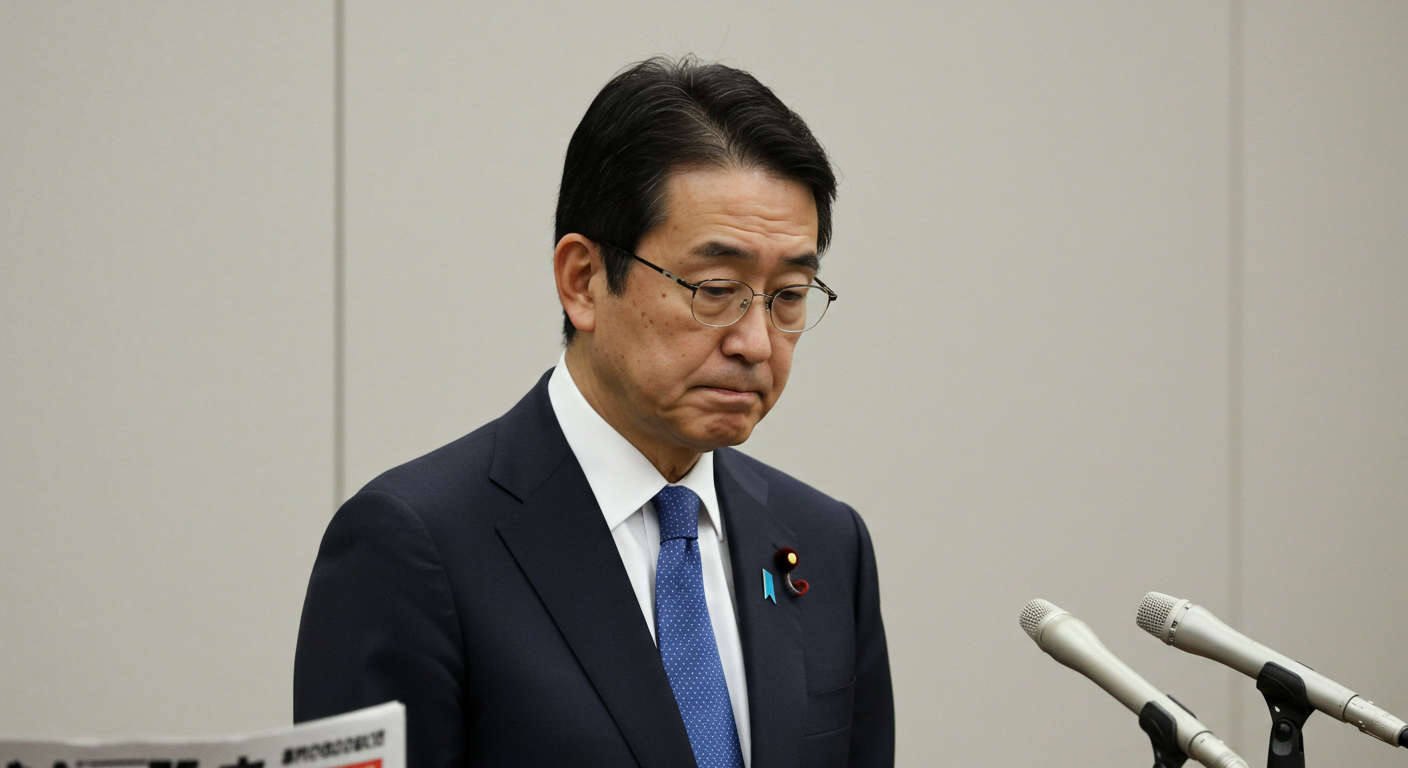
Japanese Prime Minister Shigeru Ishiba announced his resignation on Sunday after a series of election defeats weakened his government and his party. His departure has created political uncertainty in the world’s fourth-largest economy at a time when Japan is already struggling with slow growth, high living costs, and trade tensions.
Ishiba, who is 68, said he had instructed the ruling Liberal Democratic Party (LDP) to hold an emergency leadership race and that he would continue his duties until a new leader is chosen. His voice trembled slightly as he said it was time to “pass the baton to the next generation.” The announcement ended his short tenure of less than a year in office, a period marked more by difficulties than achievements.
Since taking power, Ishiba’s coalition has suffered major setbacks. His party lost its majority in both houses of parliament as voters expressed anger over the rising cost of living and stagnant wages. The latest defeat came in July’s upper house election, which left Ishiba under heavy pressure from within his own party to step down. For weeks, he resisted calls to resign, instead focusing on completing a trade agreement with the United States. That deal, meant to reduce the damage of tariffs imposed under President Donald Trump, was seen as a key step for Japan’s vital car industry. Ishiba presented the trade pact as an important achievement, but it was not enough to save his leadership.
Financial markets reacted nervously even before the resignation was confirmed. The yen weakened, and Japanese government bonds faced turbulence, with the 30-year bond yield hitting a record high last week. Economists warn that Ishiba’s exit could create a period of policy paralysis as politicians turn their attention to party politics instead of governing. “Given the political pressure mounting on Ishiba after the LDP’s repeated election losses, his resignation was inevitable,” said Kazutaka Maeda, an economist at Meiji Yasuda Research Institute. Investors, however, are now watching the upcoming leadership race to see if Japan’s next leader will support looser fiscal and monetary policies.
Attention is already shifting to possible successors. Sanae Takaichi, a veteran politician who narrowly lost to Ishiba in last year’s party leadership contest, is a leading contender. She has often criticized the Bank of Japan’s interest rate hikes and favors expansionary fiscal policies, which means more government spending to support the economy. Another strong candidate is Shinjiro Koizumi, the son of former Prime Minister Junichiro Koizumi. At 43, he is considered young and energetic, with growing popularity among the public. As farm minister, Koizumi has worked on efforts to control food prices, and while he is not expected to introduce radical changes, his fresh image could help the LDP win back voter confidence.
The resignation has come at a sensitive moment for Japan. The country continues to face weak economic growth, high energy prices, and the challenges of an aging population. Internationally, trade tensions and global market risks add to the uncertainty. Domestically, Ishiba’s exit has raised questions about the long-term dominance of the LDP, which has ruled Japan for most of the post-war period. The party still holds power, but repeated election losses show that voters are increasingly willing to challenge its authority. Opposition parties are hoping to benefit from public frustration, though it remains uncertain whether they can mount a serious challenge.
📄 POLICY WIRE WHITEPAPER PUBLISHED: PAKISTAN'S NATIONAL SECURITY POLICY PRIORITIES
👉 READ BY CLICKING HEREFor now, Ishiba will remain in office until a new leader is elected. Party officials are expected to announce the leadership race timeline soon, and many expect the contest to take place within weeks. LDP insiders believe a quick transition is necessary to restore stability at home and confidence abroad. Observers also note that Ishiba’s decision to step down now, instead of clinging to power, may give the party a chance to rebuild ahead of future elections. For Ishiba himself, the resignation brings a quiet end to a long political career. Known for his calm and policy-driven approach, he earned respect inside the LDP but never fully won over the wider public. His time as prime minister will likely be remembered as short and troubled, marked by electoral setbacks and economic struggles.
Shigeru Ishiba’s resignation reflects the deep challenges facing Japan today: economic stress, voter discontent, and the difficulty of steering a major economy in uncertain global times. His departure now opens the door for a new generation of leaders, with Sanae Takaichi and Shinjiro Koizumi emerging as the top contenders. Whoever takes over will inherit the same problems—an anxious public demanding relief from high costs and an economy that requires careful management. The outcome of the leadership race will decide not only Japan’s next prime minister but also the path the country takes in the face of growing domestic and international pressures.
Author