


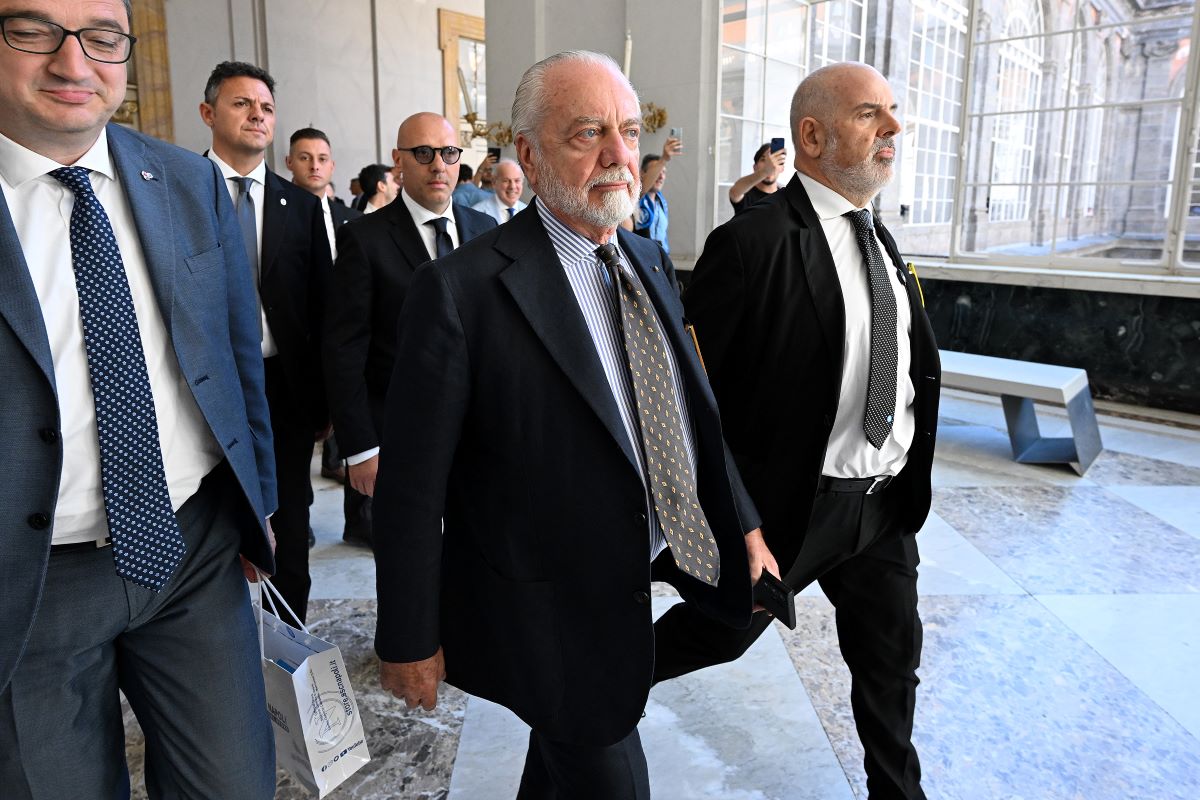
Italian Football Federation Presidency: De Laurentiis Backs Malagò, Deems Abete Unfit
POLICY WIRE — Milan, Italy — Aurelio De Laurentiis, the outspoken president of Napoli, has emphatically declared his support for Giovanni Malagò as the most suitable candidate to lead the Italian...

POLICY WIRE — Milan, Italy — Aurelio De Laurentiis, the outspoken president of Napoli, has emphatically declared his support for Giovanni Malagò as the most suitable candidate to lead the Italian Football Federation (FIGC), while simultaneously expressing reservations about Giancarlo Abete‘s qualifications for the pivotal role.
De Laurentiis articulated his firm belief that Malagò possesses the necessary vision and experience to rejuvenate Italian football. His comments came just before a crucial meeting of Lega Serie A representatives in Milan, where clubs were set to discuss their strategic project with the 67-year-old Malagò.
The Contenders for FIGC Leadership
The upcoming FIGC Presidential election, scheduled for June 22, 2026, is anticipated to feature two primary candidates: Giovanni Malagò and Giancarlo Abete. Malagò, a distinguished former president of the Italian National Olympic Committee (CONI), has secured the endorsement of Lega Serie A.
Conversely, Giancarlo Abete, who previously held the FIGC presidency from 2007 to 2014, enjoys the backing of the Lega Nazionale Dilettanti (LND). The LND commands a significant 34% of the total vote, outranking Serie A‘s 18% influence.
To clinch the presidency, any candidate must secure at least 51% of the votes, highlighting the critical need for both Malagò and Abete to garner broader support across the voting panel.
De Laurentiis’s Endorsement and Critique
De Laurentiis did not mince words in his strong backing for Malagò. He revealed a personal appeal to the former CONI head, urging him to take charge of the situation.
“I called Malagò, telling him to take charge of the situation because no one can do this better than him,” De Laurentiis stated through TMW. “He’s an entrepreneur and a sportsman with plenty of experience. The only flaw is that he’s in love with Roma, but we’ll put up with that, too.” He added with a smile, acknowledging Malagò’s allegiance to a rival club.
While acknowledging Abete as a personal friend and respecting his character, De Laurentiis maintained that he is not suited for the demands of the presidency.
“Abete is a dear friend and a person I truly respect. His brother is a business partner in one of my companies, but he’s not a good fit for this job,” he explained. “Perhaps, he’ll be upset, but we are accustomed to expressing our thoughts in a democracy, even if Italians, by nature, are cowards.”
📖 THE POLICY DIGEST MAGAZINE: OCTOBER 2026 EDITION NOW LIVEExclusive Battle Damage Assessment by Sarah Adams, US-Iran Diplomatic Talks & Transnational Investigations👉 READ BY CLICKING HERE
A Vision for Italian Football Reform
The Napoli president emphasized the dire need for comprehensive reform within Italian football. He expressed fatigue with leadership driven by personal accolades rather than genuine expertise and a commitment to progress.
“We are tired of being led by people who have institutional roles just for personal prestige. The most important thing in life is to work, but to do that, you need knowledge. Nobody more than an entrepreneur who does business can fix things that don’t work. From my perspective, Mr Malagò is welcome.”
De Laurentiis, known for his visionary approach, stressed the urgency of modernizing the sport. He believes an entrepreneurial mindset is crucial for resolving systemic issues. For more insights into challenges facing European football clubs, see how Manchester United is navigating its manager search amid high-stakes competition.
“Football in Italy has to be rebuilt,” he asserted, recalling his long-standing concerns. “They say I’m a visionary, but I came from the world of cinema in 2004, and I’ve been annoyingly saying since then that everything’s old and that kids wouldn’t watch matches anymore. But nobody is there to listen because everyone is just thinking about their seats.”
The call for fresh leadership echoes sentiments across various football leagues where modernization is key to retaining fan engagement and financial stability. The recent dominance of AZ Alkmaar in the KNVB Cup Final, for instance, highlights how strong club management can lead to significant success and European qualification.