

Is Maulana Fazlur Rehman Playing the Politics of Victimhood?
On November 24, 2026, JUI-F alleged that Punjab Police had surrounded Maulana Fazlur Rehman's residence, sparking immediate political outcry. While constitutional dissent and political criticism are...

Pakistan’s political landscape has increasingly become a battleground of competing narratives, where political disagreements are often presented as evidence of state persecution. From allegations of administrative restrictions to accusations of institutional interference, political leaders frequently turn conversations into broader arguments about political freedom, patriotism and state authority. The latest controversy surrounding Jamiat Ulema-e-Islam-Fazl (JUI-F) chief Maulana Fazlur Rehman in Lahore raises questions about how political victimhood is used to mobilise public support and intensify distrust towards state institutions.
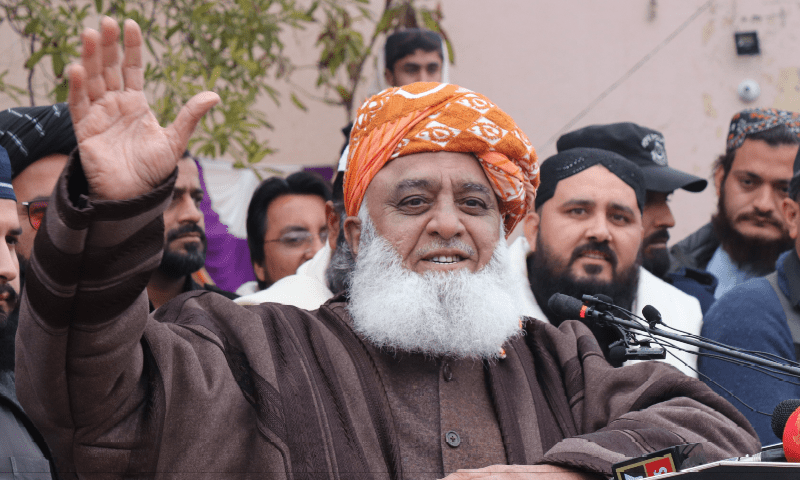
On November 24, 2026, JUI-F alleged that Punjab Police had surrounded the residence where Maulana Fazlur Rehman was staying in Lahore and prevented him from attending a gathering at the Lahore High Court Bar Association. Party representatives described the alleged restrictions as a violation of constitutional freedoms, while the incident quickly became a political controversy on social media. However, competing accounts subsequently emerged clarifying that the police deployment was connected to a property dispute involving Park View Society rather than an attempt to prevent Fazlur Rehman from addressing lawyers. But instead of allowing the circumstances to be investigated, the controversy soon expanded into a broader political confrontation. Fazlur Rehman subsequently made statements emphasising his patriotism, questioning the loyalties of state institutions and warning against what he described as attempts to exploit the country’s resources. He also indicated that his party’s political activities would continue despite the alleged restrictions.
The question is not whether Maulana Fazlur Rehman has the right to criticise the government or state institutions. He does. The concern is how political narratives are presented, whether allegations are substantiated and whether public rhetoric contributes to political mobilisation through institutional confrontation rather than constitutional engagement.
Playing a Victim
Political victimhood has increasingly become a recurring feature of Pakistan’s political discourse. Political leaders often portray administrative decisions, police actions or political disagreements as evidence of deliberate persecution. Such narratives can mobilise supporters, generate sympathy and strengthen a party’s political position. However, when allegations are presented as established facts without sufficient evidence, they risk transforming legitimate political debate into public hostility.
For a religious-political leader with considerable political influence, the responsibility to communicate carefully is particularly important. Political statements can shape how thousands of supporters interpret the actions of police, administration and other state institutions. Allegations that institutions are deliberately targeting political leaders can deepen distrust, particularly when they are amplified through social media without any evidence.
A Recurring Pattern in Pakistan’s Political Discourse
The politics of institutional confrontation is not confined to JUI-F. Pakistan Tehreek-e-Insaf (PTI) has also frequently framed its political disputes through allegations of institutional interference, persecution and restrictions on political freedom. Statements and political mobilisation associated with Khyber Pakhtunkhwa Chief Minister Sohail Afridi and PTI supporters reflect a wider political environment in which disagreements with state authorities are often presented as struggles against institutional oppression.
Political resistance is not inherently unlawful, nor is criticism of state institutions a threat to democracy. However, political mobilisation based on unsubstantiated allegations or inflammatory rhetoric can weaken public trust and contribute to a polarised political environment.
Patriotism, Freedom of Expression and Constitutional Accountability
Maulana Fazlur Rehman, PTI and other political leaders are entitled to question state policies, challenge administrative decisions and demand accountability. Article 19 of Pakistan’s Constitution protects freedom of expression, subject to reasonable restrictions imposed by law. Article 15 protects freedom of movement, while Article 25 guarantees equality before the law.
These protections apply to political leaders and ordinary citizens alike. Yet constitutional freedoms also require responsible public communication. Patriotism cannot be treated as the exclusive possession of a political party or individual, nor should the national loyalty of entire institutions be questioned without any evidence.
State institutions must remain accountable for their conduct, but political leaders must also exercise responsibility when making serious allegations.
Political Accountability Must Replace Victimhood Narratives
Pakistan’s political stability depends on institutions being held accountable without turning every disagreement into a confrontation over national loyalty or political persecution. The politics of victimhood may generate immediate political attention, but it cannot substitute for evidence, legal remedies or constitutional engagement. Political leaders must recognise that their public statements influence how citizens perceive institutions and the state’s constitutional framework.
Democracy requires the freedom to question authority, but it also requires responsibility for the claims made in the public sphere. Political influence should encourage restraint, transparency and accountability.
Maulana Fazlur Rehman and other political leaders have every right to challenge state institutions. However, political narratives must be substantiated, institutional misconduct must be investigated and public rhetoric must not become a substitute for evidence. Pakistan’s political future depends not on competing narratives of victimhood, but on the ability of political actors and state institutions to resolve disputes through constitutional procedures, accountability and respect for the law.