
Inferno’s Reckoning: New Mexico’s Seven Cabins Fire Ignites a Global Alarm
POLICY WIRE — Washington, D.C. — While New Mexico’s Capitan Mountains gasp under a sky choked with smoke, local crews tally incremental wins against the ‘Seven Cabins Fire.’ Forty...

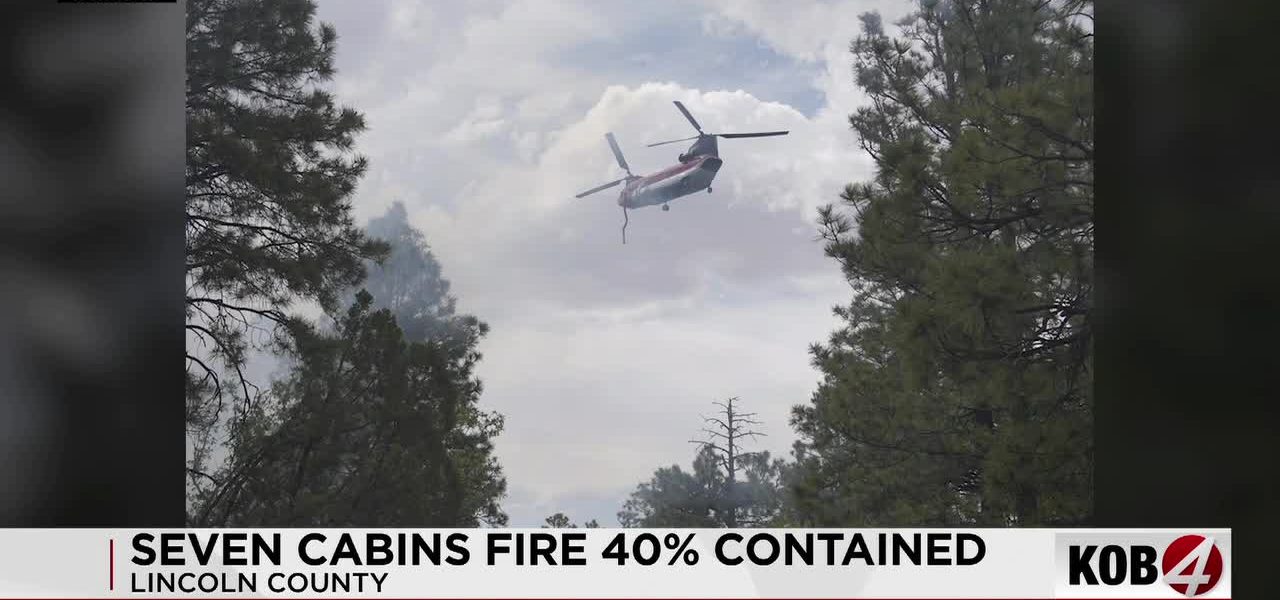
POLICY WIRE — Washington, D.C. — While New Mexico’s Capitan Mountains gasp under a sky choked with smoke, local crews tally incremental wins against the ‘Seven Cabins Fire.’ Forty percent contained, they say. Forty percent feels like a breath of fresh air when a fire’s ripping through more than 26,000 acres—a land mass larger than Manhattan, for heaven’s sake. But scratch just beneath that thin veneer of ‘progress,’ and you’ll find a far more disquieting truth: this isn’t merely a local inferno. It’s another, rather fiery, entry in a growing global dossier of climate-fueled calamities that don’t give a damn about state lines or neat departmental budgets.
It’s a grueling, dirty fight, to be sure. Firefighters, etched with ash — and fatigue, reportedly leveraged successful backfiring operations over the weekend. That’s a gamble, always, but it’s often the only card left when you’re staring down an unholy mix of tinder-dry scrub and unpredictable winds. For the folks between Highway 246 and the ridge top, ‘evacuation’ isn’t just a word on a weather app; it’s their entire world uprooted. Meanwhile, ‘SET’ status — that chilling readiness order — hovers over Fort Lone Tree and the South Base Road area. People are on edge. You can practically taste the anxiety in the air, right alongside the smoke.
“Forty percent’s a number, and we’ll take every single percentage point,” said Chief Roberto Mendez of the Capitan Fire Department, his voice raspy during a press briefing earlier today. “But don’t get it twisted; Mother Nature, she’s got a brutal, unwritten chapter unfolding here. It ain’t just brush anymore; it’s an annual, expanding furnace, and frankly, our old playbooks just don’t quite cut it when you’re fighting these beasts year after year.” His sentiment? You feel it.
And Mendez isn’t wrong. Because across the globe, from the parched hills of California to the sprawling savannas of Australia, we’re seeing this pattern repeat. But it isn’t limited to the expected places, either. In places like Pakistan, for instance, entire communities battle their own extreme weather shifts—whether it’s unprecedented floods wiping out villages or scorching heatwaves making daily life unbearable. These events might seem geographically distant, but the causal threads—and the burgeoning humanitarian crises they unleash—are increasingly interconnected.
Consider the economic toll alone. Wildfires now inflict an average of $22 billion in direct and indirect damages annually across the United States, according to a recent federal interagency report. That’s not just a budget line item; it’s homes lost, businesses shuttered, ecosystems decimated. It’s lives irrevocably changed.
“We can’t just react to these fires as individual calamities any longer,” remarked Senator Evelyn Choi (D-NM) in a candid interview yesterday morning. “Our federal approach needs to be as proactive as the fires themselves are aggressive. That means significant, long-term investments in forestry management, advanced predictive analytics, and—let’s be honest—a serious, sustained national conversation about climate adaptation and mitigation strategies. This isn’t just about firefighting; it’s about survival.” She hit it squarely, didn’t she? This isn’t some abstract concept anymore.
It’s boots on the ground, scorched earth, and a looming question about how many more communities are going to become unwitting bellwethers of a global crisis. Even as weary fire crews claw back territory, the broader ecological forecast remains grim, painting a picture not just of wildfire, but of environmental precarity. That includes regions often overlooked by Western media, places where people are similarly wrestling with increasingly extreme climates. From the droughts hitting communities across North Africa and the Middle East, where ancient agricultural practices fail under new pressures, to the erratic monsoons devastating parts of South Asia, the story’s the same, just told in different tongues, under different skies.
What This Means
The continued escalation of events like the Seven Cabins Fire carries significant, and frankly, disturbing political and economic implications. For one, the perpetual cycle of disaster response drains federal and state budgets, diverting resources from other essential public services like education, infrastructure maintenance, or healthcare. We’re essentially caught in an endless game of whack-a-mole, but with increasingly expensive moles. Because these events demand urgent, ad-hoc solutions, long-term preventative policy—the really hard work—often takes a backseat, or is dismissed as too expensive.
Economically, it’s a slow-motion catastrophe. Property values plummet in fire-prone regions, insurance rates skyrocket (or policies become altogether unavailable), and entire local economies dependent on tourism or forestry face existential threats. There’s also the unquantifiable cost to public health—chronic respiratory illnesses linked to smoke, mental health strain from repeated displacement, and the trauma of loss. This isn’t just about New Mexico, it’s a microcosm. The very ecosystems that underpin regional economies are under attack, forcing tough, unpleasant conversations about whether some areas are simply becoming uninhabitable. And if they’re, who pays for the retreat? It’s a question our leaders don’t seem keen to answer. Or perhaps, they don’t even know how. Just like in other ecologically fragile zones—such as the overstressed, war-torn lands of Gaza—the environmental impacts often deepen humanitarian crises, creating complex feedback loops that policy makers can’t easily break. The ramifications are global. They’re growing. And, frankly, we’re not prepared.