

Indonesian Government Faces Class Action Lawsuit Over Recurring Wildfire Crisis
Indigenous groups and activists sue the Indonesian government for gross negligence as toxic wildfire smoke blankets Southeast Asia. Read the latest updates.

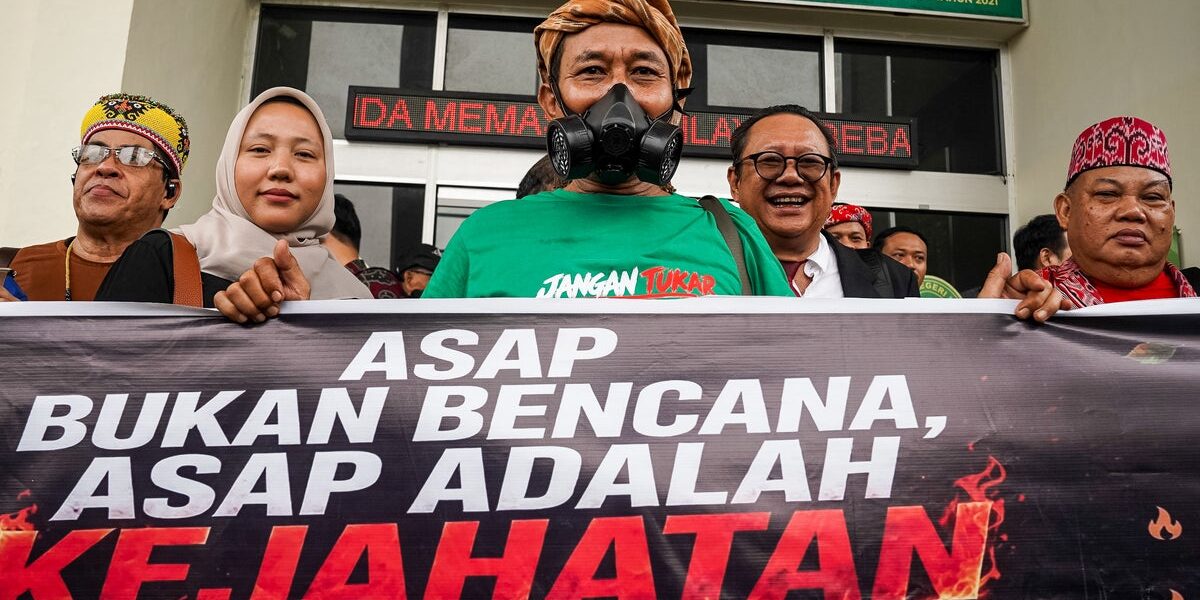
POLICY WIRE — Pontianak, Indonesia — A coalition of civil society organizations and Indigenous groups has launched a class action lawsuit against the Indonesian government, alleging gross negligence in its management of persistent wildfires. The legal challenge seeks to compel authorities to take more decisive action against the blazes, which have sent toxic haze drifting across borders into Malaysia, Singapore, and the Philippines.
The proceedings officially commenced on 7 October at a court in Pontianak, the capital of West Kalimantan province on Borneo. The lawsuit names 10 defendants, including President Prabowo Subianto, the provincial governor, and eight other government officials.
Plaintiffs, which include a local branch of the Indigenous organization AMAN and a Catholic youth group, contend that the government failed to adequately prepare for an annual crisis. They are demanding that the state formally declare the fires a national disaster and implement comprehensive rehabilitation efforts, including medical support for citizens suffering from smoke-related illnesses.
The opening hearing saw no attendance from the defendants, leading the court to postpone the case until 21 October. Glorio Sanen, the lawyer representing the plaintiffs, expressed disappointment at the no-show, though he acknowledged that the severe haze conditions might have hindered travel to the city.
Yakobus Kumis, a plaintiff representing a Dayak ethnic group, criticized the government’s absence, suggesting it sends a message that violating the law is acceptable. Sanen argued that the administration should have been better prepared, particularly given that the El Nino weather phenomenon and subsequent drought conditions were forecasted well in advance.
📄 POLICY WIRE WHITEPAPER PUBLISHED: PAKISTAN’S NATIONAL SECURITY POLICY PRIORITIES
The environmental crisis has triggered widespread health concerns, with the Indonesian health ministry reporting nearly 175,000 cases of respiratory infections between August and September. The smoke has also caused significant disruptions, including school closures and the cancellation of hundreds of flights across the region.
Environmental advocates point to land-clearing practices for oil palm plantations as a primary driver of the fires. While the government maintains that its priority is protecting communities through coordinated ground and aerial operations involving police, military, and disaster-management teams, the plaintiffs insist that legal accountability is essential.
Police data from August indicated that 196 individuals were suspected of starting fires, with investigations opened into 96 companies linked to more than 25,000 hectares of burned land. Authorities have also issued administrative sanctions against 26 corporations, ranging from permit revocations to land restoration orders.
This legal battle follows previous attempts to hold the state responsible for wildfire management. A 2016 lawsuit against the administration of former president Joko Widodo saw an initial victory overturned in 2022, and a separate 2025 case in South Sumatra was dismissed.
Reporting by Policy-Wire (PW)