

Indonesia Boosts Firefighting Efforts as Regional Aid Offers Unaddressed
Indonesia ramps up wildfire response under Prabowo, with regional aid offers not discussed. Firefighters tackle blazes in key provinces.

POLICY WIRE — Jakarta, Indonesia — Indonesian President Prabowo Subianto has intensified efforts to combat ongoing land and forest fires, directing authorities to optimize resource deployment during a recent meeting on October 12.
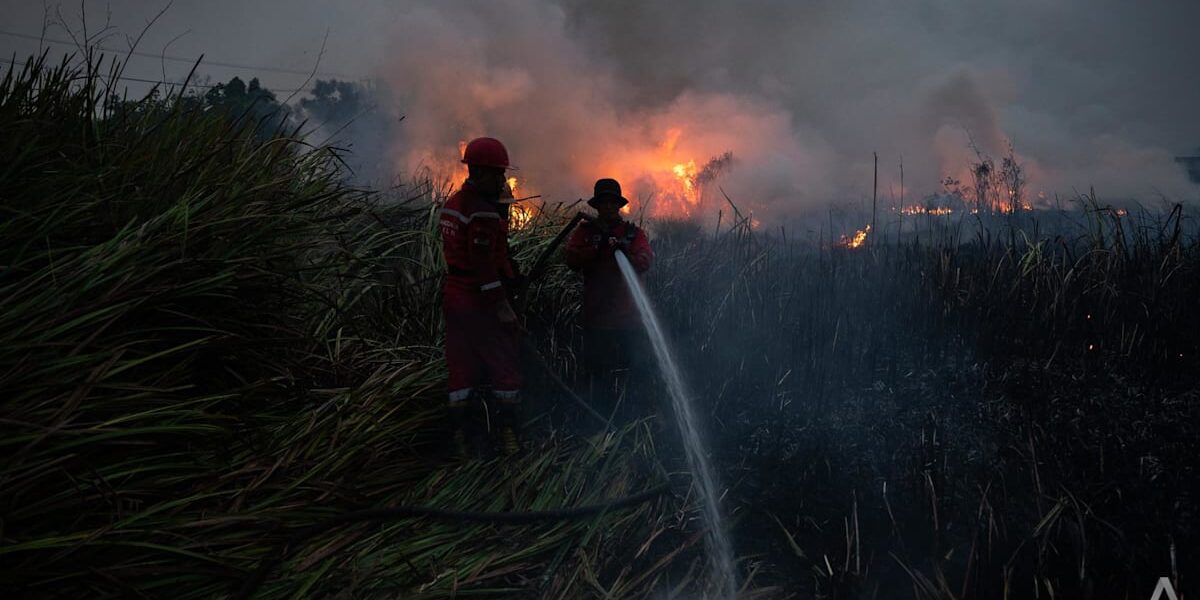
The country is focusing its firefighting operations on Central Kalimantan and South Sumatra, where over 60,000 personnel are engaged in ground operations, including water bombing, according to Cabinet Secretary Teddy Indra Wijaya. Some areas remain inaccessible by helicopter due to thick smoke, making ground-based efforts more critical.
Despite offers of assistance from neighboring countries like Malaysia and Singapore, these were not addressed during the meeting, as reported by Coordinating Political and Security Minister Dudung Abdurachman. Malaysia has previously proposed sending firefighting aircraft, helicopters, and personnel, while Singapore expressed willingness to support Indonesia in combating the haze crisis.
Firefighting teams composed of military, police, and other agencies are working to cover up to 692 hectares per day, with personnel rotation planned to avoid exhaustion. Meanwhile, efforts have prioritized Tanjung Puting National Park, a major orangutan conservation area.
Conditions in four provinces—Riau, West Kalimantan, Jambi, and South Kalimantan—are showing improvement, but the fires have caused widespread health issues, with nearly 175,000 acute respiratory infections recorded in affected regions between August 18 and September 21, including over 40,000 cases among children under five.
Flight disruptions have also been significant, with nearly 1,700 domestic flights affected between August 11 and October 9, including 745 delays and 907 cancellations or postponements, according to the transportation ministry. Safety concerns prompted these measures as visibility fell below operational standards.
Reporting by Policy-Wire (PW)