

India’s War Without Uniforms: Balochistan’s Loyalty to Pakistan Defies India’s Agenda
Separatist violence has resurfaced in the volatile province of Balochistan in recent days, with the Balochistan Liberation Front (BLF) taking credit for fatal strikes against Pakistani security...

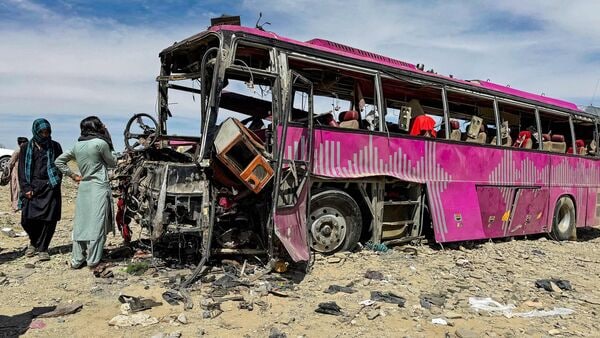
Separatist violence has resurfaced in the volatile province of Balochistan in recent days, with the Balochistan Liberation Front (BLF) taking credit for fatal strikes against Pakistani security personnel. Two troops were martyred and two others were wounded in these attacks, which were conducted in Kolwah and Jhao. Landmines and direct assaults were employed, as the BLF has admitted, which is not only cowardly but also obviously shows that an outside force with advanced financial and planning capabilities was behind the operations. However, this most recent spate of violence is not a unique instance. It is part of a larger trend of separatist agitation and terrorism in Balochistan that is funded by India and aims to undermine Pakistan from within.
Pakistan has continuously expressed worry over the last ten years regarding India’s support and harbouring of Baloch separatist organisations, such as the BLF and the Balochistan Liberation Army (BLA). India, through its intelligence agency RAW, has been funding these groups to incite disorder in Balochistan, according to evidence given at several international forums, including dossiers Pakistan filed to the UN. Concrete evidence was provided in 2016 when Indian spy Kulbhushan Jadhav was apprehended in Balochistan. He publicly acknowledged his backing for separatist insurgents in the southwest region of Pakistan and other subversive operations. In addition to being concerning, these disclosures supported long-held beliefs that New Delhi wants to use Pakistan’s internal strife as a geopolitical tool.
These groups target security forces with their attacks. Three horrifically murdered bodies were found in separate Balochistani districts-Panjgur, Washuk, and Kachhi-each characterised by violence, mystery, and terror in a troubling parallel development. The purpose of these targeted murders is to incite discontent, terrorise the local populace, and undermine faith in government agencies. One man’s body was found with bullet wounds in Panjgur; another was kidnapped from his house and found discarded the next day in Washuk; and a third was located in Kachhi with signs of strangulation and torture. Although the exact motivations are yet unknown, the coordinated nature of these murders strongly suggests that they were carried out with the intention of sowing terror and spreading false information throughout the province.
However, the Balochistani people have consistently rejected separatist narratives in spite of these provocations. People of all ethnicities and religions in Balochistan united in support of the Pakistani military during action Bunyan-un-Marsoos, a defensive action that was initiated by Pakistan in response to unjustified Indian aggression. Baloch voices rose in unity, denouncing India’s aggression and reaffirming their loyalty to the federation of Pakistan, rather than being intimidated by fear or deceived by hostile propaganda. Interestingly, even the province’s Hindu minorities fully supported the military, demonstrating the Pakistani state’s inclusive and defensive stance.
The recent unprecedented appointment of 25-year-old Pakistani Hindu lady Kashish Chaudhary as an Assistant Commissioner in Balochistan served as a potent illustration of this national unity. Kashish, who comes from the isolated district of Chagai, obtained her job after passing the difficult and merit-based Balochistan Public Service Commission exam. Her accomplishment symbolises Pakistan’s dedication to gender equality and minority rights in addition to being a personal triumph. During their meeting, Chief Minister Sarfaraz Bugti hailed her accomplishment as a turning point in Balochistan’s progress towards greater empowerment and inclusivity. This incident contrasts sharply with the prejudiced climate in neighbouring India, where laws motivated by Hindutva continue to subject minorities to systematic violence and bigotry.
Military analysts say that India’s aim to sabotage the China-Pakistan Economic Corridor (CPEC) projects-many of which go through Balochistan-is another factor contributing to the country’s growing enmity. India intends to postpone or thwart infrastructural development that might revolutionise Pakistan’s economic situation by aiding insurgency in the area. Nevertheless, these malevolent designs have not succeeded in spite of several tries. The dream of progress has been sustained by the state’s steadfast response and the tenacity of Baloch citizens.
The spirit of solidarity in Balochistan is becoming stronger despite India’s efforts to create dissension. The nation’s actions, policies, and reforms continue to demonstrate its dedication to both development and counterterrorism. Minorities being appointed to important administrative positions, elected officials denouncing violence, and the populace’s support for the military all demonstrate a society that is resolute in the face of outside pressure. India violates international law and sovereignty principles by supporting separatist organisations like the BLF and BLA. Sadly, the response from the international community has frequently been subdued, despite the mounting evidence.
In conclusion, Pakistan has reacted with maturity, resolution, and unity while India persists in its campaign of inciting discontent and funding terrorists in Balochistan. The goal of extremism and divisiveness has been rejected by the people of Balochistan, especially its minority communities. As an alternative, they have defended the country’s sovereignty alongside the military. The attractiveness of separatist propaganda is steadily declining as a result of the state’s inclusion, representation, and accountability programs. Pakistan is advancing not only with its military might but also with the unwavering ties that bind its people to its institutions. India has failed to comprehend that relationship and will continue to fail to sever it.
Author