

India’s Ugly Face of Oppression Is No Longer a Secret
India boasts itself as the largest democracy of the world. Its leaders boast of unity, peace and tolerance. The soft image is projected to the world in the form of Bollywood movies, speeches by their...

India boasts itself as the largest democracy of the world. Its leaders boast of unity, peace and tolerance. The soft image is projected to the world in the form of Bollywood movies, speeches by their leaders at international forums and slogans of Incredible India. However, there is a darker deadlier picture behind this well-polished picture, the picture of increasing fascism, criticism of religion and state promoted subjugation.
India has gone into sharp changes and was skewed towards intolerance and extremism since the entry of Narendra Modi and the Bharatiya Janata Party (BJP) into government. What was famously enjoyed as diverse and multi-cultural society is fast turning into a nation that appears to admire only one religion, one language and one political thought. The minority groups, particularly Muslims, Christians, Dalits, Sikhs, and recently even Bengalis, are being singled out and discriminated against both in the social and official manner.
Indian-occupied Kashmir is one of the brightest cases of state brutality. Ever since August 5, 2019, when the Article 370 was abrogated, Kashmir has been changed into a military zone. Over 700,000 Indian troops are deployed there and citizens terrorize in fear. Journalists get arrested, internet is closed frequently, peaceful demonstrations are mercilessly suppressed. Rather than solving the Kashmir problem, India has escalated the problem because it has turned the state into an open-air prison.
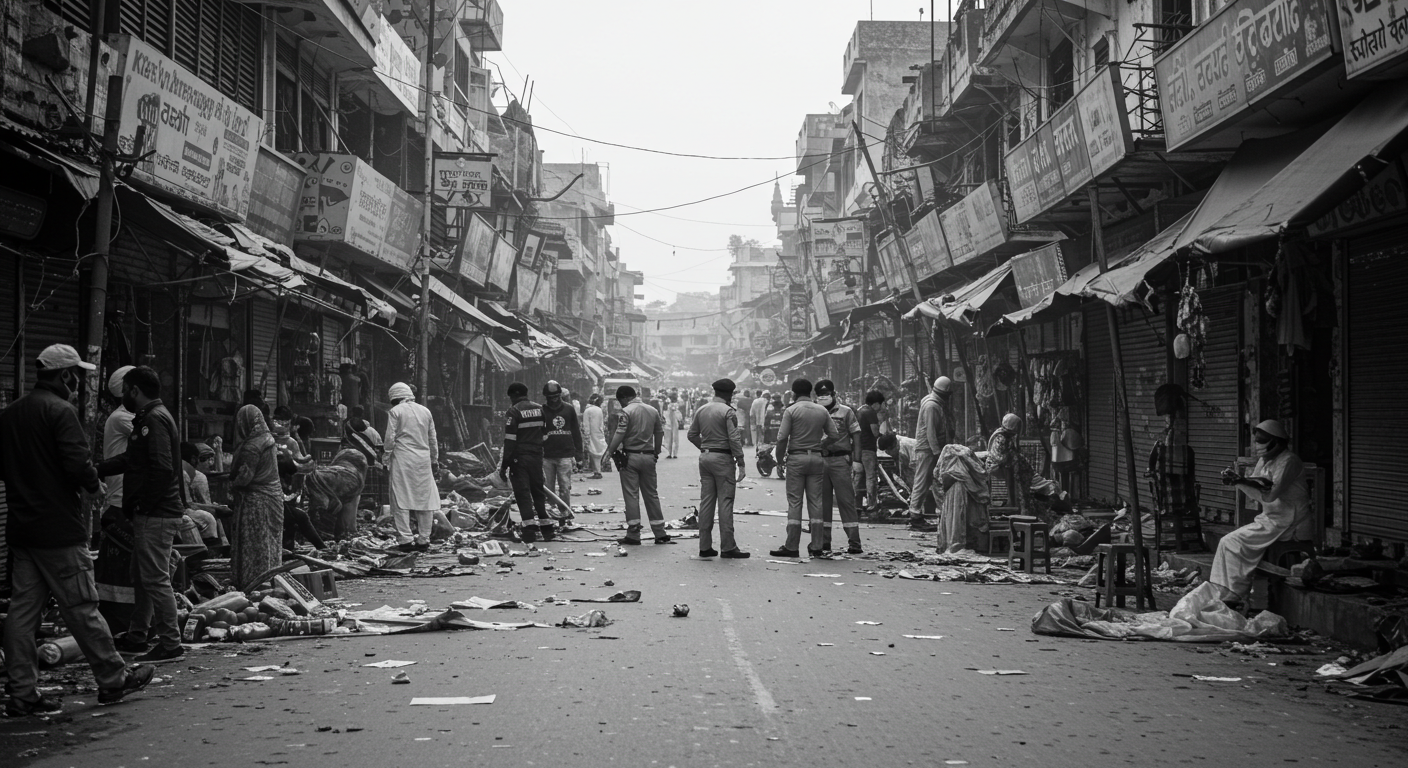
But it is not only Kashmir that is hurting. In India, Muslim community is undergoing discrimination on a daily basis. The lynchings carried out on the basis of eating beef, torching of houses and mosques subject Muslims to the status of foreigners in their own nation. CAA and the NRC have contributed to this fear. All these laws are framed in the manner, they grant the citizenship to all the communities except the Muslims. It is obvious that the ideas of the BJP are aimed at transforming Muslims into second-class citizens.
The most recent trend of hate that has been observed is the attack on Bengali-speaking individuals. The Bengali migrants are harassed, arrested, and branded as illegal foreigners in the states of Maharashtra, Chhattisgarh, and Delhi, etc. Most of them are arrested without being under proper legal procedure. Even the people who have been staying in India since decades and have adapted to Indian culture and way of life is now being challenged about their identity just because they speak Bengali.
Mamata Banerjee, the Chief Minister of West Bengal, has taken a fierce stand over this injustice. She blamed the BJP government of declaring a war against Bengali culture and language. She threatened that unless the arrests on Bengali-speaking people are halted she will put the resistance movement in New Delhi. She even said that since July 27, a protest campaign is going to be launched against this linguistic terrorism. It does not stop being merely political, it has demonstrates a means of growing frustration and powerlessness amongst the Indian people who believe at this point that they are being abandoned by the state.
The issue does not only focus in one or two states or policies. It is a large scale assault on the federal form of India, its constitution and its pledge of equality. BJP wants to make all people accept one kind of Indian identity: Hindu, Hindi -speaking and Modi worshippers. The person who d thinks otherwise is termed as anti-national or urban Naxal or a terrorist.
Concurrently, the media in India has miserably been failing to play the fourth pillar of democracy. Majority of the television stations are mouth pieces of the government. They are violent to the minorities, justify state violence and propagate against the sovereign countries. Fair-minded reporters get thrown in jail or leave the nations. Tax authorities raid independent media houses and freedom of the press is declining by the day.
The foreign policy of India is also not better. Rather than being a peace promoting country in South Asia, India is continuously meddling with internal affairs of its neighbors. An example is that of Kulbhushan Jadhav, a serving officer of the Indian Navy who was arrested in Pakistan spying and plotting terrorist attacks in Pakistan, this indicates that India has been engaged in a series of clandestine activities to stir unrest in the region. Even in Balochistan, there is indication that India had financed secessionists to cause lawlessness. It makes an attempt, however, to represent itself as victim at the international arena.
📄 POLICY WIRE WHITEPAPER PUBLISHED: PAKISTAN'S NATIONAL SECURITY POLICY PRIORITIES
👉 READ BY CLICKING HEREInternational human rights organizations have repeatedly called out India for its oppressive actions. Human Rights Watch, Amnesty International, and even the United Nations have released reports highlighting the increasing violence, religious intolerance, and suppression of free speech under Modi’s government. But instead of correcting its course, India accuses these organizations of bias and stops their funding.
India cannot keep fooling the world forever. Its actions are now becoming too obvious to hide. The burning of churches, demolishing of Muslim homes, banning of documentaries, blocking of news websites, and arresting of peaceful protesters are not signs of a democracy. These are the actions of a state that is afraid of truth and obsessed with control.
If India continues on this path, it will not only damage its own society but will also create long-term instability in the region. A country that divides its people based on religion and language cannot survive as a united nation for long. The seeds of hate that are being planted today will grow into a tree of destruction tomorrow. Even within India, voices of resistance are growing louder, from farmers to students to regional leaders like Mamata Banerjee. The more the state pushes people, the more united they will become in their fight for justice.
The world must stop seeing India only through the lens of Bollywood and economic markets. The reality on the ground is very different. A country that kills its own democracy from within should not be treated as a role model. The international community, human rights bodies, and global media must speak out before it is too late.
India today stands at a crossroads. It can either return to the values of secularism, diversity, and true democracy or it can continue walking the dangerous path of majoritarianism and hate. The choice lies with the Indian leadership, but the consequences will affect the whole region.
Author