

India’s S-400 Losses Signal New Era of Drone Warfare
India under Prime Minister Narendra Modi is entering a dangerously aggressive phase, prioritizing military expansion over public welfare, with alarming implications for South Asia. Instead of...

India under Prime Minister Narendra Modi is entering a dangerously aggressive phase, prioritizing military expansion over public welfare, with alarming implications for South Asia. Instead of addressing the needs of ordinary citizens, India is channeling massive financial resources into advanced weapons systems and high-tech exercises to satisfy Modi’s ideological Hindutva ambitions. Recent developments, ranging from the loss of S-400 air defense systems during the failed Operation Sindoor to the rapid expansion of drones, missiles, and Tejas jets, highlight a relentless militarization trend that threatens to destabilize the entire region.
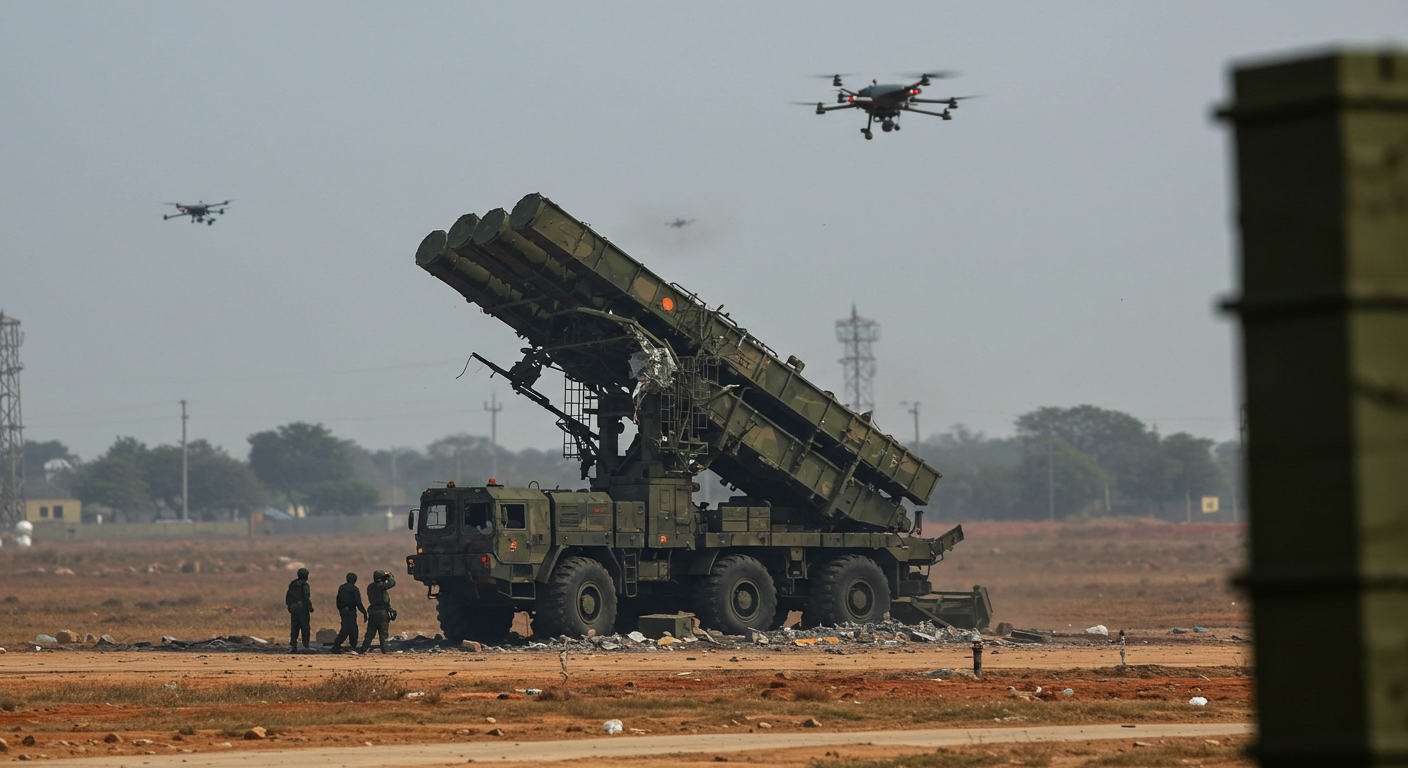
India unveiled its largest-ever drone exercise, ‘Cold Start,’ scheduled for next month, specifically aimed at testing cutting-edge drone and counter-drone capabilities. The exercise, modeled on the May 2025 war with Pakistan, reflects India’s growing reliance on drone warfare. The seriousness of India’s vulnerabilities became apparent when an Air Marshal publicly admitted: “We have already lost two S-400 systems because of them.” This rare acknowledgment starkly exposes cracks in India’s supposedly invincible defense systems and highlights the anxiety behind India’s aggressive military posturing.
Parallel to this, India is aggressively modernizing its air capabilities. The country inked a $7.03 billion deal with Hindustan Aeronautics Ltd (HAL) to acquire 97 Tejas Mk-1A fighter jets, supplementing the 83 jets ordered in 2021, delayed due to General Electric engine supply issues. With a total Tejas fleet of 220 jets, India seeks to phase out its aging MiG-21s. At the same time, missile testing continues unabated: The Agni-Prime intermediate-range ballistic missile was recently test-fired from a rail-mobile launcher, capable of striking nearly all of Pakistan’s territory. These moves, framed as enhancing “second-strike” capability, reveal an ideology-driven military assertiveness rather than a genuine defensive strategy.
The failures of Operation Sindoor further expose the recklessness of India’s military approach. Instead of learning from setbacks, India escalates militarization by investing in drones, missiles, and large-scale air exercises. Cold Start, for instance, tests rapid deployment and precision strikes but also exposes India’s insecurity regarding Pakistan’s drone advancements. These actions indicate an obsession with showing power over securing practical defense or engaging in dialogue.
India’s focus on military dignity comes at the expense of the general population. Billions of rupees are diverted from health, education, and social welfare into exercises, missiles, and fighter jets. The Tejas program, drone deployments, and Agni-Prime tests illustrate a government intent on satisfying ideological ambitions rather than addressing pressing public needs. Even internal critiques and international analysts note that this militarization primarily serves Modi’s Hindutva narrative rather than national security.
The consequences of this aggressive posture are severe. South Asia faces a new type of conflict, fast, precise, and technologically advanced; where drones, missiles, and rapid strikes can escalate tensions with little warning. India’s militarization risks triggering an arms race, forcing Pakistan and other neighbors to strengthen defenses, which only amplifies regional instability.
Pakistan’s defensive measures, including its own drone capabilities, are largely reactive, aimed at safeguarding sovereignty against an increasingly belligerent neighbor. In contrast, India’s militarization prioritizes ideological dominance and regional intimidation, deepening mistrust and undermining peaceful coexistence.
📄 POLICY WIRE WHITEPAPER PUBLISHED: PAKISTAN'S NATIONAL SECURITY POLICY PRIORITIES
👉 READ BY CLICKING HEREModi’s Hindutva-driven military focus reflects a policy of aggressive nationalism that elevates weapons over welfare. From S-400 air defense systems to Tejas jets, from Agni-Prime missiles to Cold Start drone exercises, India is investing heavily in military showmanship while ignoring the general public’s needs. Such strategies amplify risks rather than enhance security, turning South Asia into a potential hotspot for technologically advanced warfare.
The international community must take note: South Asia’s stability is imperiled by India’s militarization obsession. Peace, trust, and cooperation must take precedence over ideology-driven arms buildup. India’s aggressive policies endanger millions of civilians, compromise regional security, and undermine long-term prosperity. Unless India recalibrates its priorities, choosing dialogue over aggression, the region faces a precarious future defined by drones, missiles, and unchecked militarization.
Author