


India’s Indo-Pacific Ambitions Are Deepening Asia’s Security Dilemma
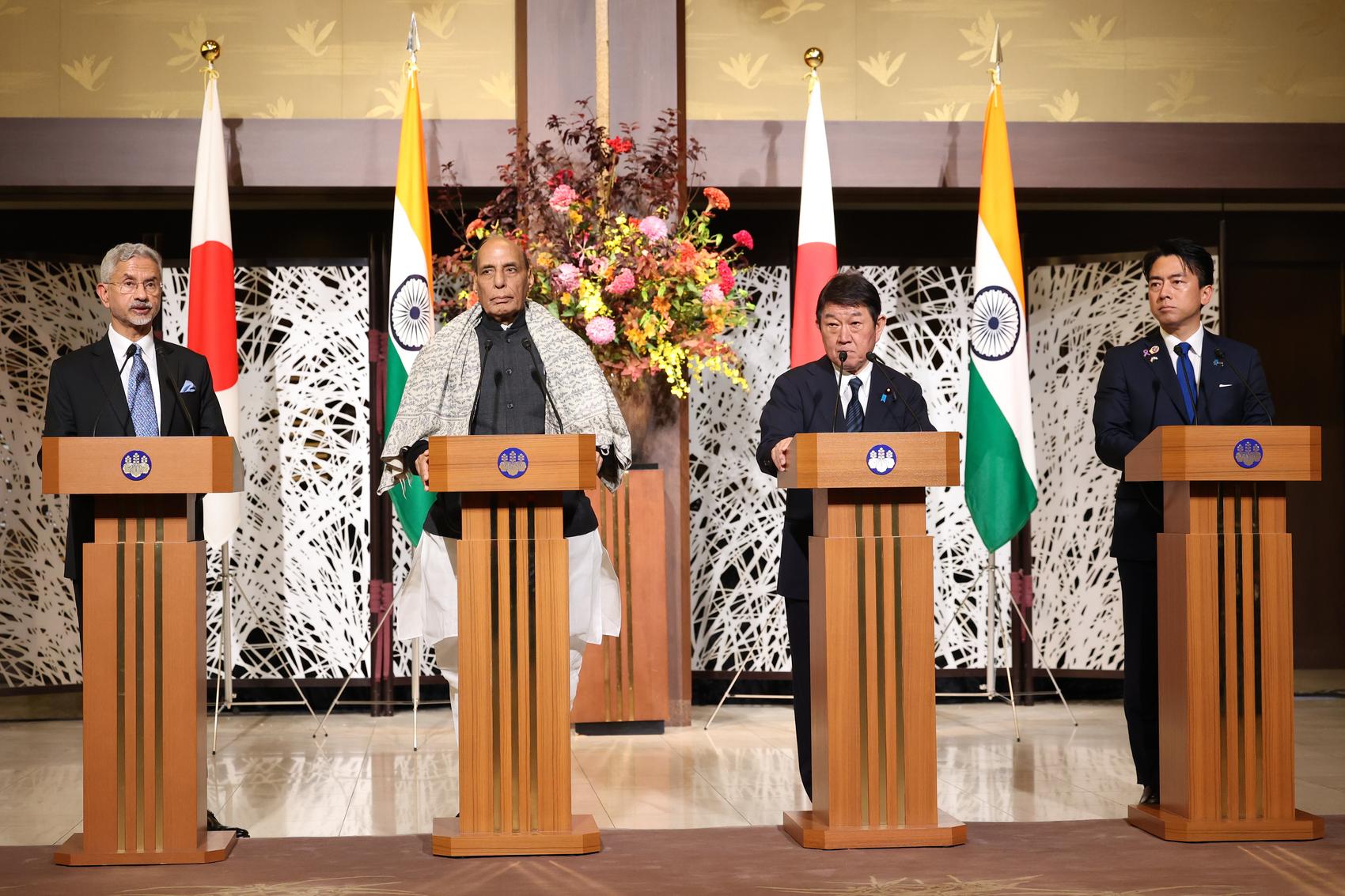
On November 19, India and Japan signed a Letter of Intent granting Japanese forces access to Indian military ranges. This expanding defense integration undermines India's claim of strategic autonomy...

Asia is entering a period of growing military competition. Countries are expanding their defence capabilities, forming new partnerships and seeking greater influence over important sea routes. While these developments are often presented as efforts to protect national security, they are also changing how other states view their own security. Military cooperation between two countries may appear defensive to them, but it can create concern among others. This is how regional competition grows, even when no country openly declares an intention to start a conflict.
India’s growing defence partnership with Japan is a recent example of this trend. The two countries are expanding military cooperation at a time when tensions over China’s rise, Taiwan and the Indo-Pacific continue to shape regional politics. Their latest agreement on the use of Indian firing ranges by Japanese forces is not simply a technical arrangement. It reflects a wider shift in India’s regional role and raises important questions about the direction of Asian security.
India Is Expanding Its Strategic Role
On November 19, India and Japan signed a Letter of Intent allowing Japan’s Self-Defense Forces to use Indian firing ranges for live-fire training, including exercises involving surface-to-ship missiles. The arrangement is expected to be implemented through further coordination between their defence authorities. Both countries are also expanding cooperation in maritime security, naval shipbuilding, defence technology and military exercises.
This development reflects India’s growing willingness to support the military needs of its strategic partners beyond conventional arms purchases and joint exercises. By offering its defence infrastructure for Japanese military training, India is adding a new dimension to its regional role. It is not only participating in the arms race alone, but also dragging allies along.
This strengthens the military relationship between New Delhi and Tokyo. It also creates closer links between their defence institutions. Over time, these links might increase familiarity with each other’s military systems and might make future peace impossible.
Japan’s Military Shift and China’s Concerns
Japan’s growing military capabilities are part of a wider change in its defence policy. Faced with concerns over China, North Korea and regional security, Tokyo is investing in long-range missiles and expanding its ability to strike targets from a distance.
For China, these developments carry particular weight. Japan’s military expansion cannot be viewed separately from the region’s history or from the current tensions in East Asia. Beijing remains sensitive to Japan’s growing military role because of the history of Japanese aggression in the region. The development of long-range strike capabilities and wider military cooperation can raise concerns about the future balance of power.
China also views the growing security cooperation among Japan, India, the United States and Australia with suspicion. Although these countries do not form a formal military alliance against China, their strategic interests increasingly overlap in areas such as maritime security, military exercises and regional influence. From Beijing’s perspective, these partnerships could gradually create an unsafe security environment that limits China’s room to manoeuvre.
The use of Indian firing ranges by Japanese forces adds another layer to this concern. Japan gains access to military training space that is difficult to secure within its own territory, while India becomes a more important defence partner in the region. This may serve the interests of both countries, but it also adds to China’s concerns about the growing military network and arms race around it.
The Contradiction in India’s Strategic Autonomy
India often presents itself as an independent power that follows its own interests rather than joining a particular geopolitical bloc. Yet its growing defence cooperation with Japan, the United States and Australia shows that India’s interests are moving closer to those of countries seeking to balance China’s influence.
This showcases that India has abandoned strategic autonomy and become part of a formal anti-China alliance. Moreover, this leads to a country contributing to wider military arrangements that carry consequences for others. India may describe its defence partnerships as necessary for its own security, but it is clearly to contain chinese influence.
A Security Dilemma, Not a Path to Stability
The problem with growing military competition is that it creates a security dilemma. One country strengthens its military because it feels threatened. Another sees that expansion as a threat and responds by increasing its own capabilities. Both may claim to be acting defensively, yet the result is greater insecurity for everyone.
India and Japan may view their defence cooperation as a way to protect their interests. China, however, may see the same as a growing challenge to its security. If Beijing responds by strengthening its own military capabilities, India and Japan may interpret that response as further evidence to increase the arms race. This cycle makes trust harder to build and raises the risk of miscalculation.
Asia does not need another cycle of military competition. The region already faces unresolved disputes, economic pressures and risks of escalation. More military infrastructure, wider missile capabilities and deeper defence partnerships may increase deterrence for some states, but they can also make others feel increasingly insecure. Stability cannot be measured only by how strong a country’s military becomes. It also depends on whether neighbouring states feel safe enough to avoid confrontation.
Pakistan and the Need for a Balanced Regional Order
For Pakistan, India’s expanding defence partnerships deserve careful attention. Islamabad has a legitimate interest in maintaining regional balance, particularly as India’s military cooperation extends beyond its borders and takes part in arms race. The implications are not limited to the immediate India-Pakistan rivalry. The growing military presence across the Indo-Pacific could also affect the wider Indian Ocean security environment.
Pakistan and China share an interest in a regional order that does not allow military power to become concentrated in one country or group of states. Their strategic partnership is rooted in shared interests, but it also reflects the importance both countries attach to regional balance. As military partnerships expand around China, the need for dialogue, restraint and credible deterrence becomes even more important.
Pakistan should respond to this growing development through strategic planning, defence preparedness and diplomacy. It must assess the changing military environment, protect its maritime interests and strengthen partnerships that serve its long-term security. At the same time, it should support efforts to prevent Asia from becoming divided into rival military camps.
India’s defence cooperation with Japan may be presented as a step toward a free and open Indo-Pacific. Yet a regional order cannot be stable if one country’s security gains deepen the insecurity of others. Asia needs cooperation that includes all major stakeholders, not arrangements that lead to strategic suspicion. Military partnerships may strengthen individual countries, but lasting security will require restraint, dialogue and a balance of interests. Without these, the pursuit of security by India may become a source of insecurity for the entire region.