

India’s Hypocrisy: Democracy in Name, Censorship in Practice
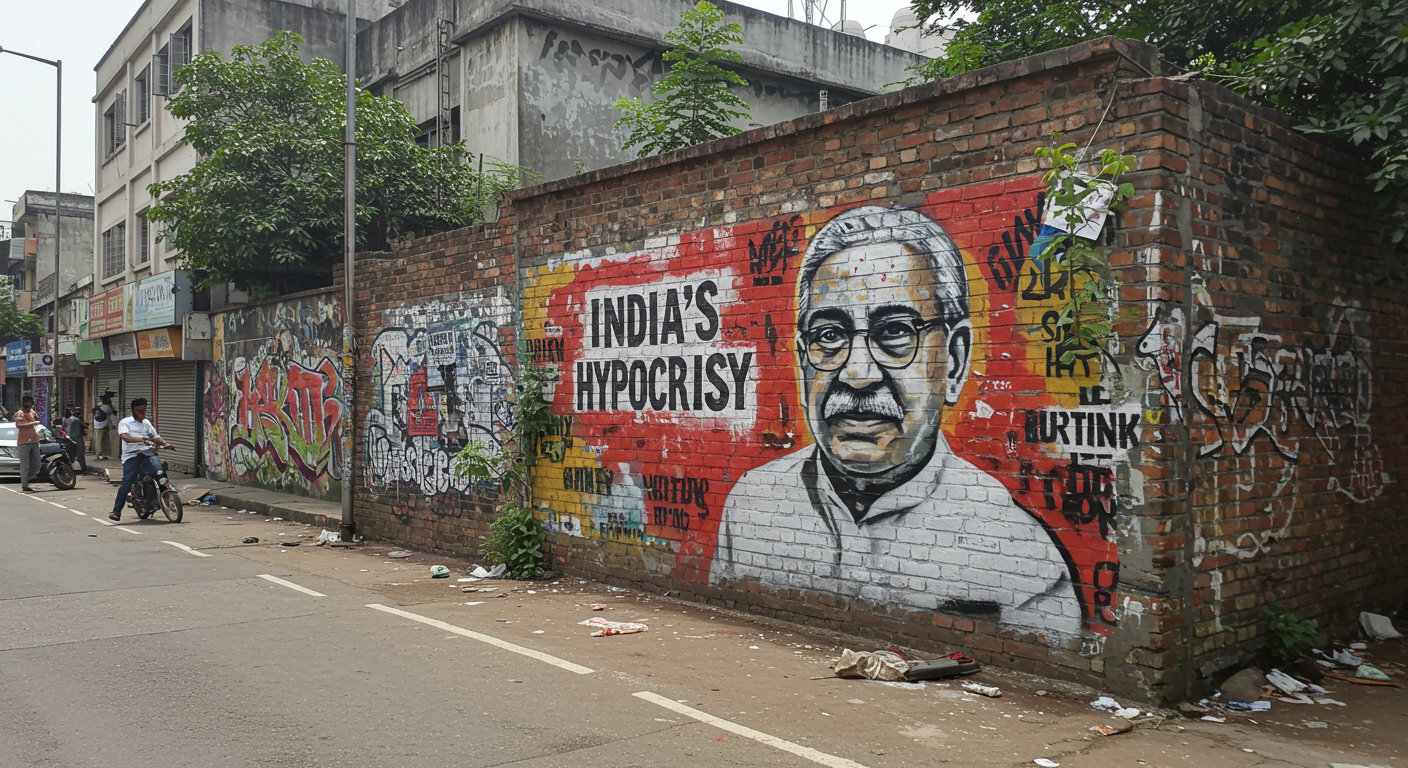
India often calls itself the “world’s largest democracy.” It uses this slogan in speeches at the United Nations, in foreign policy branding, and in its propaganda against Pakistan. But when one looks...
India often calls itself the “world’s largest democracy.” It uses this slogan in speeches at the United Nations, in foreign policy branding, and in its propaganda against Pakistan. But when one looks closely at India’s domestic record, a very different picture emerges. Behind the façade of democracy lies a system of censorship, surveillance, and repression that mirrors the practices of the very authoritarian states India pretends to criticize.
India’s track record on freedom of expression has been deteriorating for years. According to Reporters Without Borders, India ranked 161st out of 180 countries in the 2025 World Press Freedom Index. This decline is part of a longer downward trend: from 80th place in 2002 to 138th in 2018, 161st in 2023, and 151st this year. Such a trajectory is hardly what one expects from a state that lectures others about human rights. Reporters Without Borders now classifies the situation in India as “very serious.” The ranking reflects both increasing government interference in media ownership and widespread intimidation of journalists.
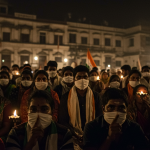
The atmosphere for journalists is deeply hostile. A Guardian investigation in May 2025 revealed how reporters in Modi’s India face bulldozer threats against their homes, surveillance by intelligence services, and arbitrary arrests under anti-terror laws. Laws like the Unlawful Activities (Prevention) Act have been misused against at least 15 journalists, while dozens more have been detained or harassed. A striking example is Kashmiri journalist Asif Sultan, who was arrested in 2018 and kept behind bars for years under terrorism-related charges, despite being granted bail. Each time he was released, authorities found new ways to re-arrest him. These stories are not the exception; they are becoming the norm. The message is clear: reporting against Hindutva or questioning government policy can cost a journalist their freedom.
Media outlets are also directly targeted. Independent platforms like The Wire have faced government-ordered bans after publishing investigative stories on corruption and defense deals. Many social media accounts of journalists and opposition activists are routinely suspended on the government’s request. In May 2025 alone, India ordered the blocking of over 8,000 X (formerly Twitter) accounts, including news outlets and commentators critical of Modi. This was part of a broader campaign of digital censorship, where social media is policed more harshly than in many states India criticizes as “authoritarian.”
Nowhere is India’s repression more visible than in Kashmir. Internet blackouts have become a tool of collective punishment. According to Access Now, between 2016 and 2023, India imposed 771 internet shutdowns, more than any other country in the world combined. In 2023 alone, the internet was cut off 84 times, most of them in Jammu and Kashmir. Such shutdowns disrupt schools, hospitals, businesses, and family communication. They silence communities not by debate, but by disconnection. Reports estimate that between 2012 and 2017, internet shutdowns cost India over $3 billion in economic losses. Yet the Indian state continues to justify them as “anti-terror measures,” ignoring the fact that they silence millions of ordinary citizens.
The double standards are glaring. India routinely criticizes Pakistan for restricting media or monitoring online spaces, but it is New Delhi that leads the world in internet shutdowns. It is India that has misused spyware like Pegasus to hack the phones of journalists, opposition leaders, and activists. Far from being a champion of democracy, India has become a case study in how democracies can hollow out from within. There is also the question of lawfare, the weaponization of state institutions to crush political opposition. Agencies like the Enforcement Directorate (ED) and Central Bureau of Investigation (CBI) are routinely deployed against opposition leaders. Politicians critical of Modi’s ruling BJP often find themselves suddenly facing tax raids or corruption investigations. This pattern of selective targeting demonstrates how state machinery is used not to uphold accountability, but to weaken multiparty competition. In contrast, Pakistan, despite its own struggles, still sustains a multiparty system where opposition voices remain a force in parliament and media.
The wider international community has often turned a blind eye. Western governments, usually quick to condemn surveillance or repression in other parts of the world, remain largely silent on India. Strategic and economic interests overshadow democratic values. Yet the consequences of ignoring India’s slide are serious. A country of over 1.4 billion people drifting toward surveillance authoritarianism is not just a domestic concern; it undermines regional stability and global democratic norms.
India today stands at a crossroads. It can either live up to the ideals it proclaims, protecting media independence and pluralism, or it can continue down the path of repression, where dissent is punished, and democracy is reduced to an empty ritual of elections. The evidence suggests that under Modi’s leadership, India is choosing the latter. What is happening is not simply a domestic issue but a warning sign for the world: democracy can erode from within, not with a sudden coup, but with steady restrictions justified in the name of security or nationalism.
India’s biggest challenge is not Pakistan, nor China, nor any foreign adversary. Its greatest threat comes from within, from policies that destroy the very freedoms that make democracy meaningful. If press freedom and digital rights continue to shrink, India will no longer be the world’s largest democracy. It will be the world’s largest surveillance state, dressed in democratic clothing.
Author