

India’s Double Standards: Cricket with Pakistan Allowed, Sikh Pilgrims Barred
In November 2025, the Indian government once again shut the door on its Sikh community. A jatha of pilgrims was barred from traveling to Pakistan to mark the birth anniversary of Guru Nanak Dev Ji,...
In November 2025, the Indian government once again shut the door on its Sikh community. A jatha of pilgrims was barred from traveling to Pakistan to mark the birth anniversary of Guru Nanak Dev Ji, the founder of Sikhism. For millions of Sikhs across the globe, this anniversary is one of the most sacred occasions of the year, a chance to walk in the footsteps of their Guru, to bow their heads at Nankana Sahib, and to reconnect with centuries of spiritual heritage. Instead, politics prevailed, and faith was silenced.
The decision has been sharply criticized by Sikh organizations such as the Shiromani Gurdwara Parbandhak Committee (SGPC), Shiromani Akali Dal (SAD), and even Punjab-based Congress leaders, who accuse New Delhi of deliberately hurting religious sentiments. For them, this is not just a visa issue, it is a reminder of how little India values the spiritual freedom of its minorities.
But to truly understand the gravity of this injustice, one must look at the pattern. This is not the first time India has denied Sikhs their right to worship across the border. In May 2025, India abruptly suspended the Kartarpur Corridor following “Operation Sindoor.” The move forced around 150 Sikh pilgrims, who had gathered at the border ready to cross into Pakistan, to turn back home. “We had prepared for months, we had done ardaas for this journey, and then we were told to go back. Our hearts broke at the gate,” said one elderly pilgrim quoted in Hindustan Times. The humiliation of standing at the gates of Kartarpur, within sight of the sacred shrine but unable to enter, is something no community should have to endure.
Just a month later, in June 2025, Indian Sikhs were again blocked from attending the martyrdom anniversary of Guru Arjan Dev Ji at Gurdwara Dera Sahib in Lahore. Despite Pakistan issuing visas and making all arrangements, New Delhi refused permission. The SGPC condemned the decision, calling it “a betrayal of Sikh sentiments.” The same month, the SGPC announced it would not be able to send pilgrims for the death anniversary of Maharaja Ranjit Singh, again due to Indian restrictions. Each ban chips away at the community’s sense of belonging, as if their faith is expendable collateral in a political feud between two states.
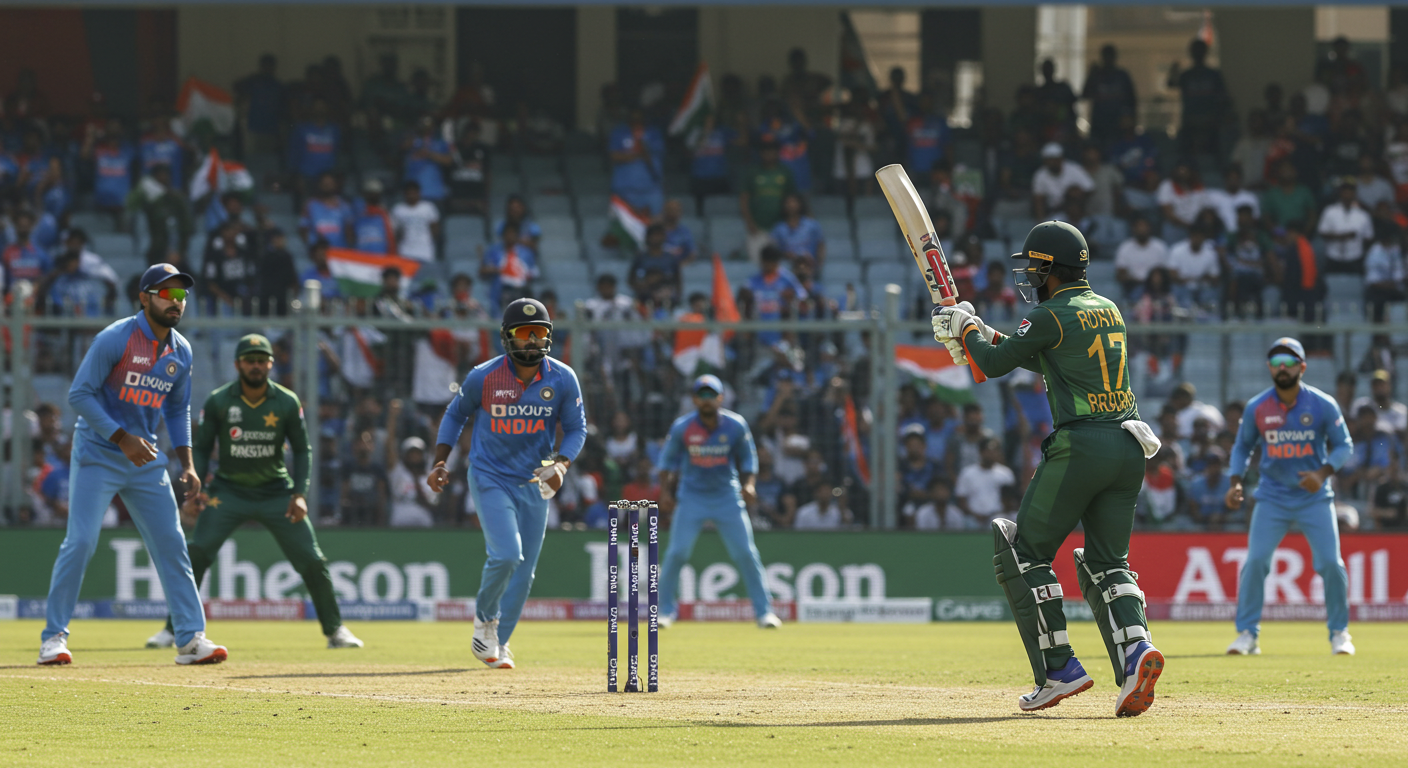
Now contrast this with India’s stance on cricket. Just last year, during the ICC T20 World Cup 2024 in Dubai, India faced Pakistan in one of the most highly watched sporting events in history. Over 400 million viewers worldwide tuned in, generating massive revenue for broadcasters and sponsors. The Board of Control for Cricket in India (BCCI) has become the richest cricket body in the world, posting a record revenue of ₹9,741.7 crore (USD $1.2 billion) in 2023–24. Of this, the Indian Premier League (IPL) alone contributed nearly ₹5,761 crore, more than half of the total.
The money from India–Pakistan matches is staggering. For the Asia Cup 2025, played in Dubai, a 10-second TV advertisement during the India-Pakistan clash cost between ₹14–16 lakh, an astronomical figure in South Asian broadcasting. Streaming rights too fetched huge sums: SonyLIV reportedly paid around USD $170 million for tournament rights. These matches are so lucrative that the International Cricket Council (ICC) allocates 38.5% of its total revenue to India, meaning the BCCI alone earns roughly USD $230 million annually just from ICC distributions and the viewership numbers speak for themselves. The IPL 2025 final was watched by 169 million people in India, surpassing even earlier India–Pakistan match records. For advertisers and sponsors, an India–Pakistan game is a goldmine. For India, it is both financial power and global prestige on display.
This is where the hypocrisy lies. For the sake of sports diplomacy and international revenue, India willingly sets aside its rhetoric of “no engagement with Pakistan.” But when it comes to religious diplomacy, when it comes to Sikhs bowing their heads at their holy shrines, suddenly national security becomes the excuse. The truth is cruelly clear: cricket, with its money and glamour, matters; Sikh faith, with its history and pain, does not.
The emotional impact on the Sikh community is profound. For many families in Punjab, these pilgrimages are not just religious obligations but moments of intergenerational bonding. Grandparents dream of showing their grandchildren the birthplace of Guru Nanak, of telling stories at the very gurdwaras where history unfolded. To be denied this repeatedly feels like an assault on identity itself. “They let our cricketers play with Pakistan, but they won’t let us pray there. Is cricket more sacred than Guru Nanak?” asked one young Sikh activist in Amritsar during a protest.
The SGPC has repeatedly appealed to New Delhi to reconsider, reminding the government that Sikh shrines in Pakistan are part of a shared heritage that predates both countries. Yet the government continues to use Sikh pilgrimage as a bargaining chip. Blocking access is framed under the pretext of “security concerns,” but the community sees it as a pattern of neglect rooted in the Hindutva ideology that dominates Indian politics today. Under this worldview, religious majoritarianism takes priority, while minorities are expected to either assimilate quietly or accept being sidelined.
📄 POLICY WIRE WHITEPAPER PUBLISHED: PAKISTAN'S NATIONAL SECURITY POLICY PRIORITIES
👉 READ BY CLICKING HEREInternational observers have also begun to take notice. Human rights groups argue that India is violating Article 18 of the Universal Declaration of Human Rights, which guarantees the right to manifest religion in worship, practice, and observance. Pakistan, on the other hand, has repeatedly said its doors remain open. Its foreign office has highlighted that despite tensions, it has always facilitated Sikh pilgrims, issuing thousands of visas annually for events like Guru Nanak’s birth anniversary and Baisakhi. The contrast could not be sharper: one state closing doors, the other opening them.
The politics behind this duality is rooted in profit and prestige. Cricket diplomacy boosts India’s global image, strengthens its hand in international sports forums, and fills the coffers of its cricketing establishment. Sikh pilgrimage, by contrast, brings no such financial or political gain. Instead, it is seen as a vulnerability, a reminder of Punjab’s unique identity and of Sikh history that transcends the Indian state. In this calculus, the rights of a minority community are simply sacrificed.
For Sikhs, the injustice is not abstract. It is personal. It is the tears of the old man turned away at Kartarpur in May. It is the pain of families who could not commemorate Guru Arjan Dev Ji in Lahore. It is the disappointment of children who may never see Nankana Sahib. Each denied pilgrimage deepens the feeling that Sikhs are second-class citizens in their own country.
The hypocrisy is glaring, and the questions remain unanswered. If India can allow its cricket team to play Pakistan before millions, why can’t it allow Sikhs to pray before their Guru in Pakistan? If ties are cut, why make exceptions only for sports? And if cricket can transcend politics, why can’t faith?
Until New Delhi answers these questions, the sense of betrayal among Sikhs will continue to grow. For them, this is not just a policy failure, it is a moral failure of a state that claims to be secular and democratic. Every locked gate, every cancelled pilgrimage, is not only an attack on Sikh faith but also a mirror reflecting India’s political hypocrisy. And the wound it leaves on the Sikh psyche is one that may take generations to heal.
Author