


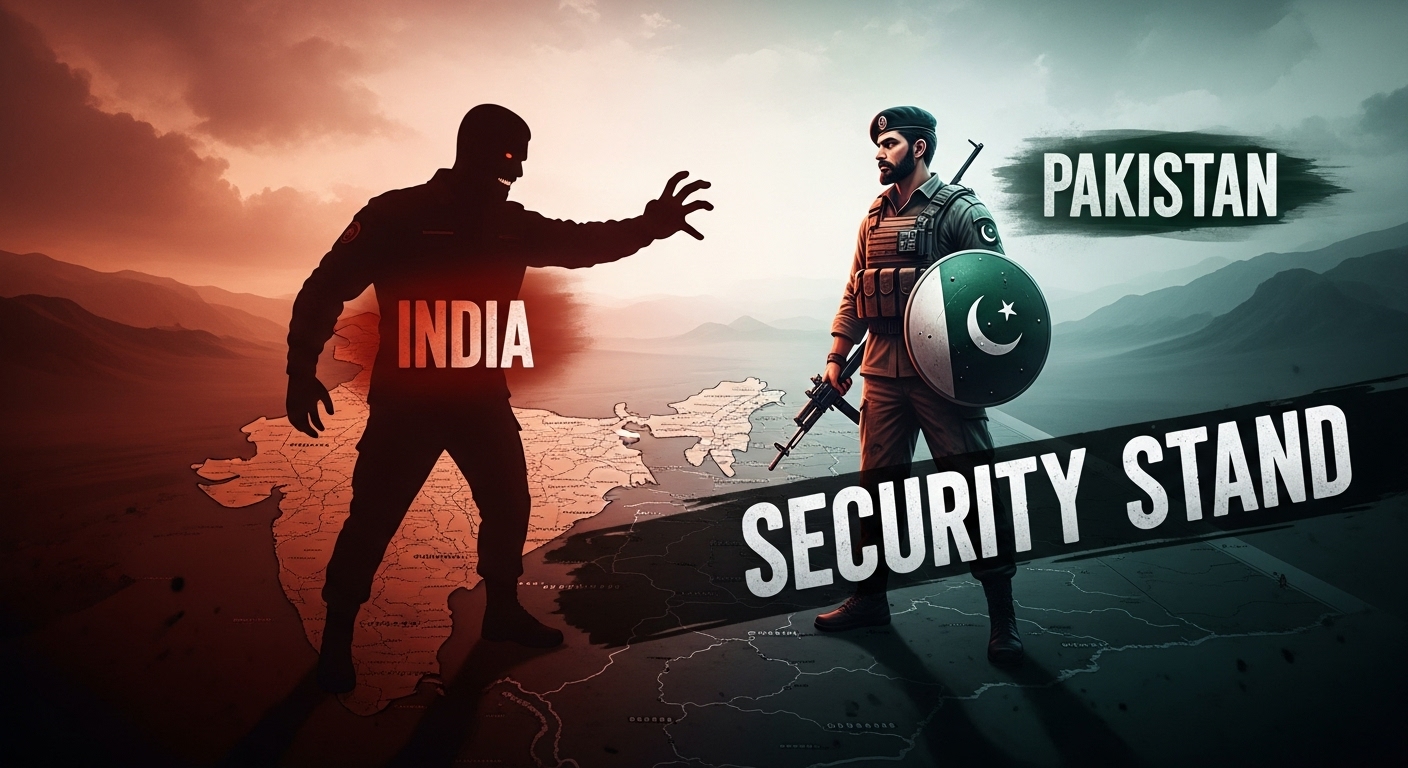
India’s Continued Aggression and Pakistan’s Unyielding Security Stand
In the face of persistent regional instability, Pakistan has consistently demonstrated exceptional resilience. As geopolitical tensions heighten, the country remains unwavering in its commitment to...

In the face of persistent regional instability, Pakistan has consistently demonstrated exceptional resilience. As geopolitical tensions heighten, the country remains unwavering in its commitment to defending its sovereignty and national security, despite mounting external aggression. On November 2, 2025, Defence Minister Khawaja Asif’s statement highlighting India’s strategy to engage Pakistan on both its eastern and western fronts came at a crucial moment, reaffirming Pakistan’s resolve in confronting these challenges head-on.
The backdrop to this statement is the ongoing geopolitical struggle in the region, where India’s hostile intentions are becoming more evident. Since the May 2025 conflict between Pakistan and India, which resulted in a temporary ceasefire brokered by the United States, the political and military leadership in New Delhi has maintained a provocative stance. India’s baseless accusations against Pakistan of cross-border terrorism persist, despite Pakistan’s consistent denial and evidence refuting these claims. Indian leaders have openly hinted at “geographical changes” in the event of future conflicts, signaling their continued aggressive designs against Pakistan.
Defence Minister Asif’s remarks underscore Pakistan’s belief that India is deliberately seeking to keep the country distracted by forcing it to focus on two borders: one with India in the east, and the other with Afghanistan in the west. This strategy is designed to exhaust Pakistan’s resources, weaken its unity, and prevent it from focusing on its long-term security interests. However, Pakistan has consistently demonstrated its strength, not only by confronting these threats head-on but also by engaging in strategic diplomacy to counter India’s attempts to undermine its position.
Pakistan’s security situation is further complicated by the ongoing challenges along its border with Afghanistan, which has become a central point of contention in the region. The Afghan Taliban regime’s support for terrorist and militant groups that operate against Pakistan has placed a heavy burden on Pakistan’s security. However, despite these challenges, Pakistan has remained steadfast in its efforts to resolve the situation through dialogue. The recent ceasefire agreement between Pakistan and Afghanistan, brokered through the Istanbul talks, marks a significant step forward, even though the peace remains fragile. The ceasefire, along with the establishment of a monitoring and verification mechanism, is an essential development—although it must be backed by real action to curb terrorism emanating from Afghan soil.
Despite ongoing tensions with Kabul, Pakistan has shown restraint and determination, continuously emphasizing the importance of a peaceful, stable Afghanistan. Defence Minister Asif made it clear that an immediate solution to the situation is necessary, with the focus on eliminating terrorism from Afghan soil. This demonstrates Pakistan’s commitment to peace, as the country strives for diplomatic solutions even when faced with a hostile neighbor. Pakistan’s clear demand for controlling or arresting terrorists operating in Afghanistan, and its proposal for handing over Pakistani nationals through designated border posts, showcases the country’s firm stance in defending its interests.
The situation was further exacerbated by the recent remarks from Afghan Taliban spokesperson Zabihullah Mujahid, who claimed that the Taliban was willing to deport individuals considered a security threat to Pakistan. The Taliban alleged that Pakistan requested the Afghan side to control such people within Afghanistan instead of deporting them. Responding to the development, Pakistan’s Ministry of Information firmly rejected the “deliberate twisting of facts.” The ministry clarified: “Pakistan had demanded that terrorists in Afghanistan posing a threat to Pakistan be controlled or arrested. When the Afghan side said that they were Pakistani nationals, Pakistan immediately proposed that they be handed over through designated border posts, consistent with Pakistan’s long-standing position.” The ministry categorically dismissed Mujahid’s assertion, emphasizing that any claim to the contrary is misleading and false. This robust response highlights Pakistan’s resolve to safeguard its security interests and not be swayed by attempts to shift blame.
Pakistan’s diplomatic approach—both with Afghanistan and India—remains firmly grounded in its national security interests. The country’s leadership, from the government to the military, is united in its commitment to protecting its sovereignty, and the Pakistani nation stands firmly behind its leaders. This unity has been critical in dealing with external threats and ensuring that Pakistan does not become a victim of foreign interference.
📄 POLICY WIRE WHITEPAPER PUBLISHED: PAKISTAN'S NATIONAL SECURITY POLICY PRIORITIES
👉 READ BY CLICKING HEREPakistan’s actions demonstrate a clear, decisive strategy: it will not allow itself to be bogged down by India’s attempts to create distractions or by Afghanistan’s inability to rein in terrorist elements within its borders. The Pakistani leadership is acutely aware of the regional dynamics at play, particularly India’s role in exacerbating instability in Afghanistan. As Defence Minister Asif emphasized, Pakistan has the evidence to prove India’s involvement in terrorism and its efforts to provoke conflict on two fronts. This will not be tolerated.
The larger global context also supports Pakistan’s position. India’s aggressive rhetoric, coupled with its attempts to destabilize the region, has been met with a growing recognition of Pakistan’s security concerns on the international stage. Pakistan’s unyielding stance against India’s provocations and its persistent efforts to bring stability to the Afghanistan-Pakistan border reflect a nation that will not be swayed by external aggression.
While the challenges remain formidable, Pakistan’s resilience and determination to uphold its sovereignty are clear. The country will continue to pursue peace through diplomatic channels, but it will never compromise on its security or allow any nation to undermine its position. Pakistan’s commitment to defending its borders and its people remains unwavering—and the world must recognize and respect this steadfast resolve.
Author