


Immigration Endgame: Supreme Court’s Verdict Reshapes Green Card Hope for Thousands
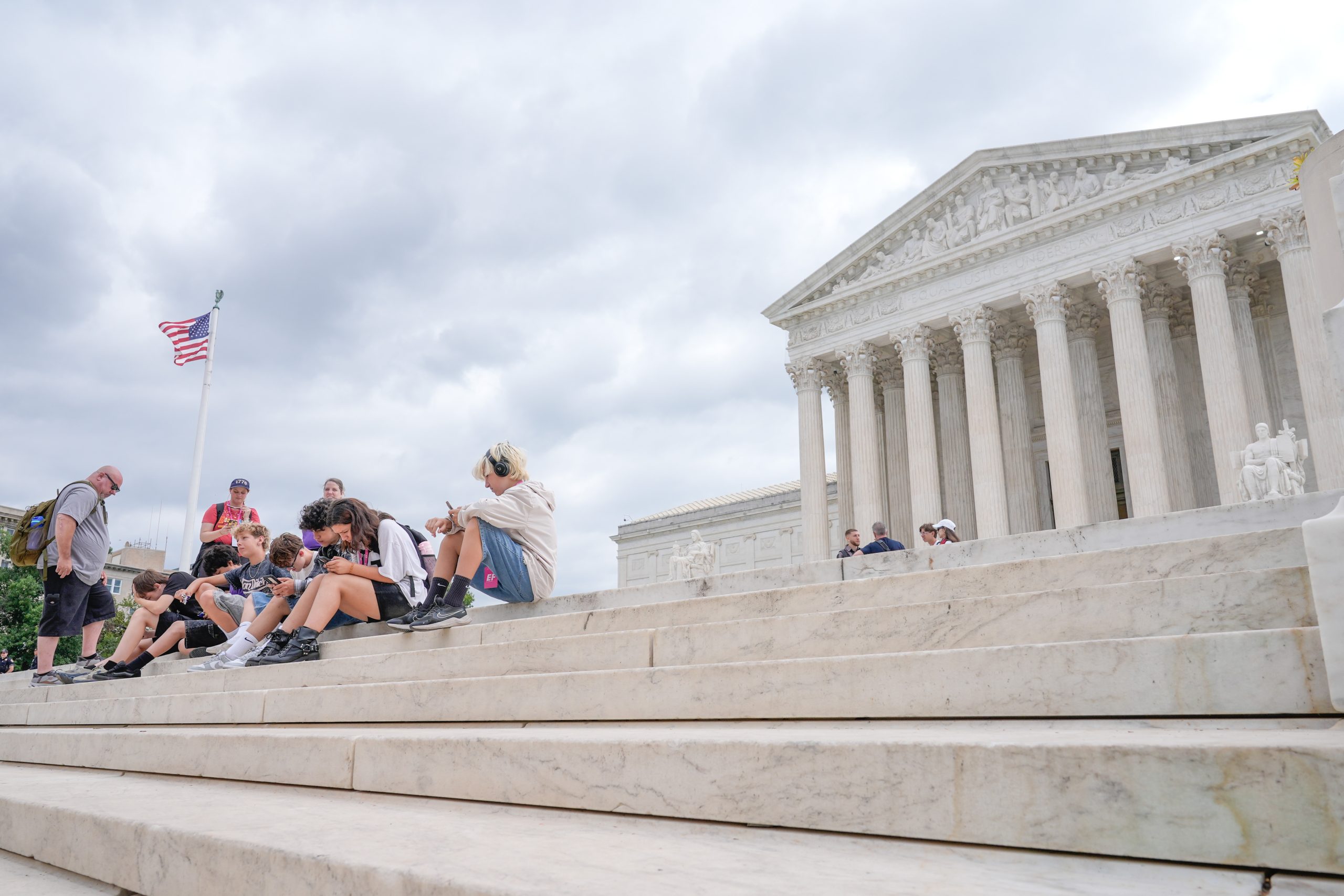
POLICY WIRE — Washington D.C., USA — The marble halls of justice can often feel distant, abstract, particularly for those whose lives hang by threads spun across continents. But when the Supreme...

POLICY WIRE — Washington D.C., USA — The marble halls of justice can often feel distant, abstract, particularly for those whose lives hang by threads spun across continents. But when the Supreme Court speaks, its echoes rattle kitchen tables from California’s Central Valley to Lahore’s bustling streets, dictating who gets to dream and who doesn’t.
It wasn’t a bombshell, not really. We’d seen this train coming. Still, the highest court in the land has once again thrown its considerable weight behind an expansive interpretation of executive authority, specifically in immigration matters, making it tougher for countless individuals to secure permanent residency here in the States. Call it a win for policy hawkishness, a tightening of the bureaucratic screws that’s bound to ripple far beyond the borders of Uncle Sam. [QUOTE_PLACEHOLDER]
The particular case involved a long-standing challenge to policies that make it harder for certain individuals—those deemed likely to become a public charge—to obtain green cards. It’s an old debate, reimagined with fresh urgency. Critics had called the administrative measures punitive, almost medieval in their approach, disproportionately impacting lower-income applicants and effectively creating a wealth test for aspiring residents. The court, however, saw fit to let the administration’s discretion stand.
And so, another layer of complexity gets added to an already labyrinthine system. It’s not just about what you know, or who you know, or even what skills you bring. Now, perhaps more than ever, it’s about what your balance sheet says, a harsh truth that sits uneasily with America’s self-styled identity as a haven for the huddled masses. But the current political winds, they’re blowing a different tune. A more restrictive, perhaps less charitable one.
The human cost of these policy shifts rarely makes prime-time news. You’ve got families, sometimes split for years, who suddenly see their painstakingly constructed immigration strategies crumble. Kids grown up under temporary visas, elders waiting for reunification—they’re caught in this bureaucratic grinder, often without a voice. Many of them from nations where remittances from abroad aren’t just discretionary income; they’re the literal backbone of survival. The legal outcome here only intensifies the pressures.
Consider the data, for instance. A 2023 report from the Pew Research Center indicated that approximately 40% of all green card applicants annually cite family reunification as their primary basis for seeking permanent residency. That’s an awful lot of personal stories intertwined with cold legal rulings. This decision, it won’t make that statistic vanish. Instead, it’ll transform those hopeful applications into a gauntlet run blindfolded.
Now, let’s look eastward. South Asia, particularly Pakistan, India, and Bangladesh, has consistently been a significant source of both economic and family-based immigrants to the U.S. Families often pool resources, sell ancestral lands even, to fund a single member’s journey and the torturous visa process, all hoping for that eventual green card, that solid link to a better future. But the public charge rule, bolstered by this SCOTUS decision, becomes an immense hurdle.
You’ve got a qualified professional, perhaps a software engineer from Karachi or a doctor from Delhi. They earn a good salary. But their parents, now aging, depend on them for support. Under previous interpretations, their parents applying for family reunification might face less scrutiny on the public charge front if their sponsoring child was well-off. But the broadened scope, it makes that financial dependence itself a higher bar to clear for the aspiring green card recipient. It forces an agonizing choice: maintain familial support networks at home or gamble on proving a stringent self-sufficiency abroad. That’s a hell of a choice for anyone, let alone someone navigating an alien system from halfway across the world. And don’t forget the ripple effects into regions facing economic instability, where emigration offers a primary safety valve.
It’s not just the legal parameters changing, you see. It’s the psychological toll, the chilling effect this kind of decision casts over entire communities that look to America not just for opportunity, but often for refuge, for a fresh start. You can bet consular officers across the Muslim world—where skepticism toward U.S. immigration policies often runs high—will be applying this framework with increased zeal, or at least with the confidence that the highest court has their back.
What This Means
This Supreme Court ruling is a political statement cloaked in judicial impartiality. It significantly empowers the executive branch, regardless of who occupies the White House, to erect higher barriers to immigration without needing new legislative action. For the next administration, left or right, it’s a template for unilateral policy tweaks. Economically, we’re looking at a potential squeeze on remittances flowing into developing nations, especially in South Asia, where millions depend on those funds to survive and grow. Less green cards means less money sent home. For the U.S. itself, it signals a deeper pivot towards a skills- and wealth-based immigration system, chipping away at the bedrock of family reunification that has long defined much of the American immigrant experience. It won’t stop people from trying, of course. Green card tightening policies may echo global trends, challenging immigrant aspirations, but human desire for betterment doesn’t just evaporate. It morphs, adapts, finds new routes—legal or otherwise. It also means potentially fewer diverse talents making it through the legal channels, something that might impact our innovative edge down the line. It’s a pragmatic, rather cold, recalculation of who we invite in — and on what terms.
This ruling, essentially, codifies a more protectionist stance. It underscores the political consensus, however narrow, that’s built around restricting access, regardless of the rhetorical flourishes about opportunity or the historical narratives. And as long as this stands, navigating the American dream will remain a brutal, often unfair, endurance test for many. You’ve got to wonder what that says about us, as a nation.