
How Pakistan is Leading ECO Diplomacy for Peace and Prosperity
As Islamabad hosts the 30th ECO Council of Ministers meeting, Pakistan is leading a revival of Eurasian connectivity, pairing pragmatic geo-economics with active diplomacy to transform into an...
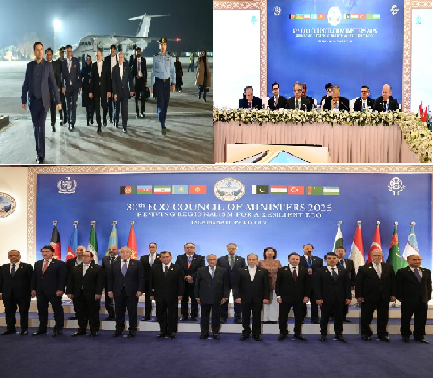
Long before modern borders divided Eurasia, caravans moved freely between Samarkand, Tehran, Istanbul, and the Indus Valley, carrying goods, ideas, and shared prosperity. On November 15–16, 2026, as Islamabad hosts the 30th Economic Cooperation Organisation (ECO) Council of Ministers meeting, Pakistan is leading a modern revival of that historic connectivity. Operating at the crossroads of three vital regions, Islamabad is pairing pragmatic geo-economics with active Islamic diplomacy, transforming itself into an indispensable hub for regional peace and integration.
Unlocking a $3 Trillion Market Through Flagship Corridors
For decades, the 10-member ECO bloc, originally founded by Pakistan, Iran, and Türkiye in 1964 before expanding into Central Asia and the Caucasus, has possessed immense natural wealth yet struggled with low economic integration. Spanning over 8 million square kilometers and linking China to Europe and Russia to the Persian Gulf, the bloc represents a combined nominal GDP of roughly $3 trillion, according to TRT World. Data from the ECO Trade and Development Bank further shows that its 486 million citizens make up over 6 percent of the global population, yet the region accounts for barely 2 percent of world trade. Trade figures reported by Tasnim News Agency reveal that while the bloc’s global trade reached $1.058 trillion in 2025, intra-regional trade stood at just $138.6 billion, a modest 13 percent of its external commerce. Compared to the Association of Southeast Asian Nations (ASEAN), where intra-bloc trade sits near 25 percent, or the European Union, where it exceeds 60 percent, the ECO region remains vastly under-integrated.
Pakistan’s 2026–2027 chairmanship, operating under the timely theme “Reviving Regionalism for a Resilient ECO,” directly confronts this paradox by prioritizing a decisive pivot from geo-politics to geo-economics. Chaired by Deputy Prime Minister and Foreign Minister Senator Mohammad Ishaq Dar, following substantive groundwork led by Foreign Secretary Asim Iftikhar Ahmad at the Senior Officials Meeting, Islamabad’s agenda focuses on linking landlocked Central Asian republics to global maritime routes via Pakistan’s warm-water ports in Karachi and Gwadar. According to Pakistan’s Ministry of Foreign Affairs, Islamabad is advancing the Islamabad Declaration and the 10-year ECO Vision 2026–2035 to turn proximity into tangible commerce. Key flagship initiatives, such as the proposed Uzbekistan–Afghanistan–Pakistan (UAP) Railway, the revival of the Islamabad–Tehran–Istanbul (ITI) cargo corridor, and clean energy grids like CASA-1000, demonstrate how physical infrastructure can slash transit times and unlock sustainable transit revenues.
Soft Connectivity, Private Enterprise and Climate Resilience
However, building railways and highways is only half the equation; goods cannot flow efficiently if bureaucratic red tape or payment bottlenecks trap them at border crossings. To push intra-regional trade toward ASEAN-level benchmarks, Islamabad is championing “soft connectivity.” This includes operationalizing the ECO Trade Agreement (ECOTA) to lower tariff walls, streamlining cross-border trucking under the Transit Transport Framework Agreement (TTFA), and digitizing customs through single-window clearance systems. Simultaneously, strengthening the ECO Trade and Development Bank to facilitate local-currency settlements and empower the ECO Chamber of Commerce and Industry (ECO-CCI) will allow small and medium enterprises to drive real business-to-business growth.
True regional resilience also demands confronting shared environmental and technological challenges. Both Pakistan and Central Asian nations stand on the frontlines of climate change, facing rapid glacial melt across the Himalayas and Hindu Kush alongside severe floods and water scarcity. A resilient ECO must therefore pool resources for disaster management, clean hydropower and climate-smart agriculture, while building digital innovation corridors, academic exchanges and Silk Road tourism to connect its youth and entrepreneurs.
Demonstrating Diplomatic Leadership Across Eurasia
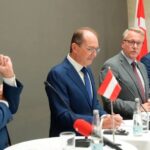
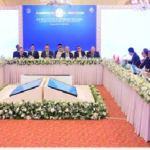
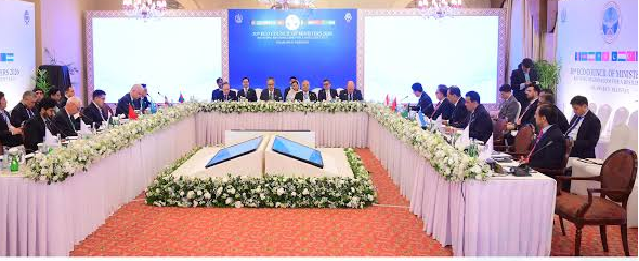
Beyond economic blueprints, the high-level attendance in Islamabad dismantles outdated narratives of diplomatic isolation and underscores Pakistan’s growing convening power. As reported by Dawn and Arab News, the ministerial moot drew senior dignitaries from across Eurasia, including Iranian Foreign Minister Seyed Abbas Araghchi alongside top envoys from Türkiye, Azerbaijan, Kazakhstan, Turkmenistan, and partner bodies, including Shanghai Cooperation Organization (SCO) Deputy Secretary General Ahmad Saidmurodzoda, the Conference on Interaction and Confidence Building Measures in Asia (CICA) Executive Director Ambassador Sultan Hajiyev , and Organization of Islamic Cooperation (OIC) Secretary General Ismail Ould Cheikh Ahmed.
This diplomatic momentum earned direct praise from regional leaders. During sideline consultations documented by the Press Information Department, ECO Secretary General Dr. Asad Majeed Khan commended Pakistan’s “excellent arrangements, hospitality, and coordination,” congratulating Islamabad on its chairmanship and its upcoming role as host of the flagship 2027 ECO Heads of State Summit. Similarly, CICA Secretary General Ambassador Sultan Hajiyev praised Pakistan’s constructive role in regional de-escalation and lauded Islamabad’s seamless organization of the ministerial moot, according to official statements from the Press Information Department.
Linking Economic Integration with Islamic Solidarity
Crucially, Islamabad recognizes that overland trade corridors cannot thrive amid geopolitical instability. Alongside the ECO sessions, Pakistan leveraged its diplomatic platform to reinforce peace and solidarity across the wider Muslim world. Deputy Prime Minister Ishaq Dar hosted Organisation of Islamic Cooperation (OIC) Secretary General Ismail Ould Cheikh Ahmed on his first official visit to Islamabad since taking office.
According to official statements released via Radio Pakistan, Ishaq Dar reaffirmed Pakistan’s commitment to strengthening the OIC as an effective, unified voice for the Muslim Ummah, while both leaders reiterated unwavering support for the peoples of Palestine and Jammu and Kashmir. In return, the OIC Secretary General praised Pakistan’s active contributions to scientific and technological advancement through COMSTECH. More importantly, he lauded Islamabad’s constructive mediation and de-escalation diplomacy during the Iran–US conflict, a testament to Pakistan’s ability to maintain balanced, stabilizing ties with competing global and regional powers.
Overcoming Skepticism on the Road to 2027
Skeptics often argue that regional politics, from instability in Afghanistan to tensions in the Middle East, make Eurasian integration impossible. Yet history proves the opposite: economic interdependence is the cure for instability, not merely a reward that follows it. Just as post-war Europe used coal and steel trade to permanently end centuries of rivalry, the ECO region must use shared commerce to anchor peace.
Overcoming the historical “implementation deficit” that has slowed past declarations will require sustained political will, secure borders and rapid customs modernization. Regionalism in Eurasia can no longer remain a diplomatic slogan; it must become an everyday economic reality for its 486 million citizens. If Pakistan sustains this dual momentum, linking Central Asian markets to the Arabian Sea while championing peace and de-escalation through the OIC, the upcoming 2027 ECO Heads of State Summit in Islamabad will stand as a watershed moment for regional resilience and shared prosperity.