

Houston’s Cultural Anarchy: Brazilians, Japanese Clash Beyond the Pitch, Signaling a New Global Order
POLICY WIRE — Houston, Texas — The spectacle isn’t always on the field, not anymore. Often, it’s sprawling onto the pavement, into bars and eateries, transforming an entire...

POLICY WIRE — Houston, Texas — The spectacle isn’t always on the field, not anymore. Often, it’s sprawling onto the pavement, into bars and eateries, transforming an entire city’s circadian rhythm for a few days, maybe just a few hours. That’s what Houston experienced. We’re not talking about local rivalries here, not even the traditional continental clashes that once defined international sports. This was Brazil meeting Japan—a vibrant collision of distant cultures on Texas asphalt, an almost surreal display that speaks less to sporting prowess and more to the relentless currents of globalized commerce and cultural osmosis.
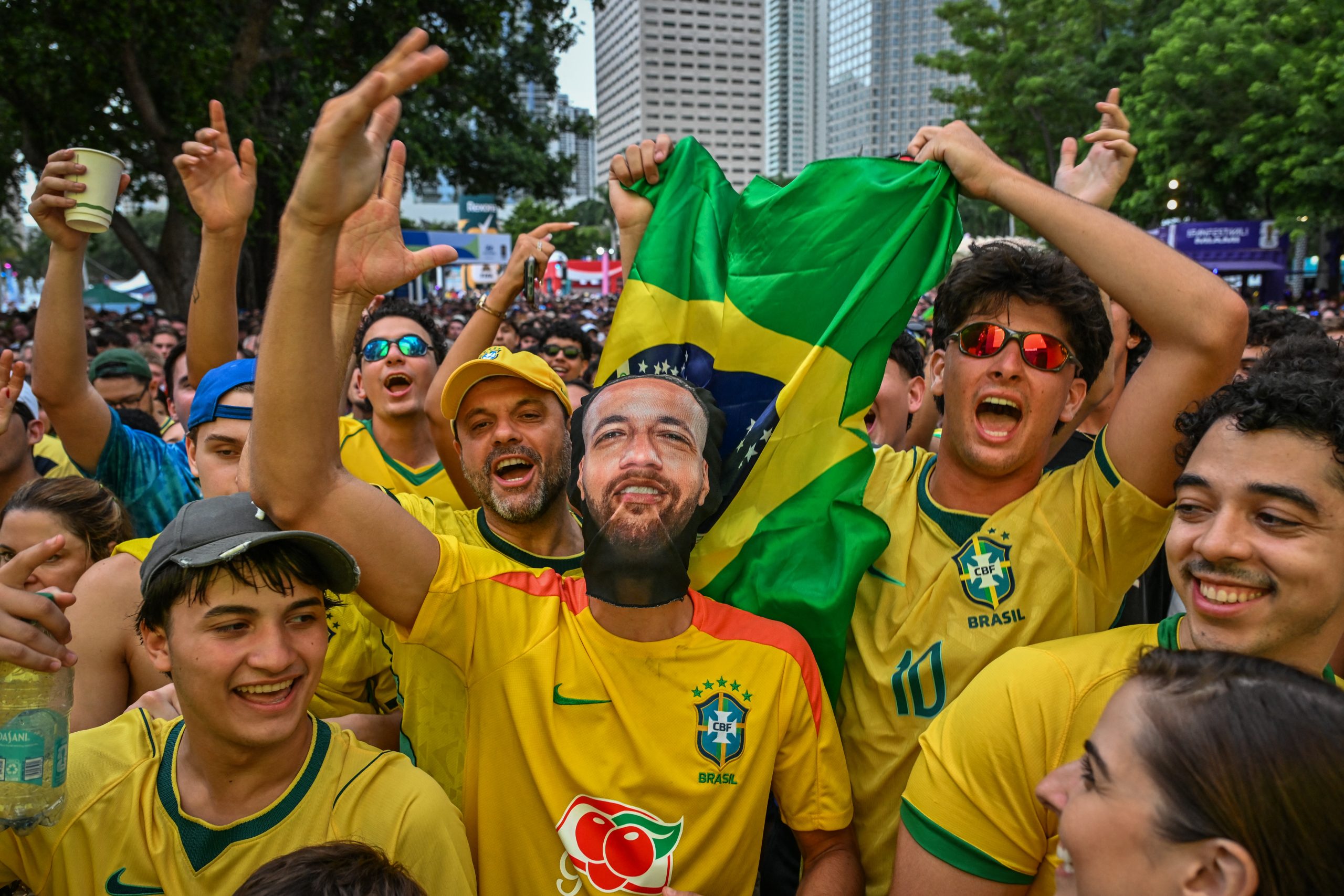
It began as an insistent hum, then grew into a roar. Long before any whistle blew, the city’s pulse quickened with the arrival of two wildly disparate fan bases. They came from across hemispheres, not just from the usual travel hubs. Some probably made a pilgrimage from places that might struggle to place Houston on a map, but for the universal language of a soccer ball and national pride. The South American revelry has taken over the atmosphere with its trademark rhythm, a pulsating beat of samba and cheers that could shake loose any lingering doubts about their collective passion. And let’s not forget the other side. The Asians respond with chants and dancing, an equally fervent, though perhaps more synchronized, counter-wave of enthusiasm. It’s like watching two different kinds of storm fronts collide, one tropical and spontaneous, the other precise and disciplined—both potent, both electrifying. [QUOTE_PLACEHOLDER]
For decades, major sporting events served primarily as a mirror to national identity. But now, they’re often a powerful, almost accidental, instrument of international diplomacy, a stage where nations project their soft power not through government initiatives, but through the sheer volume of their cheering supporters. Just imagine the logistics involved: thousands, tens of thousands perhaps, coordinating travel across vast distances, spending real money in a foreign city. The International Olympic Committee reported that the 2016 Rio Games, for instance, saw approximately 1.17 million tourists visit, with a significant portion traveling internationally, generating substantial revenue. That kind of migratory devotion for sport, it’s not just a hobby—it’s an economic force, shaping local economies and altering national perceptions one beer and scarf at a time.
And where does a metropolis like Houston fit into all this? It’s a nexus, a sprawling, modern American city accustomed to handling an international influx. It’s a petri dish for these sorts of cultural experiments. On the eve of the massive clash between Brazil and Japan, the streets of Texas have been flooded by fans from both countries. You don’t often see a place transform so rapidly, shedding its local flavor, if only for a flash, to embrace something far bigger, far more exotic. The streets are on fire, and the stage is perfectly set for the ball to start rolling in one of the most attractive matchups of this do-or-die round.
What’s truly striking, when you take a moment to step back from the pulsating street carnival, isn’t just the difference between these two fan contingents. It’s the unifying thread that ties them to sports fanatics worldwide—from the manic crowds at a Karachi cricket match to the devoted legions following European club football. Look, you’ll see fans in Lahore and Dhaka, despite geographical distance, glued to their screens for tournaments just like this. They’re buying team jerseys. They’re memorizing player stats. That shared, visceral connection to sporting excellence and national honor, it’s an inherent human trait, transcending borders, languages, and even economic disparity. For all the talk of East vs. West, there’s an undeniable, palpable echo of passion shared by enthusiasts regardless of their postcode. It’s a stark reminder that even in an age of digital disconnection, collective experiences like these—a city teeming with vibrant foreign energies—still hold a strange, compelling power. And because of the internet, that power’s now more accessible than it’s ever been. Who knows, perhaps the fans arriving aren’t even Brazilians or Japanese, but expats—diasporas whose allegiance bridges old homelands and new.
What This Means
The scene in Houston, chaotic yet somehow harmonious, isn’t just about a football game. Not really. It’s a sharp observation of modern global dynamics at play, stripped of diplomatic rhetoric — and economic jargon. This kind of spontaneous cultural merger illustrates the growing interconnectedness of our world, driven not by policy treaties but by shared human obsessions—sports, entertainment, and the search for collective identity. The immediate implication is purely economic for host cities like Houston; tourist dollars flow, local businesses hum, and civic pride gets a shot in the arm. But beyond that, it signifies a soft power shift. Countries don’t just vie for geopolitical influence; they compete for global attention and affection through their cultural exports, whether it’s music, cuisine, or, crucially, sport.
These mass gatherings, though fleeting, are also microcosms of future diplomatic challenges. How do diverse populations coexist? How do different cultural expressions resolve or amplify tensions? Brazilians or Japanese, who will be celebrating after the 90 minutes are up? The questions apply just as much off the field as they do on it. For nations in the broader South Asian and Muslim world, whose own fervent sports followings—especially for cricket and football—often mirror and magnify national sentiments, this convergence in Houston offers a strange reflection. Their populations, too, feel the pull of international sporting spectacle, often reflecting nationalist fervor or a longing for global recognition. This makes discussions on the economics of global sports, even those involving transfers across continents, remarkably pertinent.
Such events underline the reality that culture and commerce often run ahead of traditional politics, laying groundwork for future interactions. This particular event wasn’t manufactured for a UN summit; it organically surfaced from collective fandom. But its implications are broader than just the final score. It’s a testament to human mobility, shared passion, and the ever-shrinking distance between disparate corners of the globe, challenging, in its own small way, the insularity some politicians still cling to. Perhaps policymakers, observing scenes like these, might find new avenues for cooperation, learning from the organic cultural exchange ignited by a simple game.
The raw, unfiltered energy of fans isn’t a problem to be managed; it’s a phenomenon to be understood. We’re witnessing a strange, compelling evolution of international relations—one fueled by joy, passion, and, yes, perhaps a few too many celebratory beverages.