

Hoops Power Play: Ogwumike’s CBA Win Echoes Far Beyond the Court
POLICY WIRE — Washington D.C. — You don’t often find labor activists alongside titans of sport, certainly not in the traditional, suit-and-tie boardrooms of power. But here we’re. Nneka...

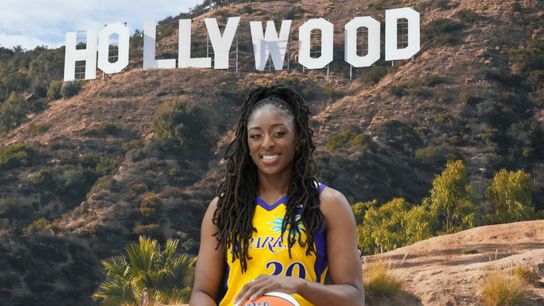
POLICY WIRE — Washington D.C. — You don’t often find labor activists alongside titans of sport, certainly not in the traditional, suit-and-tie boardrooms of power. But here we’re. Nneka Ogwumike, the L.A. Sparks forward, she’s blurring those lines, her name now stamped onto Time Magazine’s influential sports roster – not just for her silky fadeaways or tenacious boards, but for rattling the financial cage of professional women’s basketball.
It’s an unusual path for a sport star, really. They typically stick to endorsement deals — and highlight reels. But Ogwumike, she took a different route, putting her neck out as president of the players’ union since 2016. That’s eight years of grinding, talking, — and presumably, a lot of patient listening. Most athletes, let’s be honest, would rather focus on their game, on racking up All-Star nods—she’s got ten of those, by the way, plus an MVP trophy from 2016. That kind of dual role, excellence on the court and a pugnacious spirit at the bargaining table, that’s where the real story lies, way beyond just another award ceremony.
Because while the list includes heavy hitters like LeBron James and Shohei Ohtani, folks whose influence is largely dictated by their generational talent and marketability, Ogwumike’s impact—her real, lasting imprint—it’s in the dollars and cents that now line her colleagues’ pockets. We’re talking about a renegotiated collective bargaining agreement that didn’t just nudge salaries up, but exploded them. The average WNBA salary, for instance, used to hover around $120,000. It’s now at 583,000. That’s according to the agreement she pushed through.
This wasn’t a given. Players don’t just stumble into these kinds of economic victories. It takes resolve, a solid front, — and someone willing to stand firm against institutional resistance.
“Players understand their worth, they understand their value,” Ogwumike told TIME in a December interview. [QUOTE_PLACEHOLDER] And she wasn’t kidding around. They kept their word. That historic agreement, inked last March, wasn’t just a good deal; it was a revolution for the league’s economics, nearly quintupling the salary cap to $7 million and bumping the supermax from a measly $250,000 to a more respectable $1.4 million.
It’s hard not to view this as a stark lesson in collective action. What Ogwumike — and her union accomplished isn’t just about sports. It’s about labor, about the dignity of work, — and about demanding fair compensation for value created. You see this kind of struggle playing out in factories, in tech startups, in developing economies. Whether it’s textile workers in Bangladesh pushing for better wages or contract workers in Lahore advocating for improved conditions, the underlying dynamic is universal: those who produce the value demanding a fairer slice of the pie. Her tenacity reminds us that influence isn’t always about being the biggest star, but about being the most effective advocate for your people.
And yes, she’s still putting up numbers – 15.5 points — and 8.6 rebounds this season. She’s got titles too, like that 2016 WNBA championship with the Sparks. But the real game-changer here isn’t her individual stats, impressive as they’re. It’s the groundwork she laid for economic equity. You think she cares about just getting on another list? [QUOTE_PLACEHOLDER] she said about the honor during practice on Tuesday. [QUOTE_PLACEHOLDER] You hear that? It’s not what she does it for. She’s about the bigger picture.
But this is also a story that resonates far beyond the gleaming courts — and media spotlights. It’s a template, maybe, for nascent sports leagues in regions like South Asia. Imagine women’s cricket leagues in Pakistan, for example. If the game truly takes off, players there will inevitably face similar battles for fair pay — and working conditions. Ogwumike’s playbook for organized labor, for unified negotiation, offers a powerful precedent. Because securing economic recognition for athletes in what have historically been marginalized, or at least less-lucrative, sports is a universal fight. It’s about validating women’s athleticism and labor on a global stage, ensuring that talent in places like Islamabad or Karachi isn’t undervalued simply because of gender or geographic origin. And that’s not just sports news; that’s policy, plain and simple.
What This Means
This isn’t just about Nneka Ogwumike and a few other basketball players getting a bigger paycheck; it’s a critical case study in how collective bargaining, when led with strategic foresight and unwavering resolve, can fundamentally reset market dynamics. The significant increase in WNBA salaries provides a tangible model for other professional sports leagues—particularly those, like emerging women’s leagues, which have historically operated under financially exploitative structures. This shift enhances athlete retention, attracts new talent, and professionalizes the entire ecosystem, transforming it into a more sustainable and attractive investment. Economically, this means increased consumer engagement due to a more compelling product, leading to greater sponsorship opportunities and media rights values. Politically, Ogwumike’s leadership offers a compelling narrative of worker empowerment, demonstrating that even individuals in highly public, often idolized, roles can leverage their collective power to demand equitable treatment. This success story emboldens labor movements across sectors and geographies, providing concrete evidence that asserting one’s economic worth isn’t just aspirational, but achievable.