

The Golden Boot Hangs Up His Cleats (Sort Of): Müller’s New Playbook for German Football
POLICY WIRE — Chicago, Illinois — There’s a certain grim poetry to it, watching the very architect of Germany’s last World Cup triumph now offering commentary from the sidelines. Thomas Müller, the...

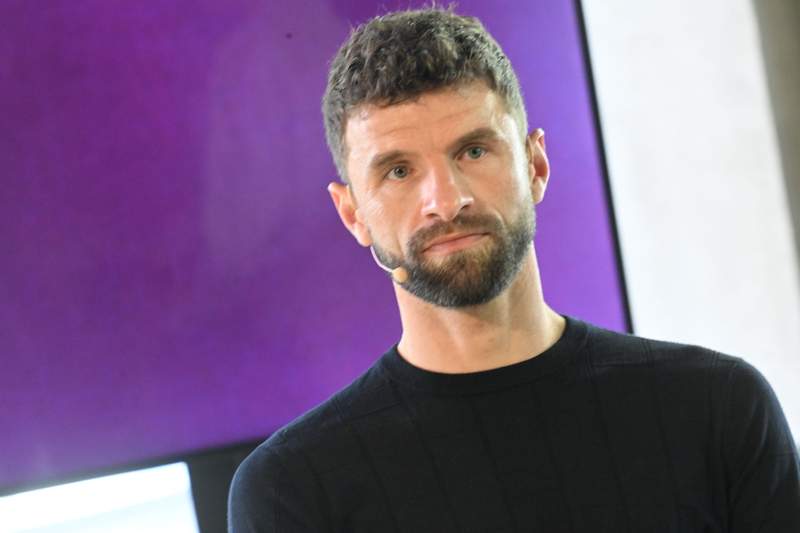
POLICY WIRE — Chicago, Illinois — There’s a certain grim poetry to it, watching the very architect of Germany’s last World Cup triumph now offering commentary from the sidelines. Thomas Müller, the player whose movements redefined the attacking midfielder role—the space investigator, the scorer of ten World Cup goals—has traded his boots for a microphone. It’s not quite a fall from grace, more like a pragmatic evolution. A legend transitions into a talking head, dispensing wisdom and the kind of cautious optimism only a veteran who’s seen it all can manage.
Müller, the lanky assassin who netted five goals in 2010 and another five in the glorious 2014 campaign, isn’t flying to North America to dictate play this time. Nope, he’s there as a pundit, a brand ambassador, another voice in the clamor surrounding the expanded 2026 FIFA World Cup. His old side, Die Mannschaft, prepares for battle, but their former spearhead sees them not as favorites, nor even as a fully formed powerhouse. That’s a stark, almost melancholic, appraisal from a man synonymous with German football’s recent peak.
“I see parallels with the World Cup in 2010 rather than with the 2014 one because this team hasn’t really matured super well together, but the journey is only really beginning now,” Müller declared, speaking from a glitzy brand event just before jetting off. He sounds a bit like an elder statesman, reflecting on youthful exuberance versus seasoned experience. “We had the feeling in 2014 that the players, the core, they were all a bit closer to their peak.” Only Manuel Neuer, a keeper whose age-defying reflexes remain a national talking point, stands as the lone remnant from that Brazilian triumph a dozen years ago. It’s a harsh reset for a nation accustomed to dominance.
But the German squad, currently nestled in North Carolina after a rather anemic 2-1 friendly win over the U.S., still carries a nation’s hopes. And they’ll need ’em, because this isn’t the familiar 32-team brawl. No, this World Cup’s ballooned to a colossal 48 nations. More teams mean more games, more eyeballs—and, yes, more money for FIFA. And that also means the group stages, often seen as a formality for top-tier squads, suddenly hold an unfamiliar complexity with eight third-placed teams now advancing.
“Look, our sights are set on steady progress, not just miracles. We’ve learned hard lessons,” explained Dr. Lena Richter, a DFB (German Football Association) Executive, offering a more formal, yet equally tempered, assessment from Frankfurt. “Today’s football environment demands patience, but our talent pool—it’s deep. We’re building for sustained success, not just a fleeting moment.” This pragmatic tone underscores a shift, perhaps a German acknowledgment that the era of assured glory is over. The days of effortless progression might just be gone.
And Müller himself seems aware of the changing landscape. He shrugs off potential “banana skins” in Germany’s relatively benign Group E, featuring Curaçao, Ivory Coast, and Ecuador. That’s a confident call from a man whose last two World Cup experiences ended in embarrassing group-stage exits. You almost detect a flicker of dry amusement when he talks about avoiding past blunders. They simply can’t flop again. They can’t. But because of this expanded tournament format, a broader range of nations now get their shot. It’s a win for football development, if not always for traditional powerhouses. Case in point: The 2022 World Cup, held in Qatar, attracted a staggering 5 billion viewers globally, according to FIFA’s own reports. Many of those eyes were glued to screens across Asia and Africa, illustrating just how much the ‘beautiful game’ has grown roots far beyond its European strongholds.
Consider the passion in nations like Pakistan. Despite a lack of direct World Cup qualification, football’s allure is undeniable, fueled by increasing accessibility and the sheer spectacle. Their interest, and that of countless others in the broader Muslim world and South Asia, translates into massive viewership numbers—numbers that make this expanded format not just a sporting event, but a global economic engine. FIFA, you see, isn’t just selling goals; it’s selling dreams to an ever-wider audience, especially where burgeoning middle classes are eager for international spectacle.
What This Means
The transition of Thomas Müller from on-field orchestrator to broadcast commentator symbolizes a significant inflection point for German football and indeed, for the global game itself. For Germany, it’s a public acknowledgment of a rebuilding phase, a deliberate lowering of expectations after two consecutive World Cup disasters. The days of swaggering into tournaments as near-guaranteed finalists are, for now, history. Politically, this reflects a more grounded approach from the DFB, recognizing the immense pressure but tempering it with a realistic vision. They aren’t making bombastic claims—not anymore. Economically, Müller’s new role highlights the ever-increasing monetization of sports legends post-career; they become valuable media assets, extending their brand influence, and thus, market reach. This is also about the deeper political economy of sport itself.
And for the World Cup writ large? This 48-team mega-event is pure pragmatism for FIFA. It’s a strategic play to grow revenues and broaden football’s geographical footprint, particularly in lucrative emerging markets. More participating nations mean more nationalistic fervor, more TV rights deals, and more sponsorship opportunities across continents. The expanded format dilutes the pool of elite teams slightly but vastly amplifies the global economic and cultural impact. For regions like South Asia and the Muslim world, even if their teams don’t consistently qualify, the greater visibility of football on the grandest stage keeps audiences engaged, inspiring new generations and opening doors for future participation—and profit. It’s all part of the big picture, really; the silent auction that shapes futures far beyond the pitch.