


Hoops, Hype, and Hegemony: NBA Finals Offers a Glimpse into Fragmented Sporting Dynasties
POLICY WIRE — New York, United States — It’s a strange thing, this global quest for sporting ubiquity. They call it the NBA Finals, a contest between two teams with shiny trophies and decades of...

POLICY WIRE — New York, United States — It’s a strange thing, this global quest for sporting ubiquity. They call it the NBA Finals, a contest between two teams with shiny trophies and decades of history, yet what we’re truly witnessing isn’t just athleticism; it’s a living, breathing case study in market fragmentation and the desperate grab for attention in a saturated world. For some, it’s about a game. But for analysts watching the tectonic plates of entertainment shift, it’s about a new kind of power play.
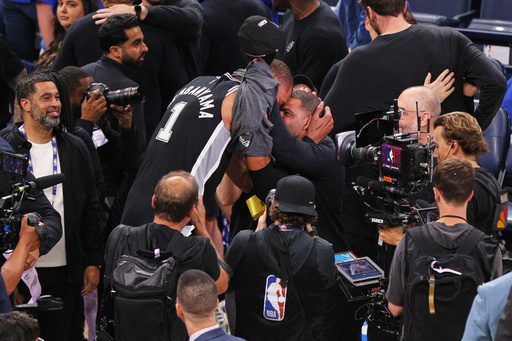
Because, really, how else do you explain the hoopla around another San Antonio Spurs vs. New York Knicks showdown? Game 1 kicks off Wednesday in San Antonio, a rematch twenty-five years in the making—since 1999—and yet it’s drenched in enough narrative about ‘new’ eras to make one’s head spin. Back then, it was Tim Duncan doing generational big man things for the Spurs. This time? It’s Victor Wembanyama, a Frenchman whose every step gets parsed like a diplomatic incident. A new star, sure, but the script feels old, albeit with a fresh coat of international intrigue.
The league, bless its heart, has tried selling us on parity for years. And you know what? It’s finally here, in a way that kinda stings the traditionalists. This year’s winner? It’ll be the eighth different franchise to snag a title in the last eight seasons, an unprecedented run in NBA history, per league statistics. Think about that: Toronto in 2019, L.A. Lakers in 2020, Milwaukee in 2021, Golden State in 2022, Denver in 2023, Boston in 2024, Oklahoma City just last year. No defending champion has even made it back to the Finals since Golden State did it way back in 2019. Dynasties? That’s ancient history. What we’ve got now is a perpetual churn, an economic model designed to give every market a sniff at glory, maintaining interest (and television rights fees) everywhere from Boise to Islamabad.
The Knicks? They’re aiming for something not done since Willis Reed was rocking MSG. It’s been 53 years, for crying out loud. Since their last triumph, 17 different franchises have claimed championships—the Lakers, predictably, bagged 11 of them. Talk about a drought. Yet, here they’re, fresh off their first Finals trip since ’99. Their journey here? Man, it felt like an improbable movie. A month ago, after two back-to-back one-point losses, they were down 2-1 to Atlanta in Round 1. Folks were ready to write them off, weren’t they? But they’ve been 11-0 ever since, often winning by a hefty margin. Knicks guard Jalen Brunson has a pretty zen approach to the whole circus: “When there’s negative things being said about you, it’s important to ignore them. When there’s positive things about you, it’s easy to be able to read them to make you feel good. But you can’t do one and not the other. Just block it out as best you can.”
It’s an appealing matchup, we’re told. Not just for its global capital versus gritty challenger narrative, but for the underlying currents it represents. We saw these teams clash before in this season’s NBA Cup championship game, won by New York. Technically, the teams split their regular-season series; San Antonio won one thriller 134-132 with Julian Champagnie hitting 11 three-pointers and Wembanyama pouring in 31, while New York snapped an 11-game Spurs winning streak with a decisive 114-89 victory. The Spurs, with home-court advantage, are the early favorites; Vegas oddsmakers gave them odds of -210 Saturday night, meaning you’d have to wager a cool $210 to pocket a hundred bucks. The Knicks sat at +170. Always betting, aren’t we?
But the allure isn’t merely about point spreads or even who hoists the Larry O’Brien trophy. It’s about how this particular American export permeates cultures previously untouched by the game’s original ethos. In Pakistan, for example, a nation of over 240 million—many of them young and hyper-connected—the NBA isn’t just sports; it’s an accessible slice of global cool, consumed via smartphones and social media. These aren’t traditional hoops markets, but they represent the next frontier for American cultural and economic influence, particularly as Western engagement shifts from overt politics to soft power through entertainment. This kind of global spectacle, like the IPL Final in Ahmedabad, increasingly defines our interconnected world.
What This Means
This Spurs-Knicks final isn’t just basketball; it’s a bellwether for the fragmented consumer attention economy. The league’s manufactured parity, while generating fresh storylines annually, simultaneously prevents the kind of sustained, dominant narratives that once built multi-generational fandoms. We’re trading long-term loyalty for short-term spikes in interest—a risky proposition when you think about long-term brand equity and fan engagement, particularly among an audience whose digital fluency means their attention span is measured in seconds, not seasons. It’s also an intriguing economic snapshot: teams like the Spurs, once built on sustained excellence, now scramble to capture the zeitgeist with a generational talent like Wembanyama to maintain their market value in a volatile sports landscape. New York, a massive media market, understands this pressure cooker inherently; for them, a title isn’t just about sports, it’s about brand resuscitation and billions in renewed revenue streams.
Politically, the global expansion of leagues like the NBA acts as an informal ambassadorial corps, subtly influencing cultural perceptions and economic ties. From the burgeoning youth markets in South Asia, where remittances and digital connectivity create ripe environments for new consumption patterns, to the growing importance of international stars, basketball isn’t just a game; it’s a key plank in a broader, less tangible form of global diplomacy. When Pakistan’s youth watch Wembanyama, they’re not just seeing basketball; they’re witnessing a curated version of global achievement and aspiration. This sort of cultural soft power plays a much larger role than most diplomats are willing to admit, often outpacing the influence of formal statecraft in shaping opinions.