


Ukraine’s Unseen Barrier: How a ‘Florida-Length’ Netting Strategy Redefines Modern War Defense
POLICY WIRE — Kyiv, Ukraine — You wouldn’t think a war, especially one as digitally complex as the ongoing struggle in Eastern Europe, could boil down to something as unglamorous as netting. But here...

POLICY WIRE — Kyiv, Ukraine — You wouldn’t think a war, especially one as digitally complex as the ongoing struggle in Eastern Europe, could boil down to something as unglamorous as netting. But here we’re. It’s a pretty gnarly detail when you zoom out, actually. Forget your smart bombs and cyber warfare for a second; Ukraine, we’re told, has engaged in a defense effort that’s baffling in its scale and, frankly, its sheer physical presence.
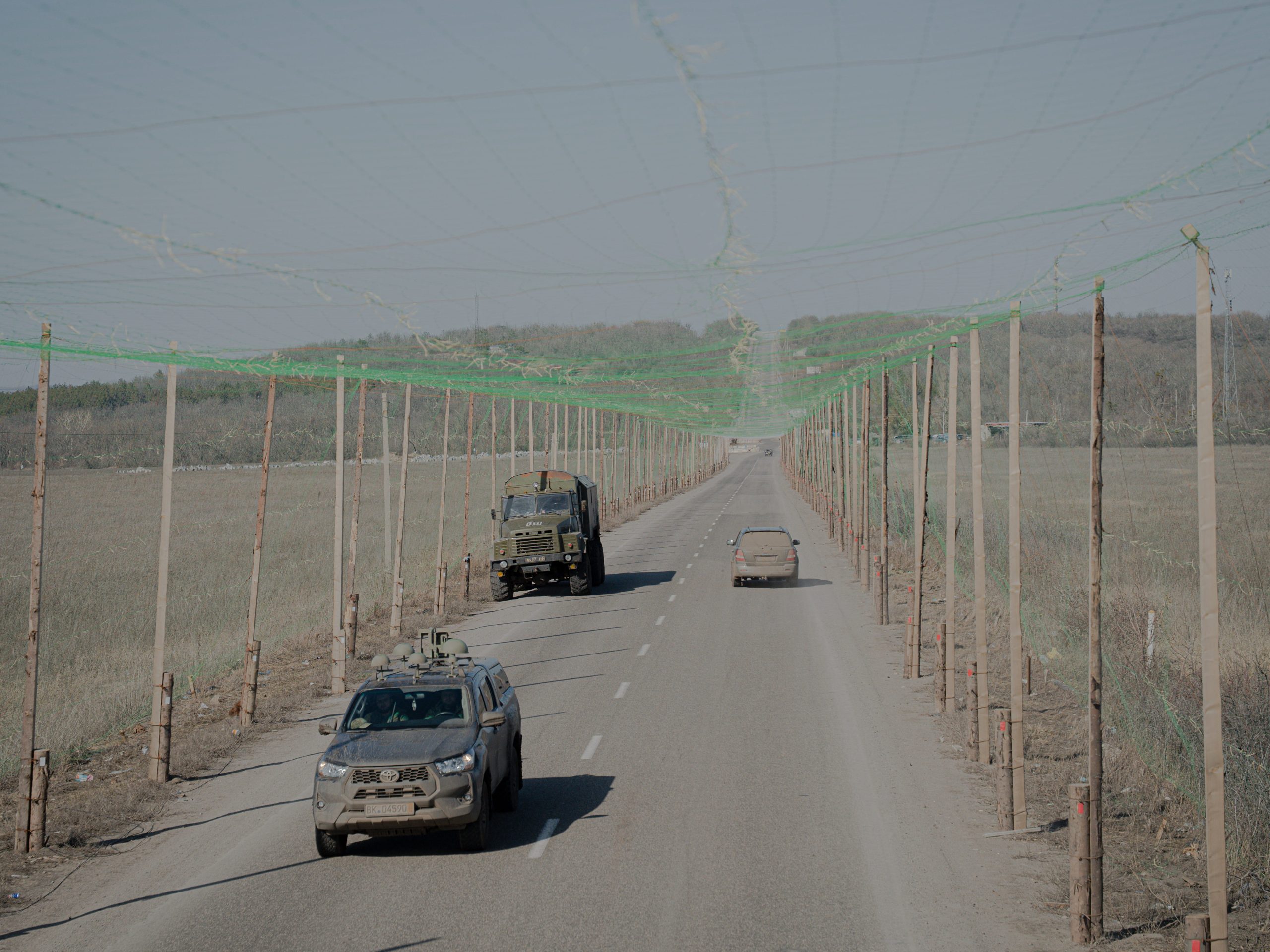
It’s not often you hear about a nation literally throwing up miles — and miles of material just to catch flying threats. But the figures are stark. Ukraine lined its roads with enough anti-drone netting this year to cover the length of Florida. Imagine that—from Key West up past Pensacola, an unbroken line of protective mesh. That’s hundreds upon hundreds of miles, a visible manifestation of a war machine adapting in real-time, on a budget, and with a relentless, grim determination. It’s an almost primitive response to an incredibly modern problem. [QUOTE_PLACEHOLDER]
This isn’t about some fancy high-tech system, though they’ve got those too. This is about physical obstacles, a low-cost, low-tech answer to the relentless, nerve-fraying drone assaults. Because those drones—they’re not just precision guided munitions anymore; they’re surveillance eyes, spotters for artillery, even just harassment. And they keep coming.
For decades, military doctrine centered on air superiority fought by multi-million dollar jets. Now? The battlefield sees a cheap, off-the-shelf drone from a retail store capable of delivering significant damage or invaluable intelligence. Ukraine’s response is a classic example of asymmetric warfare, but one where the ‘lesser’ power isn’t just relying on guerrilla tactics. They’re constructing monumental physical barriers against an airborne threat.
And it works, often enough to warrant this immense investment. What else are you gonna do? Just let these buzzing terrors roam free? Of course not. So you put up nets. Like fishing in the sky, you might say, but with much higher stakes. Defense analysts estimate Ukraine’s investment in such physical countermeasures against unmanned aerial vehicles has soared by over 300% in the last fiscal year, according to a recent report by the Institute for War Studies. It’s a staggering increase, one that highlights both the severity of the threat and Kyiv’s commitment to pragmatic defense.
The implications here stretch far beyond the battle lines. It tells us something fundamental about the changing face of conflict. Nations—even wealthy ones—are scrambling to find affordable ways to counter threats that often cost mere hundreds, sometimes thousands, to deploy. The drone market, particularly on the adversarial side, doesn’t give a darn about precision or ethical constraints; it’s about volume and accessibility. The defense industry, frankly, has been a little slow on this particular uptake.
But the sheer scale of Ukraine’s netting endeavor sparks an undeniable curiosity about how other nations, particularly those grappling with similar internal or external insurgencies involving improvised aerial devices, might observe and adapt. Look to South Asia, for instance. Countries like Pakistan have their own historical baggage with drone warfare—being on the receiving end of it for years. You’d think this kind of large-scale, low-tech defense would catch an eye or two in Islamabad or Karachi, where securing infrastructure against various threats is a constant headache. If Ukraine’s proving a giant net works against military-grade drones, what could it do for critical civilian infrastructure elsewhere?
What This Means
This isn’t just a quirky anecdote from the front lines; it’s a policy blueprint unfolding in real-time. Economically, this kind of expenditure—hundreds of miles of material, installation, maintenance—represents a significant draw on an already strained national treasury. It’s the brutal economics of modern war, where defensive measures, no matter how simple, aren’t cheap when applied at such a gargantuan scale. Every kilometer of netting means resources diverted from something else—reconstruction, social services, other defense programs. But then, what’s the alternative? Unfettered drone strikes? The cost of inaction would be far greater.
Politically, it sends a clear message: Ukraine isn’t waiting for the perfect high-tech solution. It’s improvising, innovating, and, if necessary, quite literally weaving its own defense against existential threats. This adaptive mindset could well become a case study for developing nations grappling with asymmetric conflicts. For a country like Pakistan, where border security and combating militant activity are ever-present concerns, observing these pragmatic, large-scale, and arguably ‘blunt instrument’ defenses against aerial threats might inspire local adaptations.
This war isn’t just about big armies slugging it out; it’s about engineers and tacticians figuring out how to stop small, persistent threats with ingenuity and, sometimes, an almost absurd amount of plain old netting. It’s about grit, you know? And it’s a lesson the whole world, especially those in precarious geopolitical positions, ought to be paying close attention to.
The defense sector everywhere has to reckon with this shift. It’s no longer just about stealth fighters — and battleships; it’s also about miles of netting and jammer arrays. But don’t misunderstand. The sheer, overwhelming scale of this undertaking also hints at the enduring strain on Ukraine’s resources and the creativity born out of desperation.