


USMNT’s Reckoning: High Stakes Friendly vs. Germany Offers Brutal Preview of World Cup Host Reality
POLICY WIRE — Chicago, USA — The field lights at Soldier Field won’t just illuminate a soccer match this weekend; they’ll spotlight a national sporting ambition teetering on the edge of its own...

POLICY WIRE — Chicago, USA — The field lights at Soldier Field won’t just illuminate a soccer match this weekend; they’ll spotlight a national sporting ambition teetering on the edge of its own carefully constructed narrative. It’s not simply another friendly, not for Mauricio Pochettino’s U.S. Men’s National Team. This clash against Germany—a bonafide, four-time World Cup champion—serves as a brutal stress test for a squad that still, let’s be honest, hasn’t quite convinced its own populace of its genuine global prowess.
They’ve scraped a win against Senegal, which, you know, is something. But then, to truly gauge where you stand before the grand global spectacle you’re about to host, you don’t book a warm-up act. You stare down a juggernaut. That’s precisely what Germany represents. It’s an undeniable measuring stick. And for a country obsessed with defining its global standing, these tests are about more than just points or clean sheets. They’re about perception.
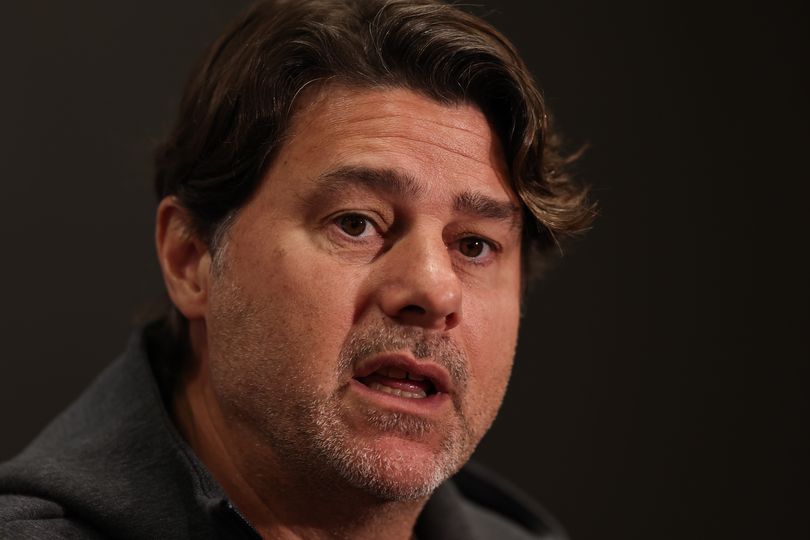
Pochettino, with that knowing, world-weary look of a man who’s seen it all pitchside, didn’t mince words. “Tomorrow we’re going to play, perhaps, with one of the rivals that we can face in a World Cup final,” he remarked to reporters, the gravitas hanging heavy in the room. “If we have to talk about three or five rivals, the most powerful in this World Cup, Germany is one of them. It’s as if we were anticipating a World Cup final. I think it’s important for us.” It’s a classic manager’s ploy, isn’t it? Talk up the opposition, elevate the stakes, then hope your boys rise to the occasion. Or, perhaps, he simply means it.
His emphasis wasn’t just on the result – because friendlies, let’s face it, aren’t about that exclusively. No, it’s about “finding our feelings, our focus, our state of mind, to keep improving collectively but also individually.” A diplomatic way of saying: ‘Let’s see if we can stand without falling on our faces.’ They’ve been a bit wobbly against European outfits recently, you see. Lost their last eight matches against them. That’s not a streak; it’s a systemic problem begging for a solution, or at least a temporary reprieve.
Julian Nagelsmann’s Germans, on the other hand, are practically humming. They strolled through Finland, beating them 4-0. The squad itself? An assemblage of Bundesliga titans — and international stars, playing in some of the globe’s toughest leagues. Nagelsmann’s record since September 2023 stands at an impressive 80% win rate across 32 games, losing only six, according to figures compiled by leading football analytics firms. They’re confident, ruthless. And they’re here to remind the USMNT just how big the gap can be. It’s not just a soccer game; it’s a public diplomacy exercise, albeit an accidental one.
For observers in regions like South Asia and the wider Muslim world, where football’s appeal often transcends geopolitical divides, the stakes are equally profound, if filtered through a different lens. They track these European giants, not just for sport, but as an indicator of global power dynamics, a measure of how one nation stacks up against another on a common stage. A dominant display by Germany or even a credible showing by the USMNT sends subtle signals about soft power, about capability. These matches become a global language, understood keenly even by those who, say, cheer for Manchester United or Real Madrid over any national squad. And it offers a fleeting glimpse into the global competition for hearts — and minds.
The USMNT, meanwhile, rolls into Chicago down one man, with Crystal Palace’s Chris Richards nursing an ankle. But it’s not just an injury list; it’s the quiet psychological weight of trying to impress an entire continent ahead of its hosting duties in a few years. It’s a peculiar kind of pressure, almost performative, where every pass, every tackle, gets magnified.
📄 POLICY WIRE WHITEPAPER PUBLISHED: PAKISTAN'S NATIONAL SECURITY POLICY PRIORITIES
👉 READ BY CLICKING HERENagelsmann himself was pragmatically understated about the US challenge. “We respect every opponent, of course, but our focus remains on our own progression,” he noted dryly. “They’re gaining experience, but we aim to demonstrate why consistency at the highest levels requires a specific kind of intensity.” No easy platitudes from him; just a blunt statement of purpose. It doesn’t get much clearer than that, does it?
What This Means
This match is less about the immediate scoreboard — and more about the delicate architecture of national confidence. For the USMNT, and by extension, the broader American sporting psyche, it’s a test of whether their rising ambitions are rooted in reality or just boosterism. A credible performance, win or lose, could solidify belief that they’re not just host nation wallpaper, but actual contenders. An embarrassing rout, however, might reinforce existing doubts, perhaps making some wonder if their upcoming World Cup host status is a reckless gambit rather than a bold stride.
Economically, strong national team performance often correlates with increased viewership, merchandise sales, and overall investment in youth soccer — a positive feedback loop for a burgeoning market. A flat showing against a European titan could temper that enthusiasm, dampening the sort of organic, passionate engagement critical for long-term growth. From a geopolitical angle, major sporting events are critical arenas for a country to project an image of competency and unity on a global stage. The way a national team performs, its resilience and flair, inadvertently feeds into this narrative, contributing to a nation’s ‘soft power’ currency across continents—a subtle art much like K-pop’s global hustle, as explored in Policy Wire’s analysis of other cultural phenomena. It’s not just a game; it’s a mirror reflecting an inconvenient truth or, perhaps, a burgeoning promise. Either way, they’re stepping into the glare.