


Hoops and Hard Lessons: When Strategic Calculus Collides with the Cold Reality of the NBA Lottery
POLICY WIRE — Indianapolis, USA — In the high-stakes theater of professional sports, where billions flow and reputations are forged, we often hail the architects of calculated risk. General managers,...

POLICY WIRE — Indianapolis, USA — In the high-stakes theater of professional sports, where billions flow and reputations are forged, we often hail the architects of calculated risk. General managers, it’s understood, play chess, not checkers. But sometimes, even the most meticulous strategic blueprint gets shredded by the raw, unpredictable force of sheer, unadulterated bad luck. And so it was for the Indiana Pacers, whose grand plan to navigate a lost season—a season meant for tactical retreat and future harvesting—hit an agonizing snag in the cruel spin of a lottery wheel.
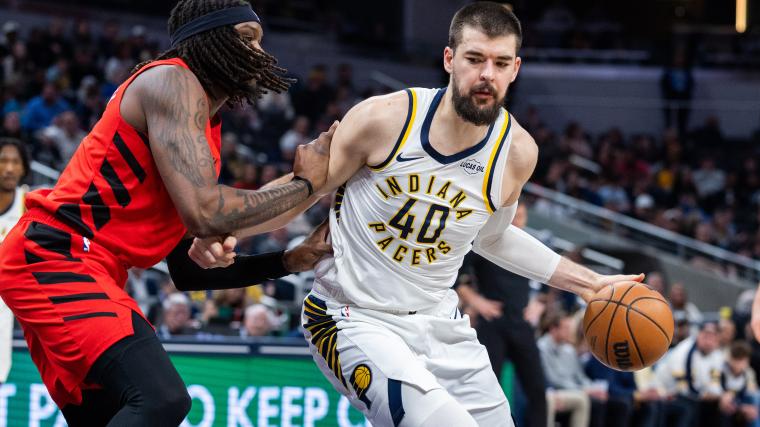
No one wants to call a year a write-off. Yet, facing a significant injury to their superstar point guard, Tyrese Haliburton, the Pacers embraced it. They’d orchestrate a one-year reset, clear the decks, — and reload. It wasn’t pretty, watching a team sputter, but it was intelligent. It felt…responsible, like a nation tightening its belt for long-term prosperity. Their mid-season trade for center Ivica Zubac epitomized this approach: acquire a piece for next year, stash him, and aim for a prize in the draft.
But the draft prize wasn’t just any prize; it was the crown jewel of the 2026 NBA Draft, widely considered a generational talent pool with players like AJ Dybantsa and Cameron Boozer lurking at the very top. To guarantee their shot at such riches, the Pacers shrewdly packaged a 2026 first-round pick in the Zubac deal, but with a critical caveat: it was top-four protected. What did that mean, exactly? It meant if the Pacers picked anywhere from first to fourth in the lottery, they’d keep their coveted pick. Because they’d purposefully been one of the worst teams in the league that season—bottom-three, to be precise—the mathematics seemed to favor them overwhelmingly. The odds of dropping beyond fifth were slim to none, they reasoned. Practically zero.
Except, of course, zero isn’t a real number in a lottery. It’s a cruel statistical fiction. The bottom three teams have a roughly 14% chance each of landing the coveted number one pick, according to NBA.com statistics. More importantly, those teams are guaranteed not to fall below fifth place.
And then came the envelopes. The Ping-Pong balls. The agony. For the Pacers, who had diligently navigated a complex retooling year, making all the ‘right’ moves, the fates delivered a sucker punch. The protected pick, seemingly safe from every conceivable threat, landed squarely in the fifth spot. The single scenario they thought implausible—falling out of the top-four range—became their devastating reality. Suddenly, that carefully orchestrated strategy dissolved into thin air. Their season-long gamble, the deliberate cultivation of losing, had spectacularly backfired, echoing the unforeseen variables that can upend even the most well-laid national policies or economic initiatives. The L.A. Clippers, beneficiaries of Indiana’s misfortune, now hold the rights to a potentially franchise-altering talent.
But it’s more than just a draft pick; it’s a profound psychological blow. “You draw up a game plan, you execute it to perfection, only to be undone by a randomly drawn number. It’s tough to swallow,” admitted Pacers President of Basketball Operations, Chad Buchanan, speaking off the record to Policy Wire after the lottery. “We understood the risks, absolutely, but you never anticipate that outcome. We still believe in our direction, though.”
And his counterpart in Los Angeles? “We’re always looking for avenues to improve,” stated Clippers General Manager Trent Redden publicly, carefully choosing his words. “The lottery is a test of fortune, — and this time, it swung in our favor. It’s part of the league’s competitive balance mechanism.”
The immediate reaction here is obvious. For the Pacers, the path ahead still includes a quality squad, but without the transformative force a top-four prospect can bring. This isn’t just about a team losing out on a player; it’s about the corrosive power of luck on perceived meritocracy. It begs the question: if careful planning can be undone by such caprice, what hope is there for long-term strategy in a league increasingly defined by unforeseen twists and turns? Imagine the ripple effect across the diverse fan bases, including the burgeoning audiences in South Asia, where the narratives of Western sporting endeavors are often consumed with intense scrutiny. Here, a misstep or a lucky break isn’t just about basketball; it becomes a talking point on fortune, destiny (or ‘qismat’ in Urdu), and the unpredictable nature of all large-scale ventures. But that’s sports, isn’t it? A mirror, distorted or otherwise, to life’s grander machinations.
What This Means
The Pacers’ draft lottery disaster is far from a trivial sports footnote. Politically, this incident can be viewed through the lens of electoral systems where gerrymandering or arcane rules can yield disproportionate, even unintended, outcomes. A party with more votes nationally might end up with fewer seats—a systemic lottery, if you will. Economically, this 𠇌ruel sting of chance” can translate to the volatile commodities market or sudden, unforeseen trade imbalances. Companies might make strategic investments based on market projections, only for a black swan event—a pandemic, a geopolitical upheaval—to wipe out their advantages overnight. This particular lottery outcome diminishes the Pacers’ future equity, both in terms of potential on-court performance and marketability. A top prospect is a revenue driver, a merchandising boon, — and a significant asset in team valuation. Losing out on that talent means lost potential income, affecting everything from sponsorship deals to local economic impact. It’s a reminder that even in highly structured environments like the NBA, pure chance holds significant sway, dictating the financial and competitive trajectory of multi-million dollar entities. The notion of ‘Hoosier Hubris’ seems an apt, if somewhat bitter, descriptor. It’s a sharp observation: no matter how much we plan, how many contingency plans we build, fate—or rather, a handful of numbered balls in a machine—always retains the ultimate veto power.