
Hollywood’s Endless Reckoning: Weinstein Retrial Fails, Leaves Ghosts in the Machine
POLICY WIRE — New York, United States — It’s like watching a legal thriller without an ending, only this isn’t fiction. This is the Harvey Weinstein saga, stretching longer than many of...

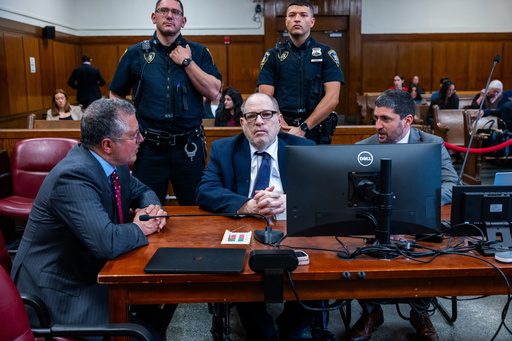
POLICY WIRE — New York, United States — It’s like watching a legal thriller without an ending, only this isn’t fiction. This is the Harvey Weinstein saga, stretching longer than many of his films’ runtimes. Just when you think the credits are about to roll, the lights come back on for another round, another installment in an almost decade-long fight. We saw it again Friday as a Manhattan jury, after three days of tough talks, threw up its collective hands, deadlocking and prompting Judge Curtis Farber to declare a mistrial in the once-omnipotent movie mogul’s rape retrial. The alleged crime? Way back in 2013.
It wasn’t a sudden plot twist, not really. This particular charge—involving Jessica Mann, a hairstylist and actor—has proven stickier than cheap theater glue, having evaded resolution across three separate trials now. Weinstein, as is his habit, reportedly remained a stone sculpture, utterly expressionless, as guards wheeled him out. He’s still locked up, sure, given other convictions on both coasts. But for Mann, whose allegations reignited a global conversation on power, the specific path to New York justice remains obscured by legal fog. Because frankly, for many, justice for powerful men often feels like navigating a hall of mirrors—each reflection a distorted, frustrating vision of the truth.
The jury’s note was stark, simple: they “cannot reach” a unanimous verdict. It’s a phrase that haunts countless victims and their advocates, a stark reminder that even with damning testimony and years of public discourse, securing convictions for sexual assault, particularly against well-connected figures, is an Everest-level climb. Mann’s account, laid out during five intense days on the stand, was chilling. She described resisting Weinstein, repeatedly saying “no,” trying to leave a Manhattan hotel room, only to be blocked, grabbed, and then, she said, raped. It’s harrowing stuff.
But the defense had their playbook, — and they stuck to it. They painted Mann not as a victim, but as a willing, if complicated, partner in a relationship. They meticulously picked apart inconsistencies, focusing on her continued communications with Weinstein in the months and years following the alleged assault—messages ranging from professional inquiries to, jarringly, expressions of affection like “I love u. Anything u need.” They didn’t even bring up, this time, the $500,000 Mann received from a sexual misconduct settlement fund established during Weinstein’s company bankruptcy after his initial conviction—a public court filing indicating this figure was mentioned in a previous trial. It complicates things; it really does, making simple narratives unravel.
Judge Farber, bound by procedure, instructed them to keep deliberating—standard protocol, really, a sort of judicial shrug against an inconvenient stalemate. Prosecutors now face the question of whether to attempt a fourth trial, a decision slated for a June 24 hearing. “It’s a taxing process, for all parties involved,” remarked Sarah Khan, a senior prosecutor in Karachi, Pakistan, observing from afar how high-profile Western cases influence broader global legal debates. “Each retrial extracts its own toll, financially, emotionally. It’s a measure of endurance as much as it’s of justice.”
📄 POLICY WIRE WHITEPAPER PUBLISHED: PAKISTAN'S NATIONAL SECURITY POLICY PRIORITIES
👉 READ BY CLICKING HEREAnd endurance is exactly what this system demands. This whole drawn-out legal dance spotlights the brutal marathon justice often becomes, especially when pitted against power. But as Aisha Hussain, Director of the Women’s Justice Initiative, succinctly put it, “A mistrial isn’t an acquittal. It’s just a pause. The trauma remains. The fight for accountability continues—it must, for all women, from Hollywood to Lahore.” Her words echo across borders, across cultures, resonating particularly in regions where systemic patriarchy still too often silences such accusations.
What This Means
This perpetual legal ping-pong carries heavy political — and social baggage. Economically, these ongoing battles are incredibly costly, not just for the parties involved, but for the judicial system itself, siphoning taxpayer dollars for what sometimes feels like an endless loop. For the #MeToo movement, it’s a bittersweet moment. While Weinstein remains incarcerated on other charges, the inability to secure a unanimous verdict on this specific, high-profile case fuels both sides of a contentious debate: those who see the difficulty as proof of justice’s fragility and those who seize on it to claim vindication for the accused.
Socially, the repetitive nature of these trials, particularly with the contrasting narratives of victimhood and consensual yet complex relationships, risks fostering a degree of public fatigue. It allows the gray areas, the messy human elements, to eclipse the fundamental accusations of abuse of power. For cultures beyond the immediate American sphere—places like South Asia, where discussions around sexual harassment and misconduct have been gaining ground but still face immense societal hurdles—the optics of an inconclusive verdict against a powerful figure like Weinstein don’t always help. They can, unfortunately, reinforce the notion that money and influence can perpetually muddy the waters, making clear cut justice a near impossibility. It’s a reminder that even when a cultural awakening begins, its full institutionalization into the bedrock of legal outcomes remains a strenuous, often incomplete, journey.