


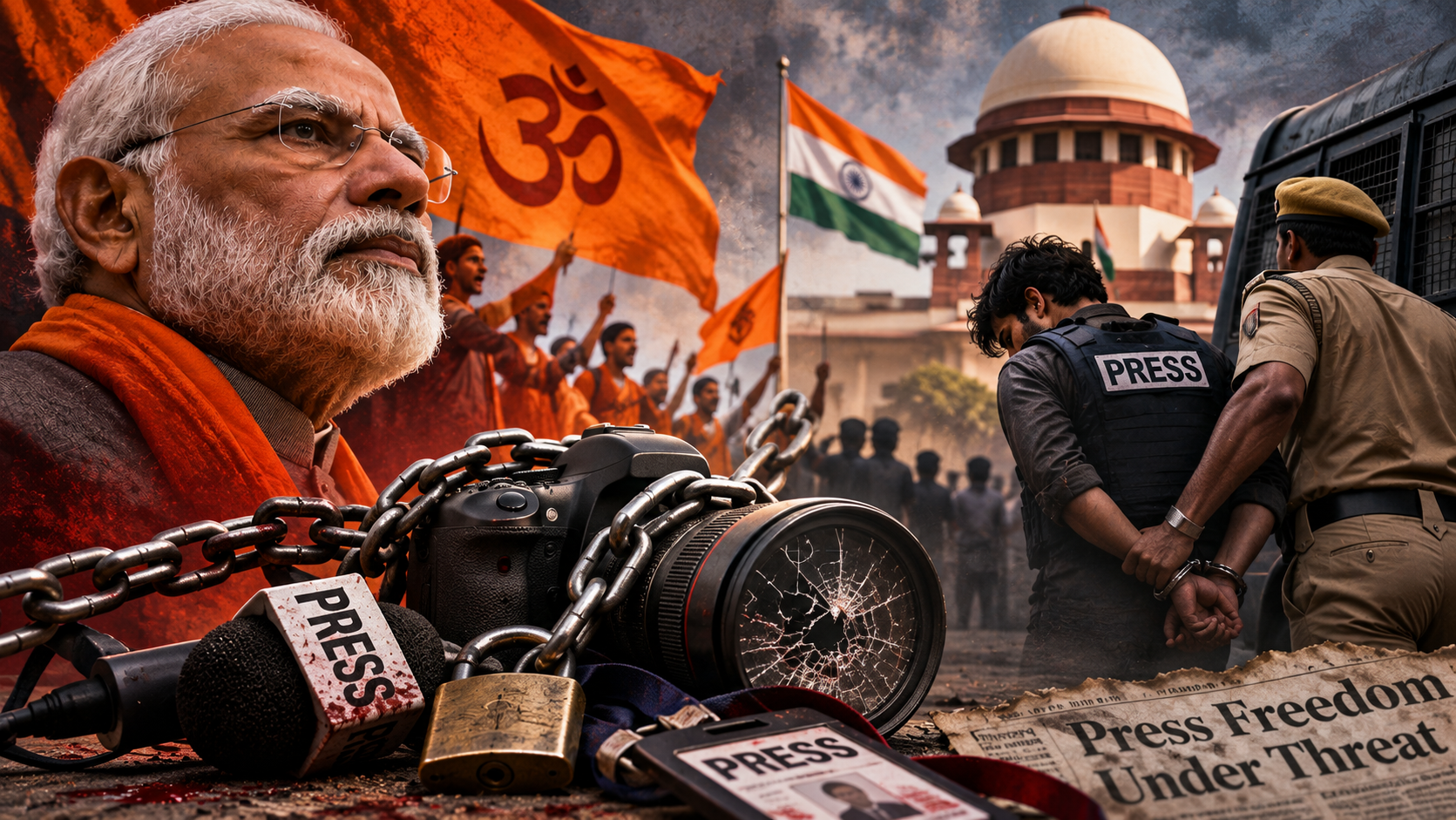
Hindu Nationalism and the Shrinking Space for Journalists in India
Democracy cannot be judged based on the frequency of elections; rather, the measure of a democratic country lies in how much tolerance its institutions have for examination, criticism, and...
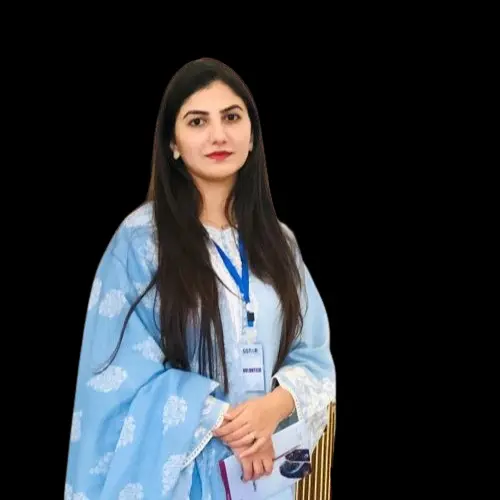
Democracy cannot be judged based on the frequency of elections; rather, the measure of a democratic country lies in how much tolerance its institutions have for examination, criticism, and opposition. As India experiences more problems with press freedom, it poses a serious query whether the political atmosphere of Hindu nationalism is affecting not only journalists inside the country but also foreign correspondents who challenge the actions of the government. Recently, another incident involving Helle Lyng Svendsen, a correspondent for Norway’s Dagsavisen, made this issue an international one.
According to Svendsen, the authorities in India cancelled her visa right before she was to fly out to Hyderabad on November 11, 2026. Invited to the Congress-organised Bharat Summit, the journalist was supposed to give a speech about media freedom and democracy at the conference. This happened after her questioning of the Prime Minister Narendra Modi during his visit to Oslo back in May when she confronted him about his unwillingness to answer questions put to him by the journalists. As per Svendsen, the Indian Ministry of Home Affairs got involved even though she was issued with the visa and political clearance. She believes that her previous criticisms towards the Prime Minister and his government could have led to this situation. The reason from the Indian government is still expected.
What makes this development especially noteworthy is the fact that it occurs within a larger context. Previously, foreign reporters have faced similar problems while reporting on politically sensitive topics in India. In April 2024, Avani Dias, who is the Australia Broadcasting Corporation correspondent for South Asia, left India after experiencing a protracted battle with getting a visa renewal and covering elections. She had been criticized for reporting on Sikh separatism and the killing of Hardeep Singh Nijjar in Canada. Dias stated that she was informed by an official from the Indian government that she had gone too far in her reporting. Although she did get a temporary visa renewal after the intervention of the Australian government, she had made up her mind to leave. Speaking about her experience, she commented, “It became too difficult to do my job in India.”
Another important case is that of French journalist Vanessa Dougnac. After 23 years of reporting from India, she was forced to return home in February 2024 when her journalism permit was revoked, and the case regarding her Overseas Citizen of India (OCI) status was brought forward. The Ministry of Home Affairs had accused her of generating an unfair negative image of India. The Committee to Protect Journalists (CPJ) had criticized the move and demanded the reinstatement of her journalism permit. In these incidents, one gets a sense of a pattern where reporting on politically sensitive issues could pose difficulties for foreign correspondents through administrative means.
However, such pressures are not limited to foreign media alone. Indian reporters have been subjected to intimidation, legal pressures and organized harassment on social media platforms. Ideological polarization in the domestic media space has grown, especially with respect to reports that defy the political discourse created by Hindu nationalists. The case of journalists’ denigration at the hands of the website OpIndia was reported by Reporters without Borders. According to its investigation, at least 314 articles denigrating Indian journalists and their organizations were published from October 2023 to September 2025. This number includes a list of journalists whose work was denounced such as Arfa Khanum Sherwani, Mohammed Zubair, Ravish Kumar, and Rana Ayyub. Also, the investigation uncovered links between the online campaigns of harassment and organizations associated with the Hindu supremacist movement. Thus, ideological intolerance can result in attempts to discredit independent journalists and even intimidation.
At the same time, such an atmosphere demonstrates the influence that majoritarian politics may have on India’s public sphere. In the context of the BJP’s political leadership, the discourse on Hindu nationalism has taken a more prominent role in the discussion of questions related to national identity, dissidence, and criticism of the government. Reporting on religious minorities, communalism, Kashmir or government policies, journalists can easily be accused of being anti-national or spreading the anti-Hindu ideology. The problem here is that criticism of the government becomes criticism of the national/religious identity.
The effects go beyond that of India’s internal politics. With foreign reporters finding restrictions imposed on them whenever they try to question the political leadership or look into sensitive issues, the implications will be both diplomatic and reputation-based. International news outlets may grow wary of having reporters within the country given that their visas, accreditation, and access will now be in question. The issue is also whether India will gain credibility as a democracy when it seeks to project itself as such to the world when its journalists experience problems in doing their work.
India’s position in terms of press freedom on the international level is one cause for concern. According to Reporters Without Borders, the country ranks 157 out of 180 nations in the 2026 World Press Freedom Index, lower than the 151 spot it occupied in 2025. Freedom House has also reported an increase in the attacks against press freedom and the role of the Hindu nationalists’ campaign in leading to self-censorship among Indian journalists.
In the end, it is important to recognize that the Helle Lyng Svendsen saga presents India with a chance to confront an underlying issue of governance. It should not be difficult for a government that claims to have faith in its democratic values to take criticism and not treat journalism critically as a political threat. It cannot yet be confirmed if the recent visa application decision is in any way related to Svendsen’s criticism before. However, taking into consideration her case together with the cases of Avani Dias, Vanessa Dougnac, and Indian journalists that have been intimidated, one thing becomes clear. That is, there is a worrying trend in the Indian media environment. If even foreign journalists are increasingly getting caught up in the middle of political ideologies, then what does that say about the space left for independent journalism in India?