


Hermon’s High Stakes: Settler Stunt on Syrian Border Unpacks Decades of Frozen Conflict
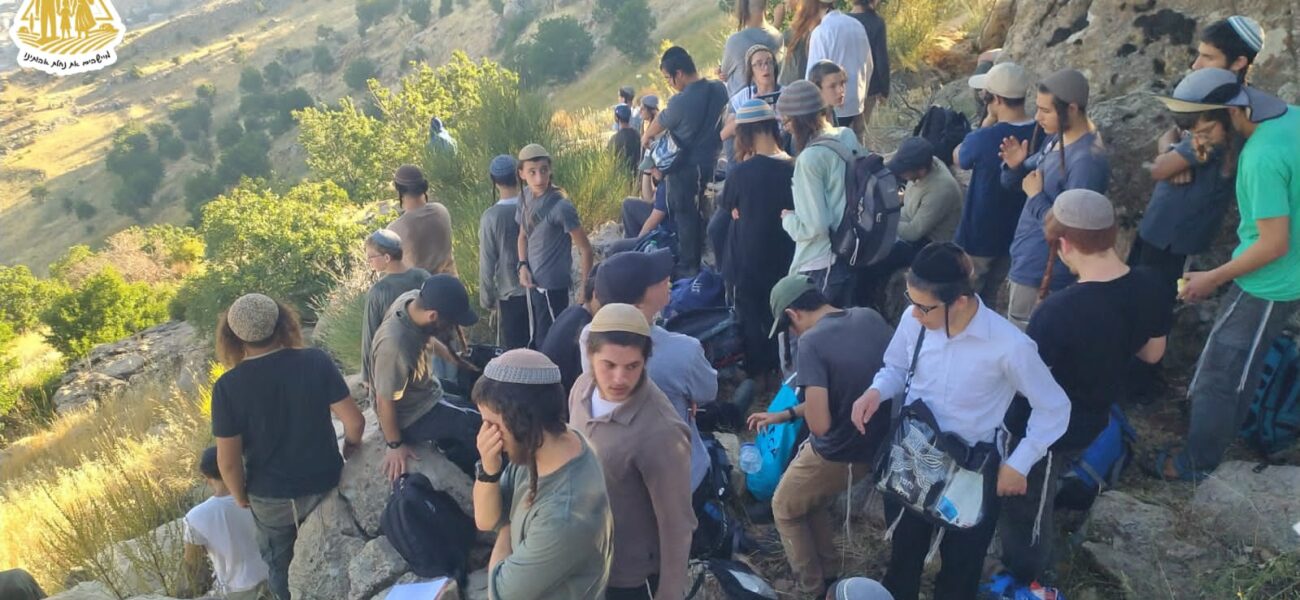
POLICY WIRE — Majdal Shams, Occupied Golan Heights — Picture this: nearly a hundred Israeli civilians, men, women, and even some kids, trudging across a rugged, snow-dusted landscape, making a...

POLICY WIRE — Majdal Shams, Occupied Golan Heights — Picture this: nearly a hundred Israeli civilians, men, women, and even some kids, trudging across a rugged, snow-dusted landscape, making a beeline not for a ski lift, but for an internationally recognized, hostile border. No, this wasn’t a scene from some avant-garde art installation. It was, instead, a surprisingly brazen and rather public attempt by a large contingent of Israeli settlers to breach the separation line into Syrian territory from the flanks of Mount Hermon—a boundary often called the ‘Line of Control’ here, a place where ‘frozen conflict’ sometimes feels more like a thinly veiled, shivering standoff.
The incident, occurring deep in what many view as perpetually contested terrain, saw the Israel Defense Forces (IDF) stepping in to halt the unauthorized pilgrimage. You’ve got to wonder what goes through minds in such moments. Were they just adventurists? Or something more, well, ideologically charged? Israeli military sources confirmed the group’s interception, with most members eventually turned back or briefly detained before release. It’s not an everyday occurrence, is it? Not quite.
This wasn’t just some wrong turn on a hiking trail. This was deliberate. A planned demonstration of, what exactly? Possession? Defiance? Because crossing into Syria from Israel—even the Israeli-occupied Golan—is about as prudent as juggling live grenades in a crowded market. The area’s heavily militarized. It’s under strict observation by the United Nations Disengagement Observer Force (UNDOF). The entire region’s a pressure cooker, really.
“We don’t tolerate unauthorized incursions across the border, regardless of the motivation,” stated an Israeli Defense official, who preferred to remain anonymous due to the sensitivity of border operations. “Our priority is to maintain security — and stability. Actions like these—they compromise it. They force our hand.” And he’s got a point. It puts the IDF in a really awkward spot: maintaining law — and order while managing settler enthusiasm. A tricky balancing act, wouldn’t you say?
But there’s a whole layer of symbolism here, too. Mount Hermon, or Jabal al-Sheikh to Syrians, isn’t just a peak; it’s a geographic and spiritual monolith, steeped in biblical and geopolitical history. It’s seen multiple wars, — and still serves as a strategic lookout. From a political analyst in Damascus, who goes by Dr. Jamal al-Sari when discussing the Golan issue, the situation was predictable. “These actions aren’t accidental,” al-Sari posited in a private exchange. “They’re an escalation of settler ambition, an attempt to normalize claims to land not theirs under international law. It plays into a long game—a very dangerous one. And the world, it seems, just watches.” That last bit stings a bit, doesn’t it?
And these particular settlers—reportedly from communities in the Golan Heights—they aren’t newcomers to pushing boundaries, figurative or literal. The Golan, captured by Israel from Syria in the 1967 Six-Day War and effectively annexed in 1981, remains Syrian territory under international law. There are currently over 25,000 Israeli settlers living in the Golan Heights, according to Israel’s Central Bureau of Statistics, coexisting (uneasily at times) with around 23,000 Druze Syrians who opted not to become Israeli citizens.
📄 POLICY WIRE WHITEPAPER PUBLISHED: PAKISTAN'S NATIONAL SECURITY POLICY PRIORITIES
👉 READ BY CLICKING HEREThis border brouhaha isn’t isolated. It fits a pattern of regional tensions where lines on a map mean vastly different things to different populations. Look at Kashmir, for example, another intensely militarized zone where disputed borders define —and sometimes deform—lives. Or consider the broader Muslim world, where such transgressions on what’s perceived as Arab land only fuel already potent narratives of occupation and injustice. For a Pakistani observing this from afar, it’s just another notch in a long list of grievances—another reminder of land claims disputed through might, not necessarily right. Policy Wire has covered similar tensions affecting Kashmir and its regional stability previously, highlighting the consistent challenge of managing these volatile fault lines.
What This Means
This recent episode, despite its somewhat farcical optics, carries some heavy implications. Politically, it signals a renewed confidence—or perhaps audacity—among some settler factions, eager to assert territorial claims even into sovereign Syrian land. This pressure from the ground up complicates the already tangled geopolitical dynamics, pushing the IDF into roles it perhaps doesn’t relish. Economically, while not directly impacting trade, such incidents ripple through regional stability, potentially chilling foreign investment in an already volatile Middle East. For Israel’s government, it’s a tightrope walk: manage domestic hardliners without provoking an international incident or—worse—re-igniting an active front with Syria or its Iranian proxies. Because these border provocations, even minor ones, have a way of escalating. They can quickly spiral from a mere news item to a significant diplomatic headache, or, if things go really sideways, something far worse. It’s a testament to the fragile peace—or rather, the frozen conflict—that grips the Levant.
Ultimately, these actions are not just about land. They’re about narrative, about historical claims, about who gets to draw the lines — and who has to live by them. And on Mount Hermon, sometimes it feels like everybody wants to draw their own.