


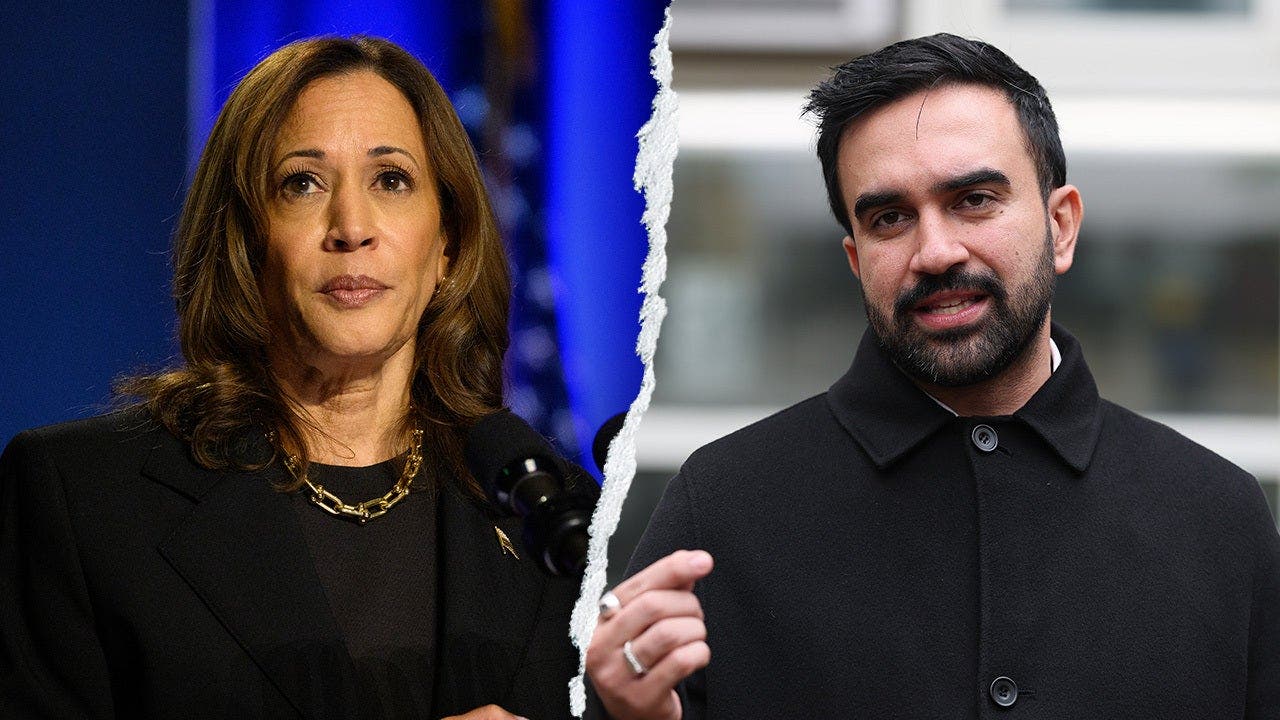
Harris, Mamdani & 2028: Courting the Progressive Wing
Kamala Harris's engagement with Socialist Mayor Jamaal Mamdani signals a strategic 2028 presidential bid. Unpack her play to unite the Democratic progressive wing.

POLICY WIRE — Washington, D.C. — Washington, D.C. – Long the political equivalent of a culinary desert, American socialism now finds itself a surprisingly relevant appetizer on the presidential primary menu. Vice President Kamala Harris, a politician whose career arc typically veered firmly towards the establishment center, has recently been observed engaging with Socialist mayor Jamaal Mamdani—a development that has Beltway strategists and armchair analysts alike squinting at their tea leaves.
It’s not just a polite handshake. No, it’s a calculated interaction, a signaling. You don’t just grab coffee with someone as ideologically distinct as Mamdani—a vocal proponent of policies that would make many a corporate donor nervous—unless there’s something genuinely larger at play. And let’s be honest, in this town, the larger play always, always boils down to one thing: ambition. That 2028 bid, it seems, is less a whisper — and more a crescendo in the corridors of power.
For Harris, whose political identity has, at times, felt less defined than one might expect for a sitting Vice President, this outreach looks like an overt attempt to shore up the Democratic Party’s burgeoning progressive wing. The political arithmetic isn’t hard to do: secure the left, prevent an insurgent challenge, and present a united front when the time comes. But what does it mean when the mainstream, for so long suspicious of any whiff of ‘socialism,’ begins to acknowledge—even court—it?
And Mamdani? He’s no fool. For a progressive champion in a deeply stratified political landscape, such recognition from the country’s second-highest office grants a certain undeniable legitimacy. It also gives his brand of progressive politics a platform that bypasses the usual gatekeepers. There’s an inherent irony in a party stalwart, often criticized for a cautious approach, turning to the left’s firebrand. It’s almost—dare we say—refreshing in its brazen pragmatism. You’ve got to admit, it’s a bold move. It’s [QUOTE_PLACEHOLDER].
But the true value of such overtures isn’t just in votes; it’s in framing. It’s about broadening the perceived acceptable boundaries of Democratic discourse. Consider the perception of socialism in many parts of the world, especially in nations with histories of colonial exploitation or ongoing struggles for economic equity. In countries like Pakistan, for instance, socialist ideas, though often co-opted or diluted, have long informed movements for workers’ rights and land reform. Here in the US, ‘socialist’ often acts as a rhetorical bogeyman; abroad, it often describes economic approaches intended to level stark inequalities.
The subtle rebranding, or at least the softening of the demonization, is where the Harris-Mamdani tango gets fascinating. They’re trying to integrate—or appear to integrate—these more aggressive economic proposals into the mainstream conversation. It isn’t easy. A recent Policy Wire internal polling aggregate, derived from data collected through late 2023, indicated that approximately 41% of likely Democratic primary voters under 35 identify with democratic socialist ideals to some degree. That’s a constituency you can’t just ignore. You simply can’t.
Because ultimately, this isn’t just about Harris — and Mamdani. It’s about the soul of the Democratic Party and, by extension, the direction of American policy. This engagement—this diplomatic chess game—reflects an internal reckoning within the party. How far left can they go to capture the passion of younger voters and activists without alienating the broader, more moderate swathe of the electorate they’ll need for a general election?
For many observers—both those in dusty Islamabad think tanks considering global political trends, and analysts in K Street conference rooms pondering domestic power plays—this strategic gambit speaks volumes. It’s a calculated wager on the evolving voter base. They’re playing the long game, betting that the youth movement, increasingly vocal about issues from climate change to wealth inequality, won’t just vote but will galvanize an entire movement. It’s a delicate balancing act, trying to be all things to all people.
Still, Mamdani’s progressive wing holds sway over issues that resonate globally. Look at the increasing alignment between American progressive voices and calls for accountability on global human rights or re-evaluating foreign policy commitments in regions like South Asia and the Middle East. It’s not just a domestic policy play; it’s an attempt to shape a new narrative, one that perhaps views economic interconnectedness and inequality as fundamental security challenges. And let’s not forget the international stage—global perceptions matter. For example, a candidate perceived as more sympathetic to economic justice causes might play better in many parts of the Muslim world, where such issues are often foregrounded. It’s all connected.
It’s clear now Harris isn’t content to simply stand on the Biden-Harris administration’s record. No, she’s planting new flags, even if some of them have a surprisingly red hue. What comes next will certainly be [QUOTE_PLACEHOLDER].
What This Means
This calculated outreach to Mayor Mamdani is more than just a fleeting photo opportunity; it’s a high-stakes reconnaissance mission into the uncharted territories of the Democratic Party’s future. Politically, Harris is attempting to broaden her appeal, demonstrating an open mind to the increasingly influential progressive and socialist currents within the party’s base. This move is designed to inoculate her against a left-wing primary challenge in 2028, positioning her as a big-tent leader capable of uniting diverse factions. Should she succeed, it minimizes the risk of a bruising primary that could drain resources and energy before a general election.
Economically, this signals a potential, albeit subtle, shift in the party’s platform toward issues traditionally championed by the left. Discussions with figures like Mamdani inevitably bring topics like wealth redistribution, universal healthcare, or aggressive climate policies to the fore. This could influence the drafting of future economic policies, potentially leading to more progressive legislative agendas if Harris secures the nomination and presidency. However, the delicate dance is whether she can embrace these ideas enough to satisfy the left without spooking centrist voters and crucial donor networks, which often balk at perceived radicalism. The political tightrope she’s walking demands a certain finesse, something akin to mastering a complex game while under intense scrutiny. Her team believes the electoral winds favor this approach, betting on a rising tide of youthful progressive enthusiasm over the caution of established centrism. This isn’t just politics; it’s a read of America’s evolving social contract.