

Gwadar Is a Strategic Asset, Not a Chinese Liability
The portrayal of Gwadar as a Chinese “liability” offers a narrow reading of a project whose significance extends well beyond immediate port revenues. The challenges surrounding Gwadar are real,...

The portrayal of Gwadar as a Chinese “liability” offers a narrow reading of a project whose significance extends well beyond immediate port revenues. The challenges surrounding Gwadar are real, including security threats, infrastructure gaps, slower-than-expected commercial activity and the need for greater local participation. But turning these challenges into evidence of strategic failure overlooks the larger purpose of Gwadar and the continuing commitment of both Pakistan and China to its development.
The central weakness in the liability argument is its assumption that Gwadar’s success depends on replacing established maritime routes or rapidly becoming another Dubai or Singapore. That was never the only rationale behind the port. Gwadar’s importance lies in its integration with CPEC, Pakistan’s maritime economy and its potential to connect regional markets. For China, an additional connectivity option has strategic value even when it does not replace existing routes.
This is particularly relevant to the argument about the Malacca Strait. Gwadar was never realistically capable of eliminating China’s dependence on maritime transportation. Its strategic value instead lies in diversification. A country with extensive global trade benefits from having multiple routes, logistics nodes and economic partnerships. Gwadar therefore should be viewed as one component of a wider connectivity network rather than as a substitute for China’s entire maritime trade system.
CPEC itself has also evolved. The first phase concentrated heavily on energy and physical infrastructure, while the second phase increasingly focuses on industrial cooperation, agriculture, minerals, technology, logistics and trade. This changes the way Gwadar should be assessed. Its future does not depend solely on transporting Chinese goods from Xinjiang to the Arabian Sea. Its potential is increasingly linked to the development of an economic ecosystem around the port and its integration with Pakistan’s wider economy.
Pakistan and China have explicitly reaffirmed this direction. Their recent discussions have emphasized developing Gwadar as a regional connectivity and logistics hub and strengthening the economic dimension of CPEC. The inauguration of the New Gwadar International Airport and continued development of the Gwadar Free Zone are part of this broader effort. These investments demonstrate that both countries continue to see strategic and economic value in Gwadar.
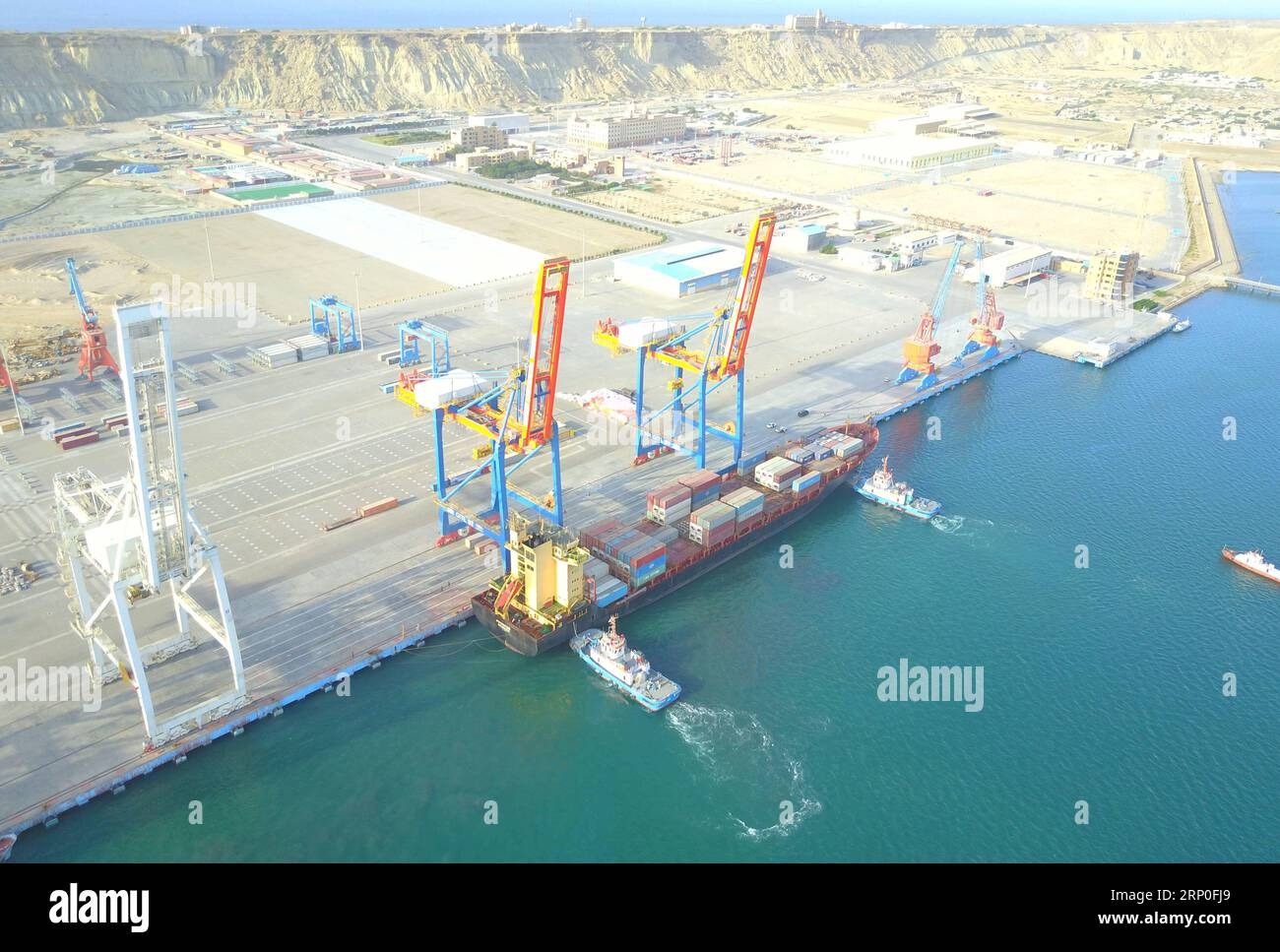
The claim that Gwadar has virtually no commercial potential also requires qualification. The port has not yet reached the scale originally envisaged, but that does not mean it is commercially irrelevant. Gwadar has handled commercial cargo and large vessels, while its supporting infrastructure continues to expand. The development of a port ecosystem takes time because shipping activity depends not only on the port itself but also on roads, logistics, industrial zones, utilities, warehousing and reliable commercial demand. Judging the project before these components fully mature risks confusing an incomplete economic ecosystem with a failed one.
Security remains the most serious challenge. Attacks against Chinese citizens and CPEC-related interests have imposed significant costs and have understandably affected the pace of investment. Pakistan has nevertheless consistently reaffirmed its commitment to protecting Chinese personnel and projects. Importantly, security concerns have not resulted in the abandonment of CPEC. Instead, security cooperation has become an increasingly important component of the Pakistan-China relationship.
The same distinction applies to China’s more selective approach to overseas investment. Beijing has become more cautious about financing large infrastructure projects globally, placing greater emphasis on commercial viability and sustainable returns. This should not automatically be interpreted as a retreat from Pakistan. CPEC’s evolution from an infrastructure-heavy programme towards industrial and economic cooperation is itself consistent with this changing Chinese investment approach.
The concerns of Gwadar’s local population also deserve serious attention. Water, electricity, employment, fishing and access to economic opportunities remain important issues. Pakistan’s own leadership has increasingly emphasized that development must benefit local communities. This is not an argument against Gwadar; rather, it identifies what must be strengthened if the project is to achieve its full potential. A successful port must generate economic activity around it, create employment and integrate the local population into its development.
Ultimately, Gwadar should neither be presented as an instant commercial success nor dismissed as a Chinese burden. Its significance is strategic, economic and regional. It provides Pakistan with an important maritime development platform, supports the development of Balochistan and forms part of a wider connectivity framework linking Pakistan with China and potentially with regional markets.
The more accurate assessment is that Gwadar remains an unfinished strategic opportunity. Its infrastructure has developed faster than its commercial ecosystem, while security and local development challenges have complicated its progress. These are problems that require policy attention, not evidence that the underlying project has become irrelevant.
China’s continued engagement and Pakistan’s sustained commitment demonstrate that both sides continue to see Gwadar as an asset worth developing. The next phase will determine how effectively existing infrastructure can be converted into trade, investment, industrial activity and regional connectivity. The question, therefore, is not whether China can “swallow or spit out” Gwadar. It is whether Pakistan and China can fully realize the strategic and economic potential of an asset that remains central to the future trajectory of CPEC.
Author