

Guterres Issues Final ‘Moment of Truth’ Warning Ahead of Last UN Climate Term
UN Secretary-General António Guterres demands world leaders act now at COP31, marking his final term as global climate crisis accelerates.

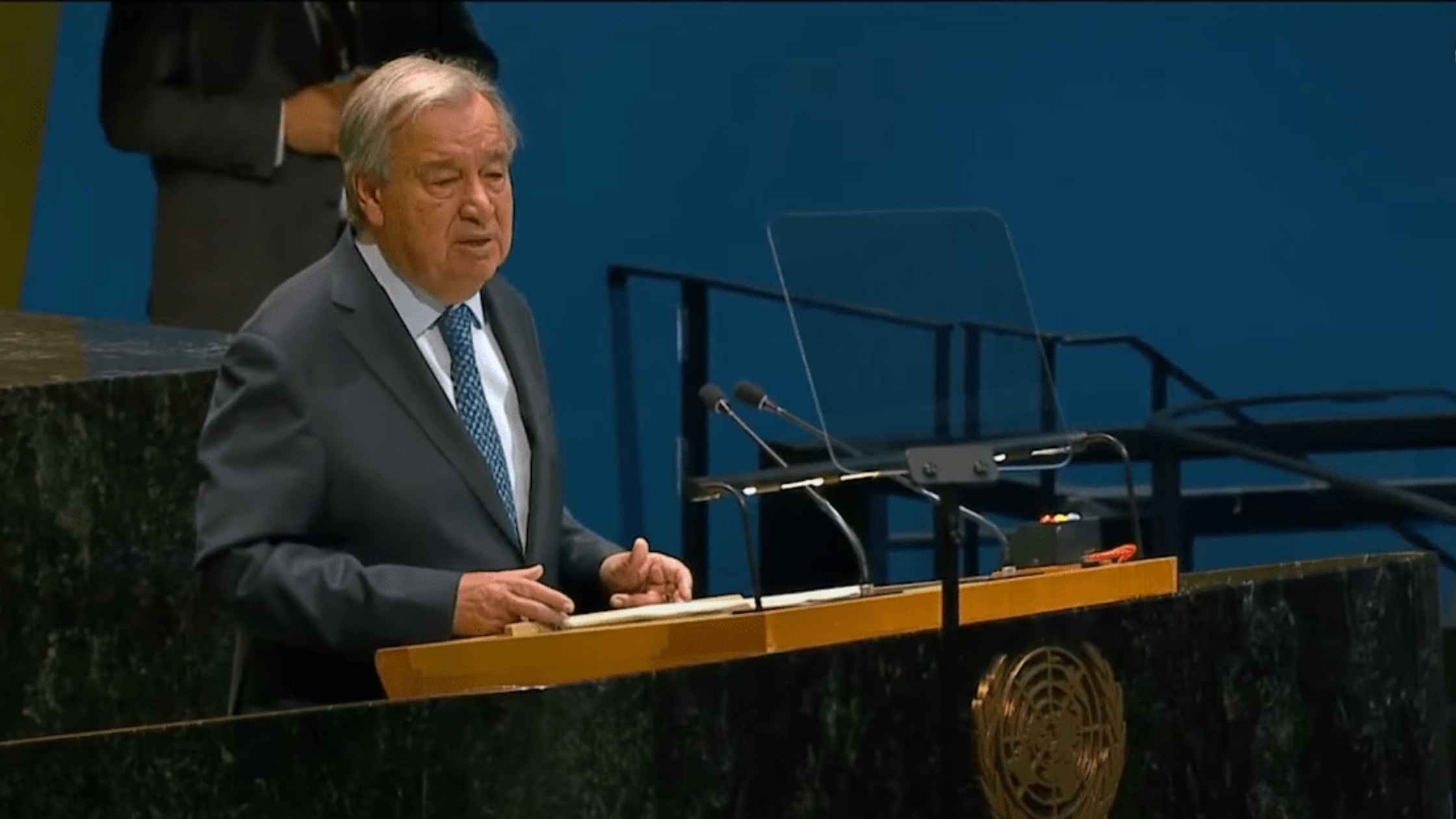
POLICY WIRE — New York, USA — As the global climate summit opens in Turkey this Monday, United Nations Secretary-General António Guterres issued a stark ultimatum to world leaders, describing the current era as a moment of truth.
The UN chief has spent the last decade issuing increasingly dire warnings regarding the environmental impact of burning oil, gas, and coal, using increasingly forceful rhetoric to emphasize the threat. Three years ago, he famously declared the era of global boiling had begun to describe the surge in temperatures and the frequency of extreme weather events.
This upcoming summit marks Guterres’s final plea regarding global warming before his second and concluding term as head of the UN ends at the close of this year. His urgency comes as the planet grapples with lethal heatwaves, floods, droughts, and storms, exacerbated by the El Niño phenomenon which disrupts global weather patterns.
Guterres told participants of COP31, set for November 9-20, that the world can no longer endure cycles of endless debates where nations attempt to shift blame onto one another. He insisted that every party must increase their efforts immediately.
The gravity of the message was evident in the fact that the Secretary-General repeated the specific ‘moment of truth’ phrase three times during a 20-minute exclusive interview with The Associated Press. Speaking from his office at the UN headquarters, he detailed his final effort to combat climate change during a ten-year tenure in which he became a leading advocate for drastic emission reductions.
Guterres reflected on one of the most difficult periods of his professional life when consulting with scientists prior to a major speech last year. He had intended to maintain the 2015 Paris Agreement goal of limiting warming to 1.5 degrees Celsius, but experts informed him that this target is no longer achievable due to the accumulation of carbon dioxide and other greenhouse gases.
He expressed shock at this reality, stating that the failure lies not with the world itself, but with political leadership. He noted that protecting the environment requires a long-term vision that is currently missing from systems where policies shift too.
Drawing on his experience as the Prime Minister of Portugal in the late 1990s, Guterres argued that investing in a sustainable future is possible, citing the global expansion of wind and solar energy as a source of hope. However, he warned that conflicts in Ukraine and Iran, combined with the high energy demands of artificial intelligence, are creating compounding threats.
Recalling a trip to the highest peaks in Nepal three years ago, Guterres had warned of a future defined by landslides and bursting glacial lakes. He observed that these disasters arrived faster than he anticipated, noting that floods in August alone claimed over 1,400 lives and left 5,600 people missing.
Events scientists link to climate, Guterres argued that fossil fuel companies are reaping massive profits that should be taxed to assist nations most severely impacted by the crisis. A recent meeting with a research team on a platform in the Arctic Ocean left him feeling a sense of fury toward those who deny or refuse to implement necessary measures to halt the crisis.
Former U.S. Vice President Al Gore praised Guterres for being eloquent and forceful in his initiatives, noting the leader understands the challenge facing humanity. Laurence Tubiana, CEO of the European Climate Foundation and leader of the Paris Agreement negotiations, stated that Guterres pushed the climate agenda further than any predecessor, despite operating in highly adversarial political environments.
Guterres acknowledged that because nations are not required to follow UN directives and because superpowers hold veto power, his office lacks real authority and significant funding. Nevertheless, he emphasized that the UN possesses a voice, offering three words of advice to his successor: tell the truth.
The Secretary-General concluded by urging the public to treat climate change as an existential threat, asserting that the fight is essentially one for human survival.
Reporting by Policy-Wire (PW)>