
GOP Spends Millions to Stop Democratic Surge, But Senior Senator Calls Party ‘Tone Deaf’
Republican senators face pressure as GOP spends millions to counter blue wave. Senior senator calls party tone deaf.

POLICY WIRE — Washington, D.C. — National Republican campaign groups are investing heavily in Senate races across the country as polling suggests the party is struggling to protect its traditional strongholds ahead of the midterms.
The National Republican Senatorial Committee has launched a $46 million advertising effort in key states, with allocations including $11 million for Ohio, $9 million for Iowa, $8 million for North Carolina, and $2 million for Alaska, according to the New York Post.
The Senate Leadership Fund, aligned with Senate Majority Leader John Thune, is pouring $100 million into Texas Attorney General Ken Paxton’s campaign, with plans to continue buying ad time through Election Day. Recent surveys show Paxton trailing Democrat James Talarico by 50-44 percent.
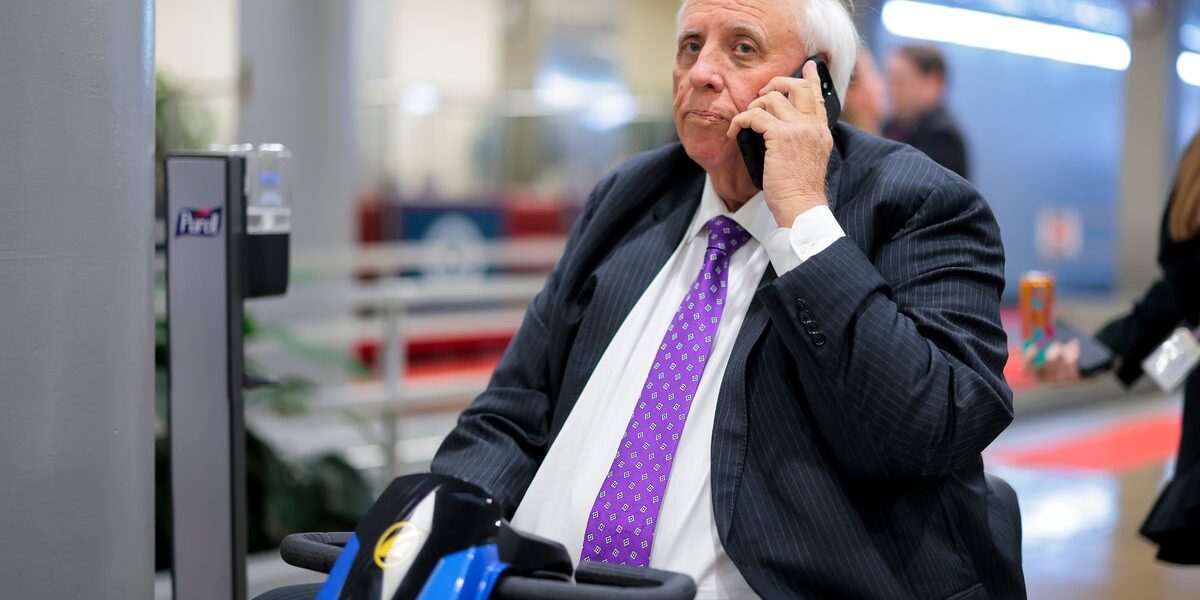
West Virginia Senator Jim Justice criticized his party’s strategy, stating, You’ve got Republicans scrambling everywhere. He added that the party failed to connect with voters earlier in the year, despite having made progress on various issues.
A source familiar with the strategy described the spending as a “red wall kind of thing,” noting that funds are only being allocated where they believe they can make an impact.
The financial push reflects growing concerns within the GOP over both chambers of Congress. With a narrow 53-47 Senate majority, losing just four seats would give Democrats control of the chamber.
In Ohio, former Democratic Senator Sherrod Brown leads appointed Republican Jon Husted by 4 points, according to Quantus Insights, which shows the race as nearly tied at 45.6 percent for Brown and 45.3 percent for Husted. Husted recently expressed support for ending the Iran conflict but abstained from a War Powers resolution vote.
In Iowa, where President Donald Trump won 56 percent of the vote, Democrat Josh Turek is deadlocked with Republican Ashley Hinson. A Marist College Poll shows Turek at 50 percent and Hinson at 42 percent among registered voters.
📄 POLICY WIRE WHITEPAPER PUBLISHED: PAKISTAN’S NATIONAL SECURITY POLICY PRIORITIES
Analysts are revising their predictions. Larry Sabato reclassified Iowa as a “toss-up” and Kansas as “leans Republican,” while the Cook Political Report shifted 15 House seats toward Democrats, including changing New Jersey Representative Tom Kean’s district to “lean Democrat.”
Cook Political Report’s Erin Covey said the economy is a major challenge for Republicans in Ohio and Iowa, citing rising gas prices and tariffs. She noted that the economic climate is worse for the party compared to the 2018 midterms, when Democrats gained 40 House seats.
Cook analyst Amy Walter said the economy has become a heavy burden for Trump, making it risky for him to campaign in competitive areas where his presence could boost Democratic turnout.
Tracking polls from Economist/YouGov show Trump trailing in all states except Idaho, Wyoming, and West Virginia. His upcoming campaign stops will focus on safe Republican territory in Oklahoma and Alabama, rather than battlegrounds.
In Kansas, where Republicans have not lost a Senate race in 100 years, Senator Roger Marshall holds a slim lead over Democrat Adam Hamilton, according to the latest Emerson College Polling-Nextar Media Survey. The race shows Hamilton at 45 percent and Marshall at 43 percent.
Marshall recently called for better coordination between ICE and local law enforcement following immigration operations in the state.
Party strategists believe that heavy ad spending and Democratic divisions over socialism could help them hold off the challenge. A Republican source told the New York Post that “a lot of our races are being nationalized,” but noted that some states like Iowa, New Hampshire, and Maine remain influenced by local factors that favor GOP candidates.
Reporting by Policy-Wire (PW)