


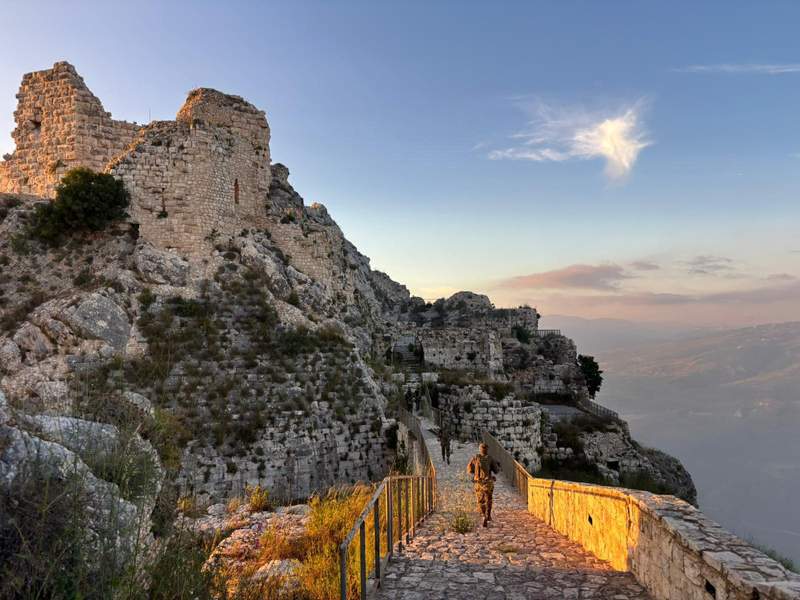
The Ghost of Beaufort: How Strategic Retreats Haunt Modern Nations
POLICY WIRE — Tel Aviv, Israel — Sometimes, the quiet departure is louder than any thunderous invasion. Nations spend fortunes and lives securing a strip of land, convinced that their physical...

POLICY WIRE — Tel Aviv, Israel — Sometimes, the quiet departure is louder than any thunderous invasion. Nations spend fortunes and lives securing a strip of land, convinced that their physical presence ensures some measure of peace, or at least, deterrence. And then, one day, they leave. They pack up the barracks, roll away the tanks, — and watch their rear lights fade into the night. It’s supposed to be a resolution—a fresh start. But what if it’s merely a preamble to another chapter of blood — and frustration? That, in essence, is the enduring lesson, or perhaps, the gnawing anxiety, etched into the collective consciousness of the Levant, a region that’s seen more than its share of comings and goings.
Consider Israel’s calculated withdrawal from southern Lebanon back in 2000. Specifically, its retreat from the Beaufort Castle, a Crusader-era stronghold atop a ridge that afforded a commanding view of the Litani River, its strategic value undiminished by millennia. The idea wasn’t simply to go home. No, it was supposed to extricate the nation from a seemingly endless morass, ending the decades-long occupation of the so-called security zone. A military operation that started in the 1970s, expanded in the early ’80s, and then lingered for eighteen tortuous years, had taken a brutal toll. Both human and economic—they were looking for an exit strategy, you see. [QUOTE_PLACEHOLDER]
But the pullout, lauded by many as a tactical maneuver to avoid further casualties, simply rearranged the pieces on the chessboard. It didn’t clear the board. Rather, it presented a vacuum, eagerly filled by adversaries who’d learned to operate in the shadows, hone their tactics, and—more importantly—build political capital from the very resistance that had made the occupation untenable. The decision to leave was pragmatic, but the repercussions? They’ve been anything but straightforward. The conflict just… mutated.
And so, instead of achieving an idyllic peace, the landscape post-withdrawal became fertile ground for Hezbollah’s ascendance. That wasn’t the explicit plan, was it? The group transformed from a fragmented militia into a formidable state-within-a-state, a non-state actor with alarming capabilities, funded and armed by external players. You can’t just wish away these forces. It’s a bitter paradox: the act of disengagement, meant to secure a nation’s borders, often merely shifts the battleground or, worse, empowers new threats just across the fence. You’d think policymakers would internalize this dynamic by now, but history, as always, is a reluctant teacher.
Because ultimately, these border zones, these areas of contested influence, they don’t just disappear when a dominant force pulls back. They morph. They become training grounds for proxies, proving grounds for new weaponry, and breeding grounds for narratives of resistance that can inspire movements far beyond the immediate geography. Look at Pakistan, for instance, grappling with its own volatile borders and the persistent challenges of militant groups operating from its rugged tribal areas—a geopolitical legacy stemming from numerous conflicts and interventions. It’s a different context, sure, but the underlying principle is similar: troop withdrawals or strategic realignments don’t end the struggle; they reconfigure it, often in ways unforeseen and unwanted.
The estimated annual economic cost of sustained regional conflict and military engagements across the Middle East and North Africa has topped a staggering $1 trillion, according to a 2019 report by the Institute for Economics and Peace, clearly illustrating the astronomical long-term price of these unresolved standoffs, even when a side believes it has taken the path of least resistance by withdrawing. This kind of financial burden, accumulating year after year, puts a truly uncomfortable question mark on the notion of cost-saving withdrawals.
What This Means
The ghost of Beaufort reminds us that state-level policy decisions, particularly those involving military disengagement, ripple through the entire regional ecosystem. For Israel, the withdrawal was intended to reduce direct exposure — and secure its northern frontier. But in its wake, it inadvertently created a stronger, more organized adversary that didn’t just target military positions but increasingly posed an existential threat to its civilian population. It’s a stark political lesson that simply abandoning contested territory—especially without a comprehensive, multilateral diplomatic framework—can destabilize an entire area, empowering fringe elements and drawing in regional powers whose interests don’t align with yours. Economically, this means resources originally intended for internal development or social programs are instead perpetually redirected toward defense and intelligence gathering to counter these emergent threats. You can’t escape the bills just by moving your troops.
the experience has, regrettably, solidified a certain hawkish caution within Israeli security circles—a profound distrust of withdrawals that isn’t entirely illogical when considering the consequences. This posture, in turn, fuels a perpetual state of tension, creating a feedback loop where every diplomatic overture is viewed through a lens of past disappointments. It suggests that, in complex regions like the Muslim world, where historical grievances run deep and geopolitical rivalries play out through proxy warfare, the mere physical absence of a power doesn’t equate to an absence of conflict. It often just redefines its parameters. One step back doesn’t always mean two steps forward; sometimes it’s just a tactical retreat that lets the enemy regroup, and boy, did they regroup. It’s a messy business, managing these ghost wars, — and it certainly won’t be ending any time soon. We’re in it for the long haul, seems to me.