

Ebola’s Lingering Shadow: New Warnings Redefine the Fight Against a Persistent Foe
POLICY WIRE — Geneva, Switzerland — Sometimes, the quietest threats are the loudest. We’ve all thought — hoped — that when a patient walks away from Ebola, the...

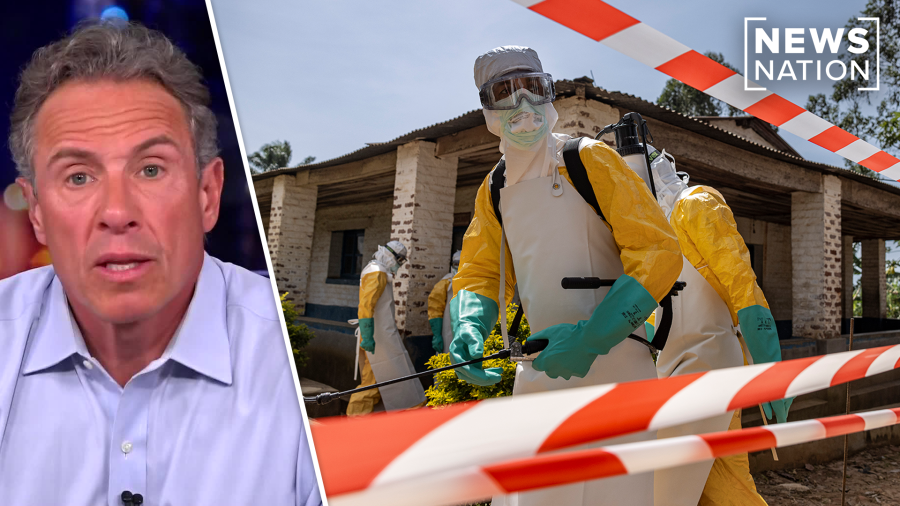
POLICY WIRE — Geneva, Switzerland — Sometimes, the quietest threats are the loudest. We’ve all thought — hoped — that when a patient walks away from Ebola, the story’s over. A heroic recovery, a triumphant return. But that tidy narrative? It’s unraveling, fast. And it’s leaving a grim reminder that some monsters don’t just disappear with a negative test result.
It turns out that for some survivors, the Ebola virus — that notorious killer — isn’t truly gone. It simply retreats. It hunkers down in ‘immune privileged’ spots within the body, places where the immune system doesn’t launch a full-scale assault. Think eyeballs, spinal fluid, reproductive organs. It’s a chilling concept, one that demands a complete rewrite of our playbook on outbreak management and post-recovery care, especially in places where medical resources are stretched thinner than belief.
A recent stark observation, made by a veteran medic on the front lines of numerous outbreaks, suggests we’ve only ever seen half the picture. The notion that the virus could continue its clandestine operation, silently present, for what could be hundreds of days post-recovery, radically alters the risk assessment for public health authorities. [QUOTE_PLACEHOLDER] is a sentiment that underscores the new depth of this challenge.
Because, frankly, this isn’t just about one individual’s health anymore. It’s about potential reservoirs, silent vectors, — and the constant threat of re-emergence. Imagine a seemingly healthy survivor, decades removed from acute illness, inadvertently triggering a new cluster. It’s a nightmarish scenario, one we can’t just wave away. They’re not just survivors; they’re, potentially, carriers. And that shifts everything.
The science isn’t just theory here. There’s hard data backing this up, chillingly so. A 2016 study published in The New England Journal of Medicine documented instances of Ebola virus RNA — the genetic blueprint — persisting in seminal fluid for an astounding 565 days after a patient’s initial symptoms. Think about that for a second. More than a year and a half. This isn’t some fleeting remnant; it’s a persistent, albeit sometimes latent, biological presence.
And let’s talk about the implications for countries already grappling with endemic diseases — and limited infrastructure. Pakistan, for instance, with its vast, often rural populations and sometimes fractured healthcare access, stands as a prime example of a region where such persistent viral threats could cause unprecedented damage. Health education is a beast there — getting information to everyone, combating misinformation — it’s incredibly tough. In a place where you’re already fighting polio and dengue, adding this invisible Ebola shadow makes an already impossible task just that much more crushing. Consider the religious — and cultural practices around burial, too. They’re deeply ingrained, and if they conflict with extended biosecurity measures needed for deceased survivors, it’s not just a public health issue; it’s a social and political powder keg. That’s a burden that many — frankly — aren’t prepared to bear.
We’re talking about a significant psychological toll on survivors too, by the way. Imagine living with the constant dread that you might still be carrying the very thing that tried to kill you — and could potentially pass it on. This creates layers of stigma — and fear, making reintegration into communities an even steeper climb. It’s a cruel twist, turning those who’ve overcome so much into a perceived ongoing risk. We’re asking them to shoulder quite a load, aren’t we?
📄 POLICY WIRE WHITEPAPER PUBLISHED: PAKISTAN'S NATIONAL SECURITY POLICY PRIORITIES
👉 READ BY CLICKING HEREIt also means global health policy makers, and certainly funding bodies, can’t just “pack up the tents” once an outbreak’s declared over. Recovery programs need to stretch for years, not months. Monitoring, psychological support, education campaigns — these aren’t luxuries anymore; they’re bare necessities.
And there’s another side to this coin: diagnostics. We’ve got to develop better tools, easier to use, that can detect these hidden viral caches in challenging environments. The FDA’s focus on advanced scrutiny for drug safety is a good start, but detecting lingering viruses in remote villages demands a different kind of innovation altogether.
What This Means
This evolving understanding of Ebola’s tenacity is far more than a medical footnote; it’s a policy earthquake. Economically, it signifies prolonged expenditure — for surveillance, for enhanced diagnostics, for community engagement, and for survivor care that stretches well beyond acute treatment. Aid agencies, governments in affected regions, and global health organizations will need to recalibrate budgets and strategies, diverting funds from other pressing issues or demanding new contributions from international partners. It’s a zero-sum game often, — and this added complexity ensures more pressure.
Politically, the prospect of silent vectors could easily exacerbate existing tensions. Trust, a commodity always in short supply during outbreaks, will become even more precious — and harder to earn. Governments must navigate public fear versus the privacy — and rights of survivors. Imposing draconian, indefinite surveillance measures could backfire, pushing individuals underground, hindering disease control efforts rather than helping them. For Pakistan and other Muslim-majority nations, already grappling with geopolitical complexities and sensitive public health campaigns, this new dimension adds layers of societal scrutiny and potential mistrust if mishandled. Building resilient health systems — robust enough to track a virus that goes dark — will become a litmus test for governance. The world has been put on notice. It’s not enough to win the battle; we’ve got to win the ‘cold war’ against this virus, too. The stakes, it’s clear, just got a lot higher.