


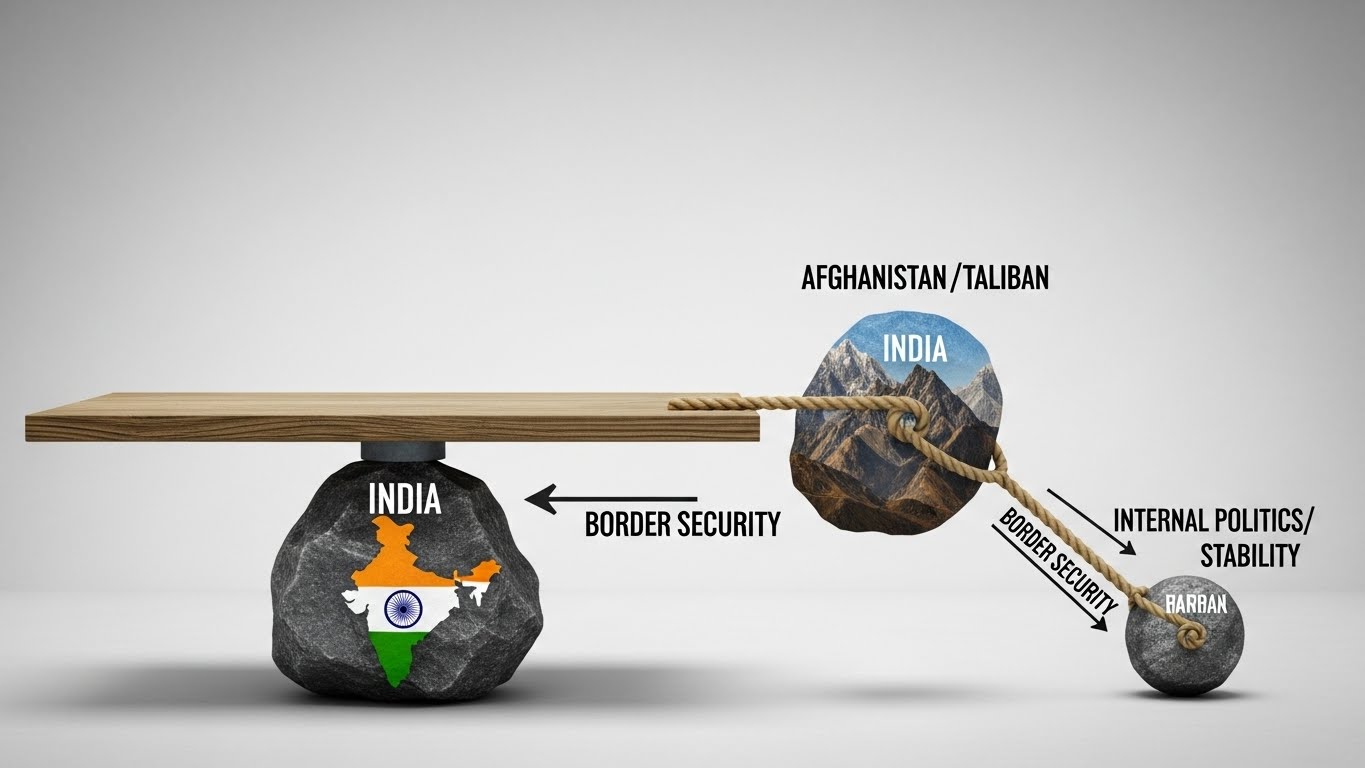
Pakistan’s Two-Front Security Challenge: Deterrence, Terrorism, and Regional Stability in 2025
At the close of 2025, Pakistan confronted some of its most complex and multifaceted security challenges in recent decades, simultaneously on its eastern and western frontiers. The year was marked by...

At the close of 2025, Pakistan confronted some of its most complex and multifaceted security challenges in recent decades, simultaneously on its eastern and western frontiers. The year was marked by intense geopolitical turbulence, with escalating tensions with India in May and a persistent struggle against terrorist activity along the Afghanistan border.
These dual pressures placed Islamabad’s military readiness, border management strategies, and diplomatic resilience under unprecedented scrutiny. Beyond the immediate operational and security concerns, the events of 2025 have profound implications for regional stability, Pakistan’s foreign policy posture, and its role in shaping the broader South Asian security architecture.
There was a short but intense battle on the eastern front, between 7 and 10 May 2025, which was domestically known as Ma’araka-e-Haq or Operation Bunyan Um-Marsoos. It was a clash of organized air, missile and drone attacks across the Line of Control and other disputed regions.
In a speech on 27 December 2025 in Garhi Khuda Bakhsh, Sindh, on the occasion of former Prime Minister Benazir Bhutto’s death anniversary, President Asif Ali Zardari recounted the conflict, noting that his military secretary had advised him to go to a bunker at the outbreak of hostilities, a suggestion he refused, stating, “If martyrdom is to come, it will come here; leaders die in the field, not in bunkers.”
Asif Ali Zardari further emphasized Pakistan’s preparedness, asserting that the country had anticipated the attack and that the Pakistan Air Force was actively engaging Indian aircraft. While Indian media have framed his comments as a sign of fear in Pakistan, his spokesperson clarified that the President’s statements were intended to communicate resolve and leadership to the public.
The war ended in a ceasefire, mediated by diplomatic forces, including regional and international actors, to avert further escalation. Independent observers mentioned that the confrontations in May highlighted the constantly unstable nature of India-Pakistan borders and the extreme danger of miscalculation between two nuclear-armed neighbors.
The swift increase proved that the two countries can still rapidly mobilize air and ground forces; however, it also revealed that the region’s deterrence mechanisms are vulnerable, and that a long-term period of diplomatic engagement could help manage the crisis.
After the Taliban assumed power once again in Kabul in 2021, the early optimism of cooperative security in the border was eroded over time due to the revival of Fitnah-al-Khawarij (FAK) and other related groups. By 2025, according to the Pakistan Institute of Conflict and Security Studies (PICSS), 2025 was deemed to be the deadliest year of terrorists violence in Pakistan in almost ten years.
On the data about the terrorist attacks in the country that were reported by PICSS, the number of terrorist attacks across the country is 1,063, which is the highest number of terrorist attacks in nationwide yearly. During these operations, 2,115 terrorists were killed showcasing the intensity of the government response.
The human price of such a two-front pressure was great. According to PICSS data, there were 664 security personnel and 580 civilians killed in combat-related incidents. The frequency of suicide bombings, small drones, and asymmetric attacks grew significantly, and it is also possible to note the increased sophistication of terrorists’ actions and the difficulties they present to traditional counterterrorism practices.
In response, the government of Islamabad stepped up its counterterrorism policy with military and civilian leadership. This was done by intelligence-led operations, where the main focus of the security policy of Pakistan was on precision and data-driven targeting rather than sweeps.
According to official data, tens of thousands of planned actions are carried out all year round, and thousands of terrorists were neutralized or arrested. The Pakistani Army once again made clear a zero-tolerance policy to all terrorists without distinction between good and bad terrorists, a policy change by Chief of Defense Forces Field Marshal Asim Munir meant to eliminate ambiguity and bring greater operational coherence to counterterrorism operations.
One of the pillars of this dual front approach has become border management. Pakistan has mostly finished building fencing and hardened positions along the 2600km Pak-Afghan border that incorporate thermal cameras, drones, and quick response teams.
The Torkham, Chaman and other strategic locations have put strong identification measures in place thus enabling the repatriation of Afghan nationals with regulated trade and humanitarian traffic.
Regional and international observers, such as China, Russia and the western capitals, have largely accepted that Pakistan has been trying to secure its frontier but some concerns have been raised on the possible humanitarian and diplomatic costs of having a highly terrorist-infested frontier.
The two-front strategy, to counter a high-intensity interstate conflict in the east and at the same time wage a long-term counterinsurgency in the west, required the highest degree of coordination between the military, diplomatic corps, and civilian agencies ever witnessed in Pakistan before.
The results of operations in 2025 indicate that this plan has helped to achieve a decline in some categories of attacks, disrupt the important infrastructures of terrorists, and strengthen deterrence along the eastern border. However, analysts observe that these gains can only be maintained by further integration of intelligence and cautious diplomacy talks with the regional stakeholders to reduce the likelihood of future intensification.
In the future, in 2026, Pakistan’s security stance shows a realistic approach of balancing operational preparedness, territory, and foreign affairs. Even though numerous challenges will persist, such as evolving terrorist tactics, weak ceasefires, complexities of border management, and the socioeconomic effects of years of insecurity, the dual-front experience of 2025 can be considered an important learning aspect in terms of deterrence, resilience, and strategic adaptation.
Author