

From Warning to Enforcement: Pakistan’s Strategic Turn in the Afghan Conflict
For several years, Pakistan conveyed through diplomatic channels, security dialogues, and public statements that the use of Afghan territory by anti-Pakistan militant networks was unacceptable. These...

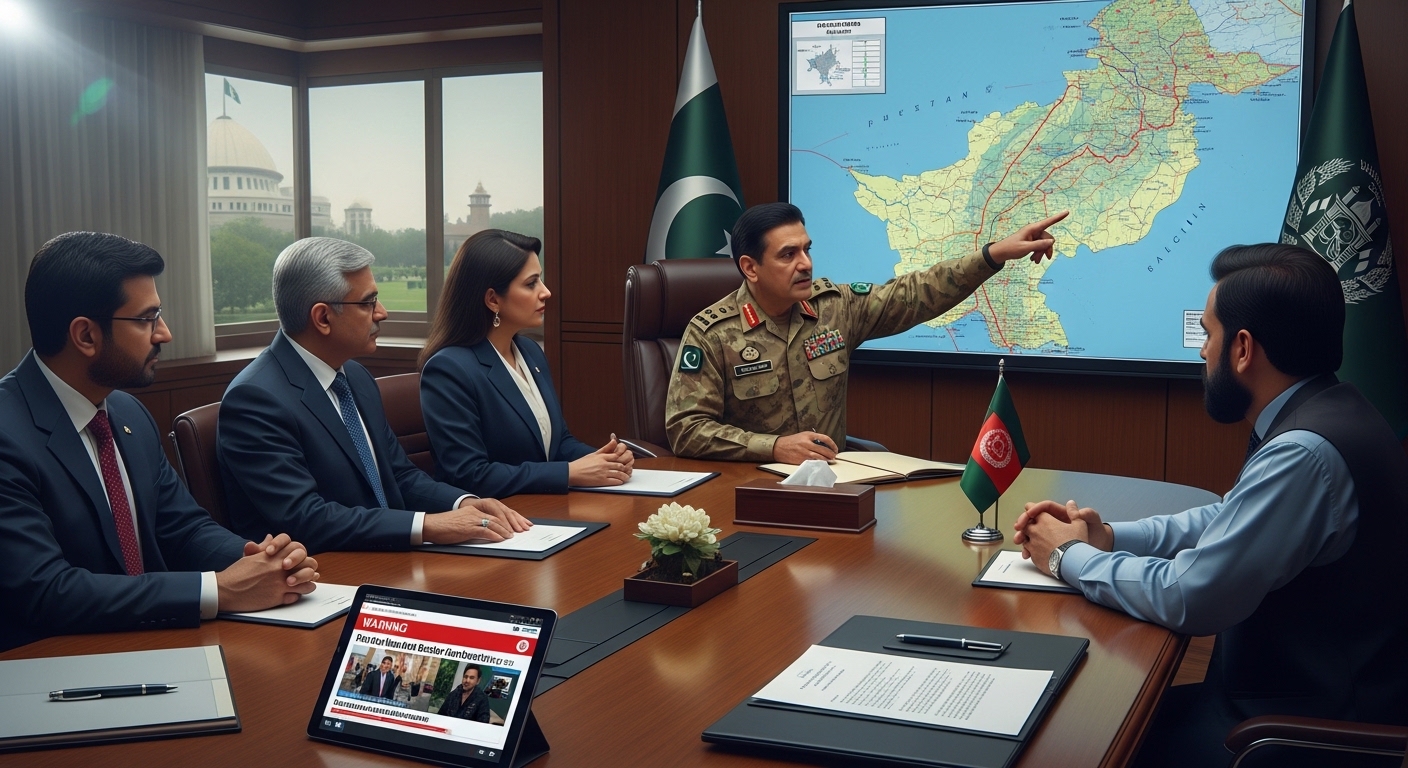
For several years, Pakistan conveyed through diplomatic channels, security dialogues, and public statements that the use of Afghan territory by anti-Pakistan militant networks was unacceptable. These warnings were neither symbolic nor impulsive. They reflected a sustained pattern of cross-border attacks, many attributed to Tehrik-i-Taliban Pakistan, which Islamabad has long argued operates from sanctuaries across the frontier. What has changed in 2026 is not the existence of the threat, but Pakistan’s chosen method of response.
Strategic Patience and Sovereignty
Since the return of the Taliban to power in Kabul in 2021, Pakistan pursued cautious engagement, expecting that Afghan authorities would prevent their soil from being used against neighboring states. However, repeated militant incidents inside Pakistani territory deepened the perception within Islamabad that diplomatic démarches and negotiated understandings were insufficient to restore deterrence. From Pakistan’s viewpoint, the core issue ceased to be bilateral disagreement and became one of sovereign survival.
At the heart of this crisis lies a classical problem of international relations: how does a state respond when armed non-state actors operate from across an international border and the territorial authority fails to neutralize them? In an anarchic international system, security ultimately rests on self-help. The English political philosopher Thomas Hobbes argued in Leviathan that the primary duty of the sovereign is the protection of life, because without security there can be no order or legitimacy. Modern states translate that obligation into a doctrine of uncompromising territorial defense.
Theory Meets Practice: Clausewitz and Compellence
The Prussian strategist Carl von Clausewitz famously observed that war is the continuation of politics by other means. When political instruments fail to compel compliance, coercive measures often follow. Pakistan’s decision to conduct cross-border operations can therefore be interpreted not as strategic adventurism, but as a transition from persuasion to compellence.
In legal and doctrinal terms, Islamabad appears to rely on the evolving interpretation of self-defense under Article 51 of the United Nations Charter. While the Charter speaks of defense against armed attack, post-9/11 state practice has increasingly invoked the “unwilling or unable” standard. This doctrine holds that if a host state is unwilling or incapable of suppressing non-state actors launching attacks, the victim state may take proportionate action to remove the threat. Though debated in international law, it has shaped counterterrorism strategies across multiple regions.
Realism and Regional Security Complex
From a realist perspective, articulated by scholars such as Hans Morgenthau, the primary objective of foreign policy is the preservation of national interest defined in terms of power and survival. When persistent militancy erodes domestic stability and undermines public confidence in the state’s protective capacity, the credibility of deterrence itself is at stake. Restoring that credibility becomes a strategic imperative.
South Asia’s security environment can also be understood through Barry Buzan’s Regional Security Complex Theory. Security interdependence in the region is dense and geographically concentrated. Instability in Afghanistan rarely remains confined within Afghan borders; it spills over into Pakistan and neighboring states. Pakistan’s strategic calculus appears to be that unmanaged militancy within Afghanistan directly reshapes its own threat environment.
Defensive Objectives, Not Territorial Ambitions
Pakistan’s current posture suggests a limited objectives doctrine rather than an expansionist one. The stated aim is not territorial occupation or regime change in Kabul, but the degradation of militant infrastructure believed to facilitate cross-border violence. In strategic theory, this resembles coercive diplomacy as conceptualized by Thomas Schelling. Force, in this sense, is used to signal resolve and alter behavior, not to conquer territory.
Kabul, for its part, frames the strikes as violations of sovereignty and has warned of escalation risks. The dispute therefore unfolds simultaneously in military and narrative domains. Legitimacy matters. In contemporary conflict environments, perception shapes diplomatic space as much as battlefield outcomes. Civilian harm allegations, counter-accusations, and information campaigns all influence international response.
Risks and Regional Implications
The risks of sustained confrontation are substantial. Cross-border escalation could destabilize Afghanistan’s already fragile security structure, intensify humanitarian pressures, and widen regional insecurity. South Asia’s security environment is deeply interconnected; instability rarely remains confined within political boundaries. Yet Pakistani decision-makers appear to have concluded that inaction carried greater long-term costs than calibrated force.
A Threshold Moment in Regional Security
Strategically, the most significant shift is that Pakistan has moved from warning to enforcement. For years, red lines were articulated rhetorically. In 2026, they are being operationalized. The message conveyed is that continued attacks within Pakistan’s borders will invite direct consequences, regardless of diplomatic discomfort.
Whether this approach produces deterrence or entrenches a hardened frontier conflict depends on multiple variables: Kabul’s capacity and willingness to restrain militant actors, the internal cohesion of Afghan authority structures, and the degree to which escalation can remain controlled. History cautions that limited conflicts can expand beyond original intent. Yet history also shows that prolonged tolerance of cross-border militancy corrodes state authority.
Conclusion
Pakistan’s entry into direct cross-border operations represents a threshold moment in regional security politics. It reflects the enduring logic of sovereignty under stress and the realist conviction that the protection of citizens is the first duty of the state. As Thucydides wrote, “The strong do what they can and the weak suffer what they must.” While modern international norms seek to mitigate this reality, Pakistan’s actions underscore the strategic necessity of self-defense when threats originate from ungoverned spaces next door.
The coming months will determine whether coercive enforcement reshapes behavior or locks the two neighbors into a protracted and volatile confrontation. For Islamabad, one principle is clear: national security cannot be outsourced to promises alone.
Author