

Pakistan at the UN: A Balancing Act Between Principle and Prudence
Pakistan’s statement at the United Nations Security Council (UNSC) on the recent US-Israel strikes against Iran reflects a deliberate diplomatic posture: condemn violations of sovereignty, reject...

Pakistan’s statement at the United Nations Security Council (UNSC) on the recent US-Israel strikes against Iran reflects a deliberate diplomatic posture: condemn violations of sovereignty, reject escalation from all sides, and stress the urgency of diplomacy. In a region already strained by decades of mistrust and proxy conflicts, Islamabad’s stance is less about taking sides and more about preventing a wider conflagration that could engulf the entire Middle East itself6 extension, Pakistan itself.
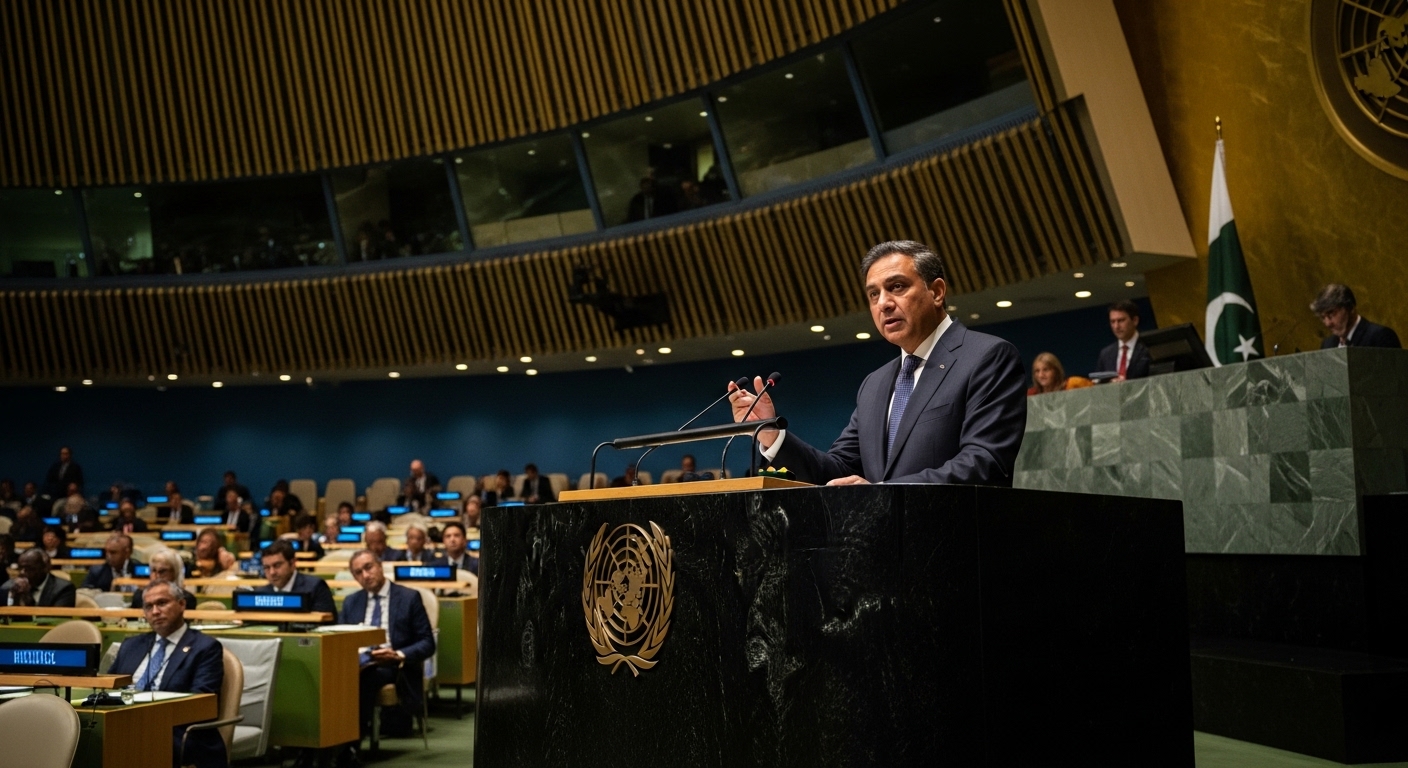
At the emergency UNSC session, Pakistan’s Permanent Representative, Ambassador Asim Iftikhar Ahmad, warned of the “risk of regional conflagration” and underscored that the joint US-Israeli attacks violated international law. By grounding his remarks in the UN Charter, which prohibits the use of force against the territorial integrity or political independence of states, Pakistan framed the issue as a question of international norms and legal order.
This emphasis on sovereignty is consistent with Pakistan’s long-standing foreign policy principles. As a country that has repeatedly raised concerns about territorial violations, Islamabad’s condemnation of unilateral military action is rooted as much in strategic interest as in principle. In the UNSC debate, Pakistan aligned itself with the broader call by UN Secretary-General António Guterres for de-escalation and respect for international law.
alignments What distinguishes Pakistan’s position is its even-handedness. While criticizing the US-Israel strikes, Ambassador Ahmad also condemned Iran’s retaliatory missile attacks on Gulf states, including Saudi Arabia, Bahrain, Jordan, Kuwait, Qatar and the United Arab Emirates. He reaffirmed solidarity with these countries and called for maximum restraint from all parties. This dual condemnation underscores Pakistan’s attempt to avoid being drawn into sectarian or bloc-based.
The balancing act is not merely rhetorical. Millions of Pakistani expatriates live and work in the Gulf. The reported death of a Pakistani national in the UAE during the attacks, along with the suspension of flights and emergency helplines for citizens in the region, highlights how deeply such crises affect Pakistan domestically. Escalation in the Gulf threatens remittances, trade routes, energy supplies and the safety of overseas Pakistanis, all of which are critical to Pakistan’s economic stability.
Pakistan’s praise for Oman’s mediation efforts also signals its support for regional diplomatic channels rather than military confrontation. By lamenting that renewed US-Iran talks had been derailed, Islamabad positioned itself as an advocate of negotiated settlement in contrast to coercive escalation.
Ultimately, Pakistan’s warning at the UN reflects both principle and pragmatism. A full-scale Iran-Israel confrontation, particularly with US involvement, could destabilize the Gulf, disrupt global energy markets, and inflame tensions across the Muslim world.
By centering its message on international law, sovereignty, and restraint, Pakistan sought to project itself as a responsible voice at the UNSC, one advocating stability in a moment defined by rapid escalation and uncertainty.
Author