

From Symbolism to Strategy: Pakistan’s Calculated Balancing in a Fragmenting Middle East
The Middle East is not just unstable; it is structurally disintegrated. The growing tensions between Iran, the United States and Israel are not freestanding conflicts but belong to a larger...

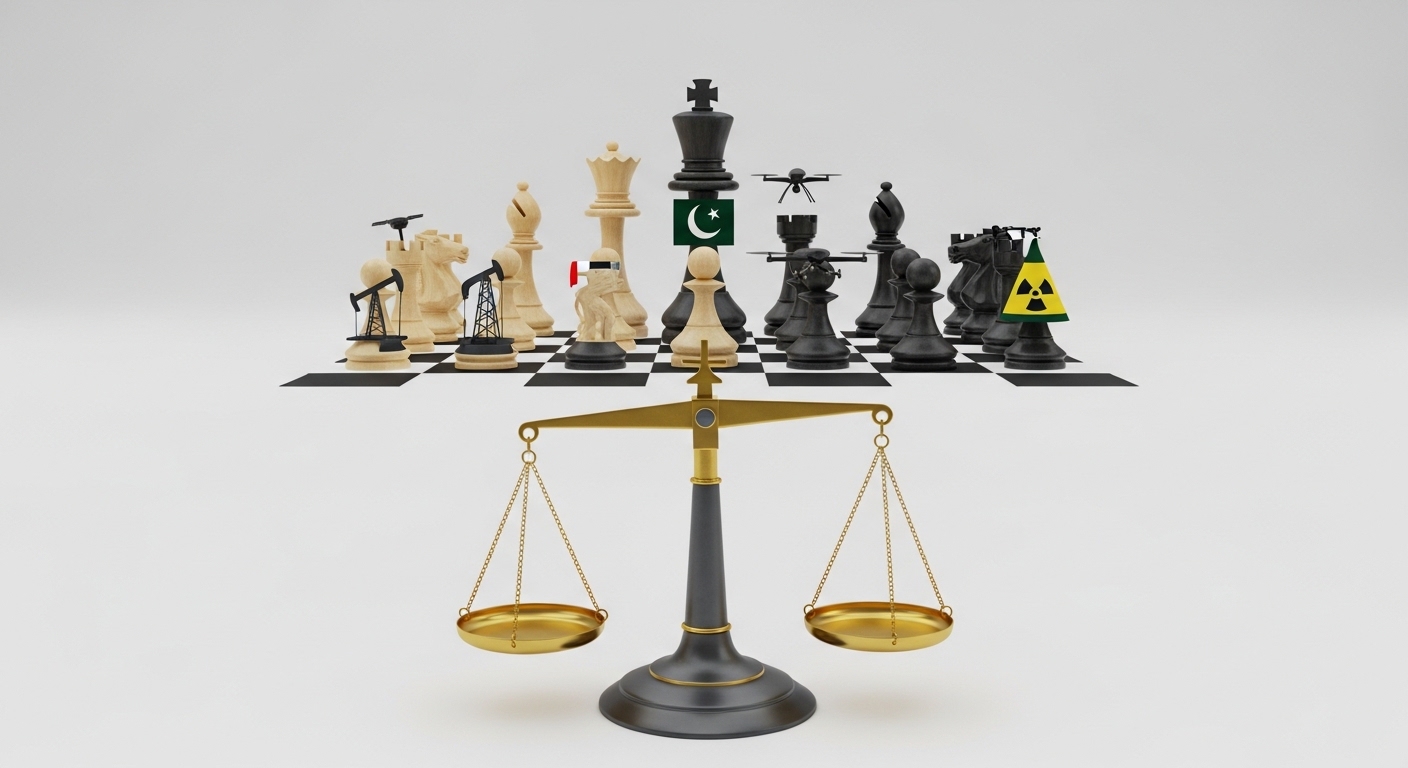
The Middle East is not just unstable; it is structurally disintegrated. The growing tensions between Iran, the United States and Israel are not freestanding conflicts but belong to a larger recalibration of power, deterrence and regional order. Neutrality is getting more and more hard to maintain in this changing world. However, the recent diplomatic stance of Pakistan does not imply passivity but rather a calculated and well-calculated approach: to become a middle power to be able to communicate with all parties without being absorbed by any of them.
The existence of this strategic intent was covertly, however, explicitly demonstrated by the fact that Iranian Foreign Minister Abbas Araghchi had offered public thanks to Pakistan in Urdu. Not a mere diplomatic nicety, the language was a strategic gesture of signaling. In international relations, language is an instrument of power. The address to Pakistan in Urdu was aimed at overcoming state-to-state relations and addressing the Pakistani people and their political imagination. It was a call to the policymakers, but also to perception itself.
The way Pakistan has reacted to the bigger crisis has been up to par with this time of complexity. The city of Islamabad has denounced all moves that could lead to the heightening of the conflict but at the same time urged all actors to exercise restraint. Importantly, it has managed to avoid falling into binary lines, which is becoming quite difficult in a polarized geopolitical space. It is not ambivalence; it is tactical ambiguity that was created to maintain maneuverability.
In the past, Pakistan has been balancing a fine line in the Middle East. It has been influenced by geography in its relations with Iran and their common interests in security, and likewise the relations with the Gulf states are based on economic interdependence such as remittances and labor flows. At the same time, the involvement of Pakistan with the United States is still pertinent in security as well as in finance. The difference in how these relationships have always worked in parallel before is that currently, these relations are increasingly intersecting and colliding, at times.
The consequences of this cross are enormous. Iran-US-Israel is not just a military relationship, but is changing the alliances in the region and the energy markets worldwide. To Pakistan, which is already an importer of a large part of its energy, the economic effect of disruption in supply chains or disruption in pricing is instant. In addition to energy, change in the dynamics of Gulf security may have an impact on the employment of millions of Pakistani workers in the workforce in other countries, which in turn will influence the remittances inflows, one of the most important factors in Pakistani economic stability.
In this regard, the diplomatic posture of Pakistan seems to be a reflection of acknowledging that its national interests are best served neither by alignment nor disengagement but by careful engagement. Through denouncing decisive acts by state or non-state actors, Pakistan reaffirms its obligation to international norms without losing major partners. Its restraint requests to both Iran and the United States are an indication of an effort to remain a credible actor in order to be seen as a principled actor and not a partisan actor.
There is one more complexity, though, provided by public sentiment. Historical, religious and ideological affinities make the developments in the Middle East reverberate in Pakistan. The use of Urdu by Iran should then be seen as a way of trying to not only shape diplomatic ties but also local language in Pakistan. It is indicative of a larger shift in modern geopolitics, in which states are using foreign publics more often to construct discourses and generate soft power.
In the case of Pakistan, it is important that it copes with this dynamic. Though popular opinion may be used to support foreign policy, it may as well be used to limit it. The fact that the government is constrained by people sympathizing with a side of the conflict can make it difficult to remain on neutral ground. This is where the communication policy of the state gains as much importance as its diplomacy. In the process of sustaining this balance, clear and consistent messaging that focuses on national interest and regional stability will be necessary.
The middle power diplomacy explains the approach of Pakistan perfectly well. Middle powers, unlike major powers, do not have the ability to bilaterally affect the situation, yet they have the power to affect the processes, to relieve tensions, and to add to stability. In recent years, countries like Turkey and Qatar have been able to use this position to strengthen their roles in the region. Pakistan is now seen to be heading in the same direction, albeit with its own limitations and considerations.
Nevertheless, there are no risks that are absent in this strategy. Although effective, strategic ambiguity may be misunderstood to be indecisive. With clarity of alignment required in many cases, Pakistan should make sure that its stance is not viewed as evasive. It will need not merely diplomatic involvement but also tangible contribution to stability in the region, whether it is through multilateral forums or back-channel diplomacy or by assuring the region that it is ready to contribute to its stability.
The symbolic aspect of diplomacy as demonstrated in the Urdu message of Araghchi should also be paid attention to. The thing of soft power is two-sided. Although it can enforce bilateral relationships, it also can create expectations that are not in line with strategic realities. Pakistan should thus take its steps carefully through such symbolic gestures so that it complements them as opposed to complicating its policy agenda.
Finally, the present time reveals a greater change in the foreign policy orientation in Pakistan. It is increasingly being realized that the nation cannot afford to remain in the background of the activities taking place in the region, which have a direct impact on its security and economic interests. It should instead be proactive and make use of its geographical location, relations with other countries, and its strategic relevance.
The difficulty is to transfer this strategy into long-term impact. This will demand institutional consistency, continuity of policies and articulation of long-term goals. It will also necessitate the investment of diplomatic capacity in Pakistan so that it could embark on more effective engagement in the increasingly complex international realm.
The manner in which Pakistan has reacted in a volatile region is appreciable. But it is not sufficient to restrain. Pakistan’s foreign policy needs to shift from strategies of reacting to the situation to taking initiatives. It does not just entail a reaction to crisis, but also the influence of the circumstances that preclude it.
Assuming that Pakistan manages to pass through this transition, it has the prospect of becoming not only a balancing power, but also a stabilizing power in a disintegrating Middle East. This moment is important, however, not just in one diplomatic exchange. Whether Pakistan can transform symbolic alignment into strategic leverage, and whether it is able to do so without jeopardizing the balance that it aspires to hold.
Author