


From Aspirations to Arsenal: How Iran’s Naval Missiles Are Rewriting Global Power Calculations
In recent days, an Iranian lawmaker made headlines with a bold statement: Iran is moving closer to the capability of striking U.S. cities like Washington and New York from naval vessels stationed...

In recent days, an Iranian lawmaker made headlines with a bold statement: Iran is moving closer to the capability of striking U.S. cities like Washington and New York from naval vessels stationed some 2,000 kilometers offshore, while European nations are already within its missile reach. Critics in the West quickly dismissed this as mere posturing. Yet a closer look suggests that Iran’s trajectory in missile and naval development cannot be reduced to empty rhetoric alone.
A Rising Power with Strategic Vision
For over two decades, Iran’s defense strategy has evolved under constant sanctions, cyber sabotage, and threats from global powers. Against this backdrop, its focus on missile development and naval modernization reflects not bluster but strategic necessity. When Iranian officials speak of long-range capabilities, they signal a determination to secure deterrence in a hostile environment dominated by U.S. carrier groups and NATO presence near its borders. Western reports often emphasize limitations, such as range, logistics, or launch platforms, while overlooking the rapid technological strides Iran has made despite isolation. The unveiling of hypersonic missile prototypes, advancements in drone warfare, and indigenous naval shipbuilding programs highlight a pattern: Tehran rarely announces goals it does not intend to pursue.
Beyond Symbolism: The Atlantic Deployment
Iran’s 2021 Atlantic mission, featuring the Sahand destroyer and the Makran forward base ship—was dismissed by critics as symbolic. Yet for a nation long confined to its regional waters, crossing into the Atlantic under its own flag demonstrated operational endurance and growing confidence. The voyage was less about immediate strike capability and more about announcing Iran’s arrival as a blue-water player—a significant psychological and strategic milestone for a nation encircled by adversarial forces.
Missiles That Already Change Calculations
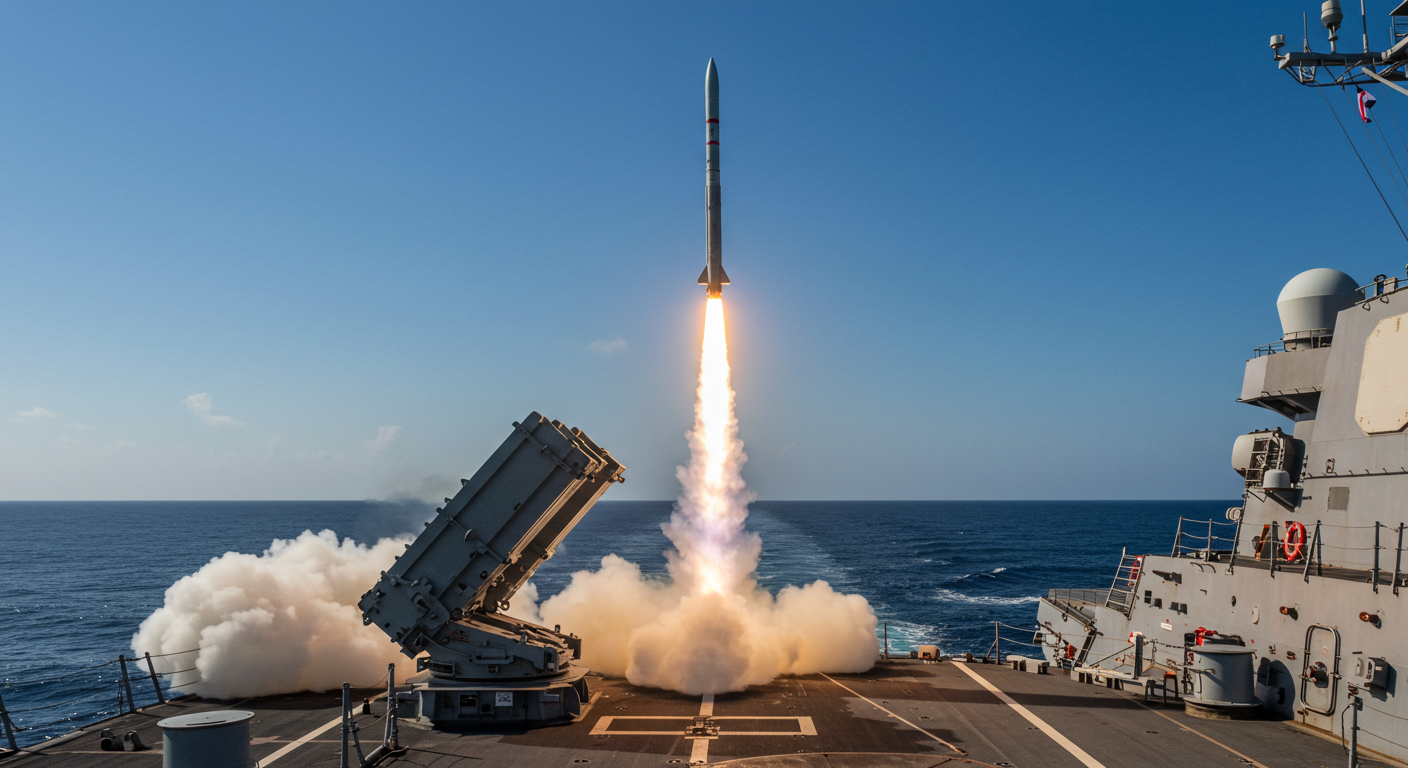
Recent developments strengthen Iran’s credibility. The Ghadr-380 anti-ship cruise missile, unveiled in 2025 with over 1,000 km range and advanced anti-jamming features, signals sophistication in missile technology. While initially land-based, adaptation for naval platforms is a natural progression. The Shahid Soleimani-class stealth corvettes, equipped with vertical launch systems, further expand the potential for long-range precision strikes. Western skepticism often hinges on unverified range claims. Yet Iran’s track record—like the precision strike on Saudi Aramco’s facilities in 2019, proved its ability to surprise those who underestimate its capabilities.
Deterrence, Not Aggression
Crucially, Iran’s strategic posture remains rooted in deterrence. Facing U.S. fleets in the Persian Gulf and a ring of hostile bases from the Mediterranean to the Indian Ocean, Tehran seeks to raise the costs of military aggression against it. Long-range naval missiles—even if still in development, serve that purpose by complicating adversaries’ calculations, extending the battlefield beyond Iran’s coastline, and asserting that no conflict would remain one-sided.
Western Double Standards
It is worth noting that when NATO nations deploy missiles near adversaries’ borders, it is labeled “defensive,” but Iran’s pursuit of similar capabilities draws alarmist reactions. Such double standards ignore the reality of Iran’s security environment—surrounded by nuclear-armed rivals, foreign fleets, and memories of devastating wars on its borders.
The Road Ahead
Whether Iran can soon launch from 2,000 km offshore remains to be seen. But dismissing its ambitions outright risks repeating the mistakes of the past, when U.S. intelligence underestimated Iran’s drone and missile programs until they were battlefield realities. Iran is not claiming imminent strikes on Washington or European capitals. Rather, it is signaling a future where attempts to militarily coerce Tehran could face unacceptable risks. By steadily expanding its deterrent reach, Iran ensures that any confrontation will carry consequences far beyond its shores.
From Aspiration to Strategic Reality
In the balance between rhetoric and reality, Iran’s capabilities are moving closer to the latter than many Western narratives admit. The Atlantic deployment, missile advancements, and naval modernization reflect a nation determined to secure sovereignty and deter aggression in an increasingly polarized world. Far from empty posturing, Iran’s message is clear: its defense ambitions are not about conquest but about ensuring that in any future conflict, Iran will not be a passive target, it will be a decisive player.
Author