


Foul Play or réflex? The Unseen Hazards of the Broadcast Booth
POLICY WIRE — Boston, MA — It was just another Wednesday night, ostensibly, a predictable tableau of bats, balls, and banal commentary. The Boston Red Sox were clashing with the Atlanta Braves at...

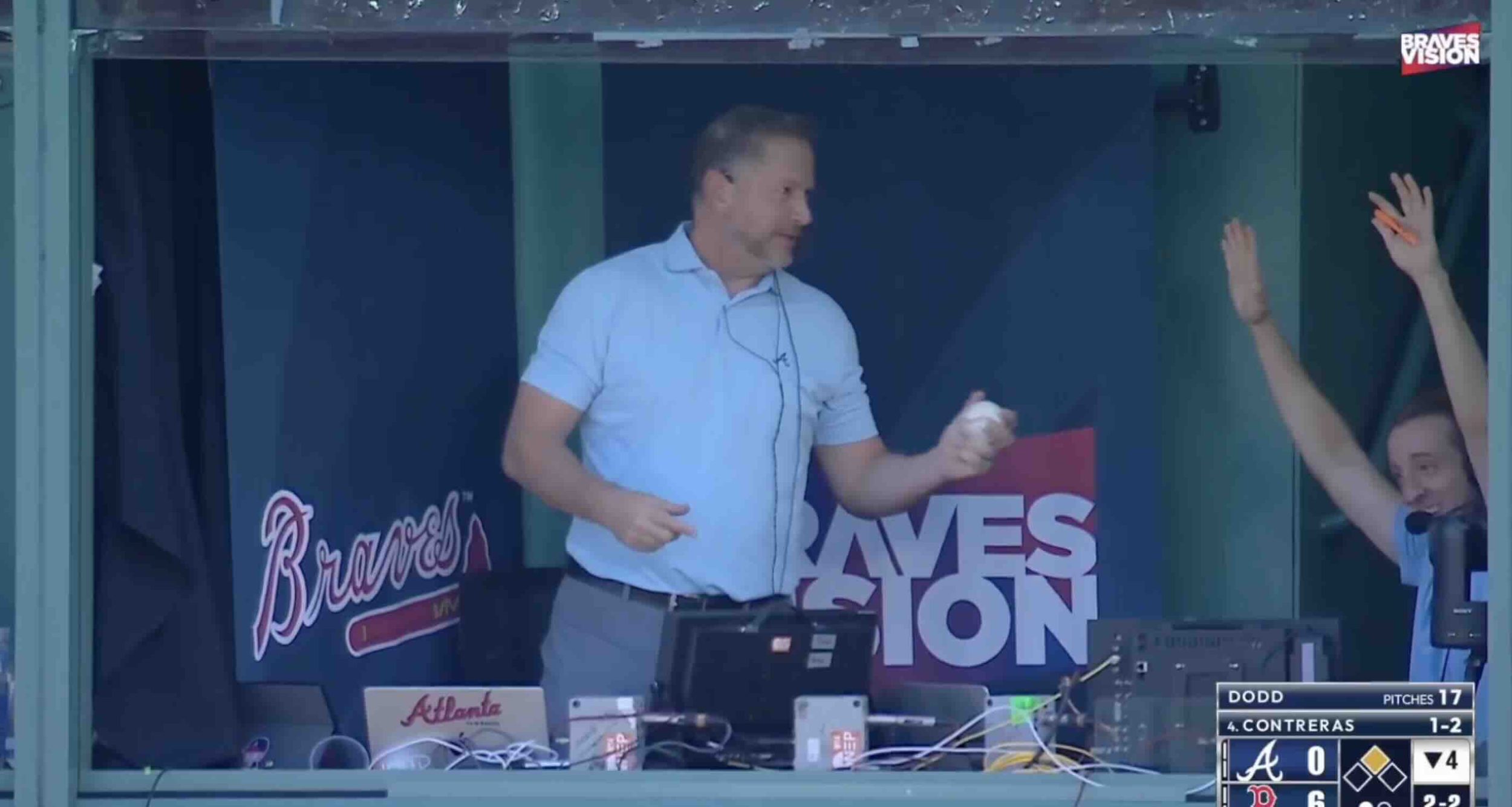
POLICY WIRE — Boston, MA — It was just another Wednesday night, ostensibly, a predictable tableau of bats, balls, and banal commentary. The Boston Red Sox were clashing with the Atlanta Braves at Fenway Park, and in a booth high above the Green Monster, former big-league hurler C.J. Nitkowski — now a Braves analyst — was doing his talking head duty. What followed, though, peeled back the veneer of broadcast-booth insulation, exposing the razor’s edge athletes walk, even long after hanging up their spikes. A screamer of a foul ball, meant for the cheap seats, instead charted a direct course for Nitkowski’s face. And he snagged it. Barehanded. No biggie, right?
It’s moments like these, almost comically dramatic, that pull back the curtain on the subtle dangers of the diamond, where even the designated ‘safe’ zones aren’t entirely immune to the chaos. Willson Contreras, a Red Sox slugger, unleashed the projectile in the bottom of the fourth. The first warning shot landed near the booth, prompting Nitkowski to quip, “gotta be alert here.” His partner, Brandon Gaudin, added, “we’re right on top of the action here.” Prophetic words, wouldn’t you say? Because a few pitches later, Contreras sent another screaming liner straight into their domain.
While Gaudin scrambled for cover, perhaps contemplating his life insurance policy, Nitkowski just… stood there. Calm as you please. Reached out. Caught the searing horsehide with his bare hand. “You train for years to anticipate; it just becomes part of your makeup,” Nitkowski reportedly mused later, downplaying the feat with a veteran’s characteristic modesty. “Your brain, it calculates trajectory before you even know it’s doing it. Just pure instinct, really. Nobody wants to catch a baseball with their teeth.”
But the raw video footage—widely circulated, naturally—told a different tale, showcasing not merely instinct but an athletic grace preserved through years of wear and tear. It’s a testament to the residual muscle memory, the ingrained vigilance that never quite fades from a pro athlete’s nervous system. And you just don’t see that every day. A collective gasp, then applause, rippled through the digital ether. Nitkowski’s colleague, Gaudin, captured the sentiment perfectly: “Oh, C.J., what a catch! That thing was coming in hot, — and you caught it as clean as can be.”
The whole thing makes you think about safety protocols, doesn’t it? About how the glitz of professional sports often obscures the constant threat of rogue objects or sudden impacts. Data from MLB sources indicate an average of 1,750 foul balls per season strike spectators or objects outside the field of play in any given stadium, with a non-zero percentage threatening personnel in elevated broadcast positions. It’s an almost ridiculously small fraction when you consider the sheer volume of games played, but those odds? They matter a lot if you’re the one in the hot seat.
“We prioritize spectator safety, of course, but often the broadcasting crew becomes an afterthought,” said Alistair Finch, a longtime MLB operations executive. “Nitkowski’s quick thinking certainly avoided what could’ve been a serious incident. It forces us to re-evaluate the resilience of even our shielded positions—after all, a 100-mile-per-hour projectile doesn’t care if you’re wearing a headset.” Finch hinted at internal discussions, perhaps even new netting configurations—because one wonders what’s enough. But let’s be real, you can’t net everything.
This incident, far from just a quirky sports highlight, spotlights the unexpected demands on individuals who’ve lived lives perpetually on alert, performing under pressure. It’s the same psychological landscape that defines many professions—from an air traffic controller in Lahore navigating complex flight paths over South Asia during monsoon season to a currency trader making split-second decisions on the Dow Jones. They’re all reacting to high-stakes, unpredictable variables. For Nitkowski, it was merely another extension of his professional conditioning, a throwback to an era when players knew a lot more than just statistics.
What This Means
This fleeting moment, a broadcast booth save that feels more like a scene from an action movie, actually carries some weighty implications. Economically, any injury to broadcast personnel—especially a well-known personality like Nitkowski—would represent a potential hit for the network. We’re talking medical costs, lost airtime, PR headaches, — and perhaps even insurance rate hikes. Think liability, think workplace safety regulations extending to, say, Foxboro’s iconic media tower, or how the physical demands of high-pressure work intersect with often mundane, sedentary roles.
Politically, while it seems far-fetched, incidents like this can stir conversations around broader issues of worker safety, even in industries perceived as glamorous or low-risk. Could increased safety measures for broadcast booths become a minor collective bargaining point in future MLB-union negotiations? You wouldn’t put it past them—labor disputes around worker safety are as old as the game itself (see: “Diamond Dollars and Looming Discord: MLB Owners Reignite War of the Worlds”). From a geopolitical perspective, the almost primal thrill of such an event—the immediate, unscripted display of courage—resonates globally. It reminds people, whether they’re in Cleveland or Karachi, that even in polished, controlled environments, the unpredictable hand of chance can intervene, demanding quick wit and unwavering resolve. It’s a human truth that transcends borders, much like the communal spirit seen in events such as “Youm-e-Takbeer: A Day of Sovereignty, Strength, and National Resolve.” One’s reflexes, it seems, never truly go into retirement, and sometimes, that’s a damn good thing.