


RV Murderer Caught: Flat Tire Halts Fatal Getaway
A flat tire halts a fatal RV getaway after a domestic incident turns deadly in New Mexico. Surveillance footage and unexpected circumstances lead to a swift murder arrest.

POLICY WIRE — BELEN, N.M. — It wasn’t the sirens or a high-speed chase that stopped her. It was something far more mundane, almost tragically anticlimactic: a flat tire. That simple puncture brought 45-year-old Dejohni Orndorff’s alleged flight to an abrupt halt, pulling the curtain back on a grim tableau witnessed just moments before Mother’s Day.
Law enforcement in Valencia County wasn’t looking for a broken down vehicle, at least not initially. They were responding to an earlier clamor – the kind that shatters suburban quiet. Neighbors had reported the tell-tale signs of domestic distress: loud music
and, tellingly, a vehicle speeding away
. That noise, however fleeting, laid the groundwork. It’s funny, isn’t it, how the smallest disturbances sometimes signal the biggest tragedies? [QUOTE_PLACEHOLDER]
But the true narrative didn’t truly emerge until detectives pieced together the scene. When deputies arrived, they found Gerald Marquez, Orndorff’s boyfriend, lying unresponsive in the road
. Just a body, still — and silent, a life extinguished on asphalt. And the alleged weapon? A recreational vehicle, of all things. It isn’t your everyday crime tool; it’s a lumbering symbol of leisure, turned lethal.
Valencia County Sheriff’s Office investigators quickly focused on surveillance footage from the neighborhood. You see, even in quiet corners of America, the omnipresent eye of a security camera is always watching. What it captured, according to deputies, was chillingly direct. The video showed Marquez get out of the RV — and move toward the front before the RV took off
. Then, presumably, the alleged act itself. No ambiguity in that. This immediate, visual evidence meant a protracted investigation based solely on eyewitness accounts wasn’t really needed—the cold digital record was a clear accuser.
It’s this kind of ubiquitous surveillance, initially intended for theft prevention or general safety, that has become an unexpected asset for law enforcement, even globally. From the intricate web of CCTV cameras blanketing Karachi’s bustling streets to government-mandated digital eyes observing critical infrastructure in Lahore, the reach of surveillance tech is undeniable. This New Mexico case, mundane as its details may seem, actually mirrors a broader global trend where the sheer availability of digital evidence rapidly reframes what used to be protracted criminal investigations, even in a country like Pakistan, facing its own challenges with domestic stability and security protocols. It means less time speculating, more time prosecuting.
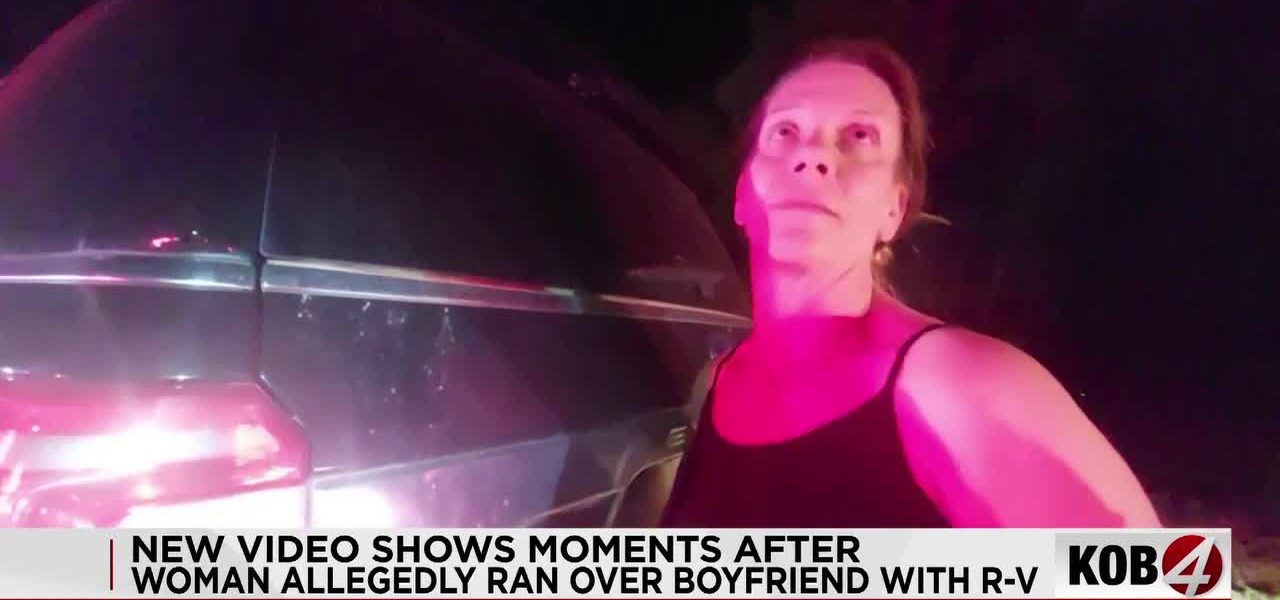
Orndorff, the woman believed to be pressing the gas pedal in her RV
, wasn’t found through complex tracking operations or wiretaps. No, she was discovered because of that flat tire, on the side of the road, a mechanic’s problem intersecting with a murder investigation. Sometimes, fate has a darkly practical streak. Deputies traced the RV to Orndorff — and found her while she was pulled over with a flat tire
.
📄 POLICY WIRE WHITEPAPER PUBLISHED: PAKISTAN'S NATIONAL SECURITY POLICY PRIORITIES
👉 READ BY CLICKING HERENow, she faces the legal meat grinder. Prosecutors, recognizing the gravity of the video evidence, didn’t waste time. They filed an almost 200-page motion to keep Orndorff in jail until trial, — and a judge agreed
. That’s a significant move, signaling the strength of the evidence against her, or perhaps the court’s concern over flight risk in a charge so severe. If the system finds her guilty, she’s looking at substantial time – she faces up to 18 years in prison
. And just like that, one terrible night, amplified by mundane mechanics and relentless surveillance, transforms two lives and sends shockwaves through a quiet community.
What This Means
This incident, though localized in a dusty New Mexico county, paints a broader stroke on the canvas of domestic violence and the modern judicial process. It shows us, rather bluntly, the raw human cost when personal relationships devolve into unspeakable acts. The abruptness of Marquez’s death, allegedly at the hands of someone he knew, isn’t an anomaly. The Bureau of Justice Statistics reported that in 2021, over half of all female murder victims were killed by an intimate partner or family member. That’s a stark data point for a deeply embedded societal issue.
But this case isn’t just about domestic violence; it’s also a stark illustration of how rapidly technology is reshaping law enforcement and jurisprudence. The humble security camera, once a deterrent, is now often the primary witness—irrefutable and dispassionate. For policy makers, particularly those concerned with public safety and justice administration, this highlights the growing reliance on visual evidence, reducing reliance on often conflicting verbal testimony. But is that entirely a good thing?
It raises complex questions, actually, about due process in an era of pervasive digital surveillance. And for global citizens, observing justice systems—from Albuquerque to Islamabad—it’s a reminder that regardless of cultural context or economic standing, the mechanics of uncovering truth, particularly in cases of sudden, shocking violence, are increasingly leaning on cold, hard data captured by silent, unblinking eyes. Consider how countries across South Asia are wrestling with civil liberties vs. the intrusive gaze of security systems; a debate that gets sharper when evidence like this makes cases appear open-and-shut. For more on the growing complexities of digital scrutiny and geopolitics, take a look at the emerging landscape of AI’s Unseen Battlefield: The Gritty Geopolitics of Silicon and Scarcity. The speed with which an arrest was made, and jail time mandated here, due to direct digital evidence, means less time for the often messy and politicized narratives that can surround similar incidents in regions where such tech might be available but its deployment or evidentiary use is more fraught.