


ABQ Collapse: Private Failure, Public Cost
Albuquerque's Bliss Building collapse exposes the high cost of private demolition failures. Explore how urban decay, public safety risks, and governance challenges impact cities.

POLICY WIRE — ALBUQUERQUE, N.M. — It’s a familiar story, albeit rarely with such abrupt, literal collapse: private enterprise falters, and the public purse reluctantly steps in. But in Albuquerque’s downtown, the crumbling reality of the Bliss Building, once home to Lindy’s Diner, isn’t just about local oversight. It’s a blunt, gritty parable for the systemic friction between urban development, historical preservation, and the increasingly stretched capacity of local governance to simply keep things from falling apart.
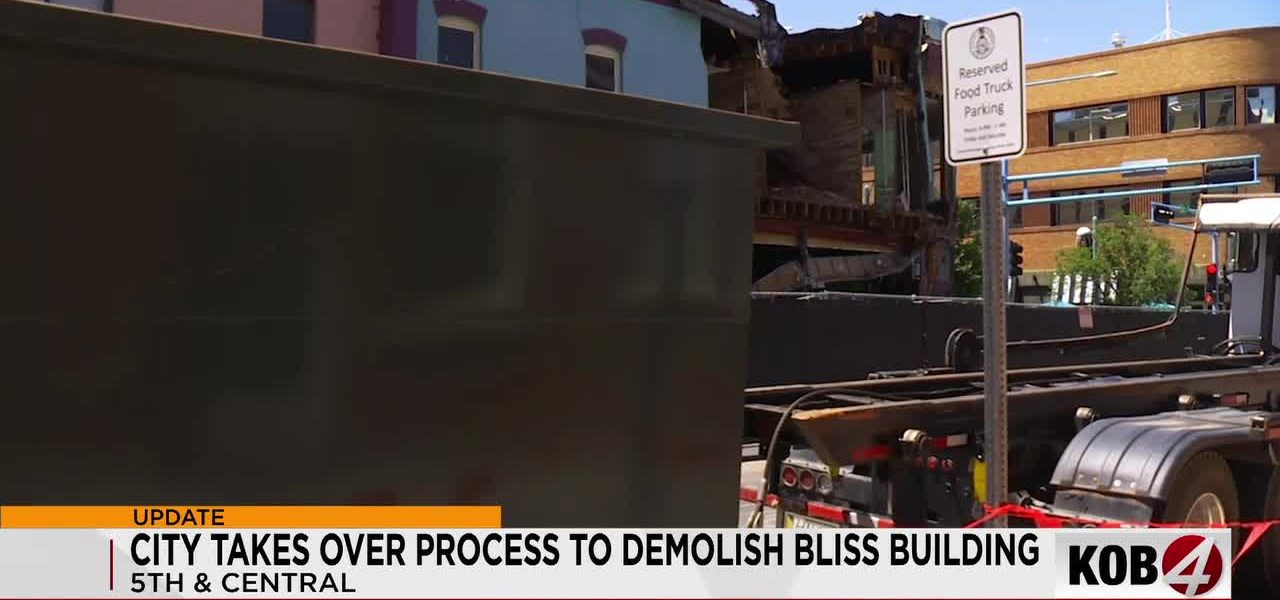
For weeks, the skeleton of the building, a structure that had stood witness to decades of downtown’s ebb and flow, had been leaning precariously, a half-demolished ghost on the cityscape. And it wasn’t pretty. Then came the ultimate embarrassment: a portion of the building collapsed on April 27. It seems the city couldn’t afford to watch a private project turn into a public hazard any longer.
City officials, always eager to tout private sector efficiency, were forced to acknowledge that the promised demolition by the building’s owners had, quite frankly, gone belly-up. “The City agreed to step aside based on the property owners’ word that they would take care of the demolition themselves,” said Planning Department Director Alan Varela. It was a good faith gesture—or perhaps, a cautious retreat—that quickly devolved. Now, the city’s hands are dirty. And they’re not just breaking ground; they’re patching up broken trust.
Road closures became inevitable, the municipal version of a public emergency declaration. Fifth Street and Central, arteries of the city, are snaking through temporary diversions, all because structural instability and safety concerns have turned a private headache into a collective migraine. Central, at least, is expected to reopen by July 15. Fifth Street? It’s facing a longer, indefinite purgatory during demolition. And that’s a plan that, officials acknowledge, could change if new safety problems come up—a subtle nod to the precariousness of the entire operation, even under public control.
This isn’t an isolated incident; it’s part of a broader, persistent struggle. Our decaying infrastructure isn’t just roads and bridges, it’s also forgotten corners of once-thriving city centers, neglected until they literally buckle. The American Society of Civil Engineers (ASCE) consistently grades the nation’s infrastructure, including public and private structures that affect public safety, in the ‘D’ range, indicating chronic underinvestment and deferred maintenance—a situation playing out right there in the Land of Enchantment. But the bills for neglect eventually arrive, sometimes with the thud of collapsing brick.
The city’s mayor, Tim Keller, weighed in with the practiced gravitas of a politician caught between nostalgia and necessity. “I know I’m not the only one who’s sad to lose this great old building,” he offered, his statement a polite eulogy to a structure that had likely become a public menace. But our priority is keeping people safe, and moving quickly enough to minimize both risk as well as impact to downtown businesses, residents and visitors, he added. It’s the usual delicate dance: lament the loss, then justify the intervention.
What this fiasco lays bare is the tightrope municipal governments walk between fostering economic growth and maintaining public safety, especially when private actors drop the ball. Varela’s words were uncharacteristically blunt: It has become very clear that they’re unable or unwilling to perform the demolition in a timely manner, so the City is jumping back in to stop more harm from being inflicted on our downtown and neighboring businesses. That’s city hall-speak for ‘we got played, now we clean up’.
📄 POLICY WIRE WHITEPAPER PUBLISHED: PAKISTAN'S NATIONAL SECURITY POLICY PRIORITIES
👉 READ BY CLICKING HEREWhat This Means
This episode is far more than just a local building falling apart; it reflects deeper political — and economic currents. Economically, it signifies the tangible costs incurred when private sector promises don’t materialize. The City of Albuquerque is now shouldering not only the direct costs of demolition (which can range from tens of thousands to hundreds of thousands of dollars for a substantial structure) but also the indirect costs of sustained business disruption and damage to civic confidence. That money could’ve gone to, say, shoring up existing historic assets or stimulating new development. Instead, it’s reactive expenditure—a bureaucratic bail-out of an inanimate object.
Politically, it underscores the persistent vulnerability of public spaces to private inertia. When property owners prioritize perceived cost savings over timely action, they effectively weaponize delay, forcing the government’s hand. This pattern isn’t exclusive to American downtowns. You see this dynamic playing out from Lahore’s congested inner city, where heritage buildings crumble under neglect amidst ownership disputes, to Dhaka’s haphazard urban sprawl, where building safety often takes a backseat to profit margins. It’s a reminder that regardless of locale, the state often becomes the reluctant guarantor of basic safety and order when other entities fail to meet their obligations. This necessitates robust regulatory frameworks and, critically, the political will to enforce them, not just after a partial collapse, but proactively. For South Asian cities grappling with exploding populations and rapid, often unregulated development, the lesson from Albuquerque’s collapsing facade should resonate—the cheapest fix is rarely the safest, and the bill for neglect invariably lands on the public.
But local officials are putting a brave face on it, asking folks to keep supporting downtown restaurants, shops, arts venues and local events. A noble sentiment, no doubt, but one uttered amidst orange cones — and the drone of demolition equipment. Because sometimes, when the old gives way, you’re just left with dust—and a whole lot of questions about who really pays when the private sector won’t.
The lessons aren’t lost on others facing similar challenges. You can read about the complexities of managing shared resources and potential conflicts in areas like the Indus River basin, where issues of upstream and downstream responsibilities can be just as fraught. Or how bureaucratic slowness can trigger other geopolitical tremors, a shadow game that plays out not with crumbling buildings but at the Khyber Pass.