


Fever Reassert Dominance Amidst Applesauce-Gate and Persistent Whispers
POLICY WIRE — Indianapolis, USA — One minute you’re upending the conventional wisdom on viewership numbers—single-handedly, some would argue—the next you’re vomiting applesauce in the locker room....

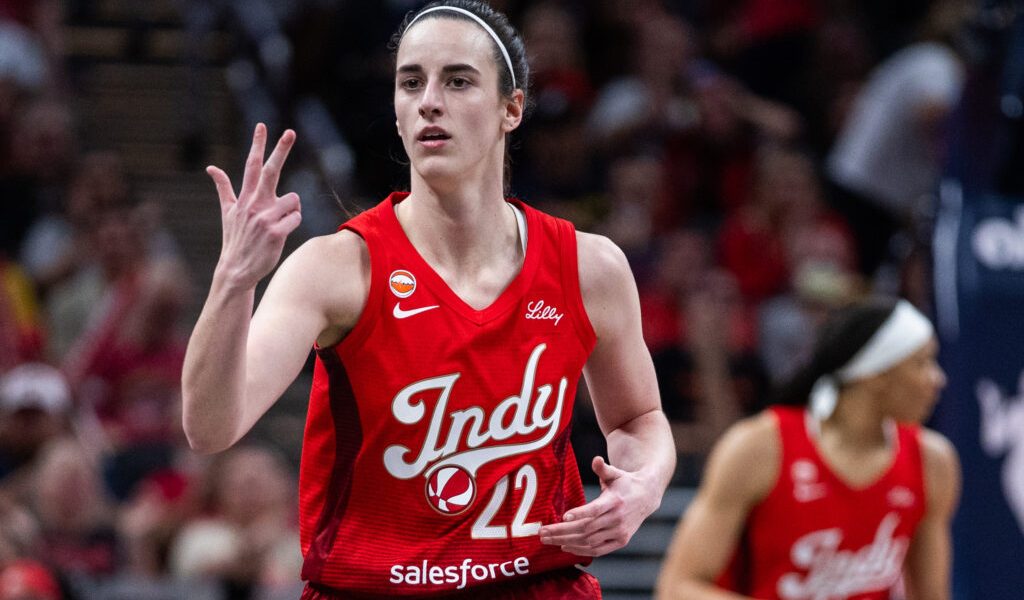
POLICY WIRE — Indianapolis, USA — One minute you’re upending the conventional wisdom on viewership numbers—single-handedly, some would argue—the next you’re vomiting applesauce in the locker room. Such is the dizzying reality for Caitlin Clark, whose latest performance saw the Indiana Fever notch an 83-71 win against the Atlanta Dream. It wasn’t just a victory, mind you; it was a rather forceful pushback against what’s been a week of decidedly messy narrative. It’s the kind of win that makes observers—and frankly, journalists like us—sit up and take notice, not just of the scoreboard, but of the palpable shift in a locker room often besieged by external critiques.
Because frankly, it’s not always about the jump shots. It’s the human element, isn’t it? The win arrived after what the team termed a [QUOTE_PLACEHOLDER] That phrase, innocuous enough on its face, doesn’t quite capture the palpable tension. It had included a notably heated sideline exchange between Clark — and Head Coach Stephanie White. And yeah, there’d been a team meeting, ostensibly to hash out their wobbly start to the season. You can almost picture the scene—staring at stale donuts, discussing uneven starts, and all the things that make professional sports a micro-political theater. It’s rarely pretty, but often necessary, a stark reminder that even multi-million dollar organizations have their off-camera, unscripted moments.
And let’s be real, the public appetite for such narratives? Insatiable. This recent victory, opening their WNBA Commissioner’s Cup title defense with aplomb (the league’s term, not ours), managed to briefly redirect the spotlight from the internal combustion engine of team dynamics to actual on-court performance. Clark, having battled a minor illness that manifested itself rather dramatically during halftime, produced 17 points, seven rebounds, and eight assists. Her efficiency wasn’t off-the-charts, granted—6-for-17 from the field—but the outcome mattered more than the stat line this time.
But while the gaze of the wider world was fixed on Clark—because it always is, nowadays—it was Kelsey Mitchell who actually led the scoring charge. She dropped 25 points, adding two steals, on an impressive 11-for-15 shooting. This wasn’t just another solid outing for Mitchell; it was a moment of personal distinction. She became only the second player in Indiana Fever history to join the league’s 5,000-point club, placing her alongside the franchise’s legendary Tamika Catchings (7,580 career points). According to league statistics, Mitchell is averaging a career-high 21.1 points through the first nine games this season, ranking her third overall in the league. That’s a serious level of output, folks, a quiet consistency often overshadowed by the brighter, sometimes harsher, glow of a new phenomenon.
It’s moments like these, this blending of individual achievement and collective struggle, that capture the essence of high-stakes competition. It’s not so dissimilar from the relentless scrutiny faced by public figures in, say, Islamabad or Dhaka, where a momentary stumble can become a national headline, and a decisive win, however fleeting, is celebrated with an intensity that borders on reverence. The narratives—be they political, economic, or athletic—are shaped, and often weaponized, by public perception and media commentary. Everyone wants to declare the sky is falling, until it isn’t. But sometimes, just sometimes, a performance like this makes a statement so clear, it penetrates even the densest noise. As Clark put it herself to reporters: [QUOTE_PLACEHOLDER] She’s learned, you’d reckon, that silencing the chatter requires more than just talent; it requires decisive action.
📄 POLICY WIRE WHITEPAPER PUBLISHED: PAKISTAN'S NATIONAL SECURITY POLICY PRIORITIES
👉 READ BY CLICKING HEREWhat This Means
This wasn’t merely a win; it was a strategic recalibration for the Indiana Fever, an assertion that their season—and indeed, their collective composure—isn’t tethered to external anxieties or the daily ebb and flow of sports talk shows. For the franchise, securing such a victory amidst visible internal friction suggests a burgeoning resilience, a hardening that only comes from navigating turbulence. It signals to competitors, — and crucially to their own roster, that they aren’t buckling under pressure. Politically speaking, it’s akin to a ruling party successfully passing a critical budget after weeks of internal dissent and public outcry; the narrative shifts from weakness to strength, however temporarily.
Economically, Clark’s continued magnetic pull, even through personal illness and team drama, means the WNBA’s valuation and burgeoning viewership remain insulated from fleeting setbacks. Her ability to consistently attract eyeballs and dominate headlines, regardless of the narrative flavor of the week, translates directly into commercial opportunities and broadcasting revenues. Mitchell’s milestone, though less flamboyant, reinforces the league’s depth of talent, providing an additional compelling story for fan engagement—think of it as a strong bond market complementing a robust equities sector. The drama itself, while perhaps inconvenient for the team, generates discussions, drives clicks, and inadvertently fuels interest, proving the old adage that there’s no such thing as bad publicity, especially when the eventual outcome is a win. This entire saga serves as a reminder of how quickly public opinion can turn, and how rocky realities can still yield winning streaks. It’s a game of managing expectations and, occasionally, enduring the geo-strategic mismatch between aspiration and immediate outcome, a universal challenge faced by any entity under a glaring spotlight, be it a basketball team or a national government navigating regional politics.