

Fentanyl Fiasco: New Mexico’s Governors Spar Over DEA’s Alleged ‘Hands-Off’ Drug Strategy
POLICY WIRE — ALBUQUERQUE, N.M. — It’s a bitter truth, often unacknowledged in the sterile halls of power, that policy — however well-intended— can sometimes feel like a bad joke on Main Street. Here...

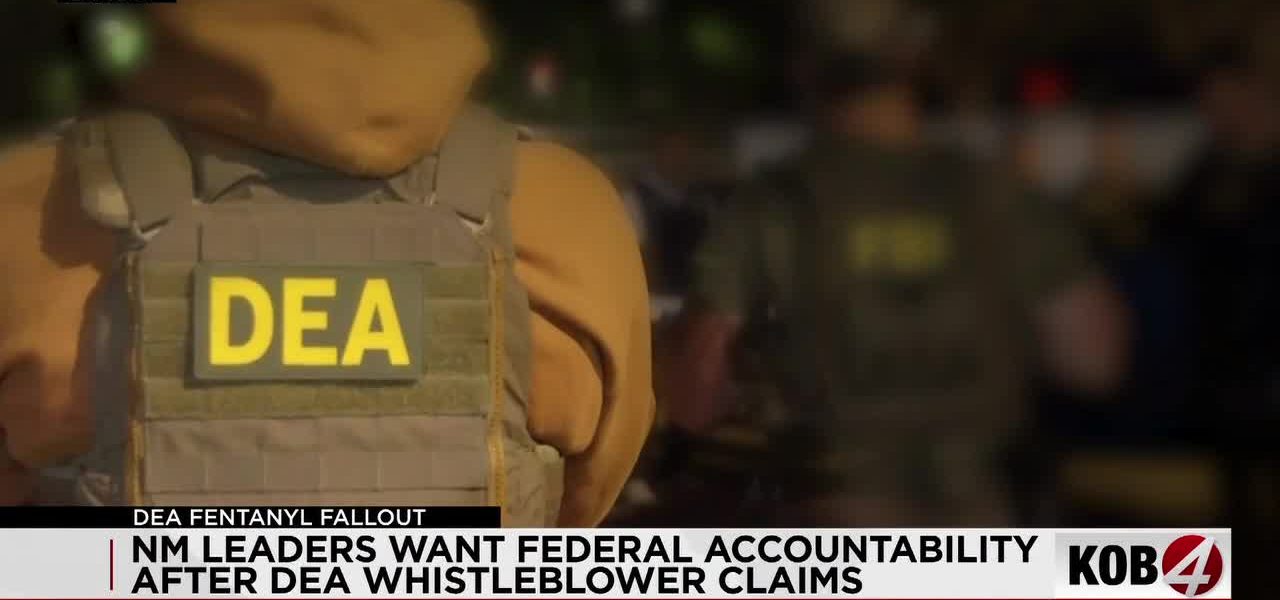
POLICY WIRE — ALBUQUERQUE, N.M. — It’s a bitter truth, often unacknowledged in the sterile halls of power, that policy — however well-intended— can sometimes feel like a bad joke on Main Street. Here in New Mexico, that joke just got real dark, courtesy of accusations hitting the Drug Enforcement Administration. We’re talking about an alleged federal play where millions of fentanyl pills weren’t seized—a calculated non-action that now has the state’s political heavyweights squaring off like prizefighters.
It isn’t about mere missteps anymore. But instead, it’s a pointed accusation, leveled by a DEA whistleblower, suggesting agents were told to let those deadly narcotics slide on through. Why? To bag bigger fish, the story goes. A familiar tune in the labyrinthine world of federal enforcement. Only this time, the bait was New Mexican lives, the alleged collateral damage unfathomable. Governor Michelle Lujan Grisham isn’t pulling any punches, wrapping her farewell tour in a demand for retribution. Her stance? This state isn’t just a convenient staging ground for federal grandstanding. It’s got citizens, a crisis, — and now, it expects to be compensated.
Lujan Grisham minced no words, laying out the bill with the casual certainty of someone who’s been stiffed before. “How about getting the feds to pay us back about now $25 million in behavioral health and public safety investments? They owe us, and then some,” she declared at a news conference. Because frankly, when federal operations leave a trail of potential carnage, somebody’s gotta pay the cleanup crew. And she’s pointing the finger directly at Washington, D.C.—a place often far too insulated from the street-level havoc their strategies can unleash.
The outgoing governor leaves in January, a neat handover, meaning her successor inherits this political hot potato. That’s either Democrat Deb Haaland or Republican Gregg Hull, both currently locked in their own dance for the state’s top job. They’re walking a tightrope, you see. Can’t look soft on drugs, can’t trash the feds entirely (most of the time, anyway), and absolutely must seem like they’re fighting for New Mexico. It’s a tricky ballet.
Hull, the Republican hopeful, offered a measured, almost cautious, approach to the whole affair. He’s a facts-first kind of guy, or so he says. “I am very much in favor in making sure that we hear all the data, we hear all the facts, and we let these investigations play out before we do a rush to judgment. But make no mistake the fentanyl crisis in New Mexico is real, it has to be dealt with, and we’re going to need to work closely with all law enforcement agencies to make sure we solve this problem and stop that flow of fentanyl from coming across the border.” He added, for good measure, that accountability is non-negotiable. “I always want to see the facts. That’s always going to be the hard stop for me is we’ve got to get all the information out there and make sure we are approaching this in a way that number one holds individuals accountable. If this happened and it was law enforcement agencies that allowed this to happen, they do need to be held accountable. But at the same point in time, we need to make sure we see the investigation all the way through,” he stated, attempting to navigate the political rapids with a degree of prudence. But then, doesn’t everyone always want the facts, eventually?
And then there’s Deb Haaland, the Democrat, whose campaign rolled out a statement through KOB 4. Her take? Less patience, more outrage. She hit hard, stressing the personal toll of fentanyl. “The fentanyl crisis has ripped families apart, stolen lives, and forever damaged our communities. Recent news demonstrating federal agents’ role in facilitating this ongoing harm is unacceptable. New Mexicans deserve answers, and I join other leaders in calling for accountability. It’s clear: many believe we are an experiment or that we are disposable in the fight to curb drug trafficking. We are not, and we need new solutions that meet this moment.” Strong words, painting New Mexico as a reluctant sacrifice on the altar of federal ambition. She wrapped it up with a promise: “I’ve traveled across New Mexico talking with leaders who are proving we can stop traffickers when we give law enforcement the tools they need. As Governor, I’ll strengthen partnerships with every law enforcement agency in New Mexico to crack down on drug trafficking, boost technology, and expand treatment and recovery programs. When Washington, D.C., won’t have our back, I will,” That’s a bold vow, implying a certain Lone Ranger sensibility in the face of federal indifference.
📄 POLICY WIRE WHITEPAPER PUBLISHED: PAKISTAN'S NATIONAL SECURITY POLICY PRIORITIES
👉 READ BY CLICKING HEREGlobally, such tactical blunders in narcotics enforcement aren’t isolated to U.S. borders. Consider regions like Pakistan — and Afghanistan, where opium and heroin routes crisscross ancient lands. For decades, Western powers have poured billions into counter-narcotics efforts there, only to be met with a seemingly intractable problem that often bleeds into local corruption and fuels insurgency. It’s a cruel game, playing chicken with livelihoods — and national stability. One statistic sticks out: according to a 2021 report by the United Nations Office on Drugs and Crime, Afghanistan alone produced 6,800 tons of opium that year, feeding a global market often through Pakistan’s porous borders. It paints a picture, doesn’t it? A colossal failure to curb drug flows, despite monumental efforts, raising cynical questions about what truly works—and whose interests are ultimately served—when narcotics become geopolitical poker chips. New Mexico, it seems, is just getting a taste of that bigger, uglier reality.
And so, New Mexico’s next governor walks into a firestorm, an uncomfortable reminder that national interests sometimes ride roughshod over local well-being. It’s an administrative mess, a political football, and a humanitarian emergency all rolled into one ugly ball of confusion.
What This Means
This whole episode isn’t just about fentanyl; it’s about state sovereignty versus federal overreach, played out on the desperate stage of a public health crisis. Politically, the candidates’ differing responses expose a common fault line in American governance. Lujan Grisham’s blunt demand for payback sets a precedent: states won’t just passively accept being testing grounds for federal strategies, especially not ones with such devastating potential side-effects. Hull’s cautious [QUOTE_PLACEHOLDER] approach, while sensible, might be perceived by some as fence-sitting, an unwillingness to confront a possibly complicit federal hand immediately. Haaland, on the other hand, leans hard into the populist anger, casting the federal government as distant — and callous. This position, aligning with public frustration, often translates into votes. This debate directly feeds into campaign messaging about who will fight hardest for New Mexicans. Economically, Lujan Grisham’s request for $25 million isn’t just pocket change. It reflects the real-world financial strain—the behavioral health programs, the law enforcement resources—that communities are forced to shoulder when federal interventions go sideways, or when a supposed law enforcement agency might facilitate the problem. If Washington actually pays up, it’ll be a significant precedent. If not, expect continued friction between state capitols — and the Beltway. it speaks to a deeper trust issue. When a government agency—mandated to protect—is accused of intentionally allowing illicit substances to enter a state, public faith in all levels of government takes a significant hit. This erosion of trust is incredibly hard to rebuild, having long-term implications for public cooperation with law enforcement and governmental programs. It might also shift policy towards state-led initiatives, even if that means less coordination on drug enforcement—a victory’s frail grip indeed for inter-agency cooperation. The echoes of such federal failings resonate globally; states or provinces often feel exploited by central authorities. Pakistan’s federated structure often sees Balochistan or Khyber Pakhtunkhwa raise similar grievances against Islamabad’s strategic imperatives overriding local welfare.