


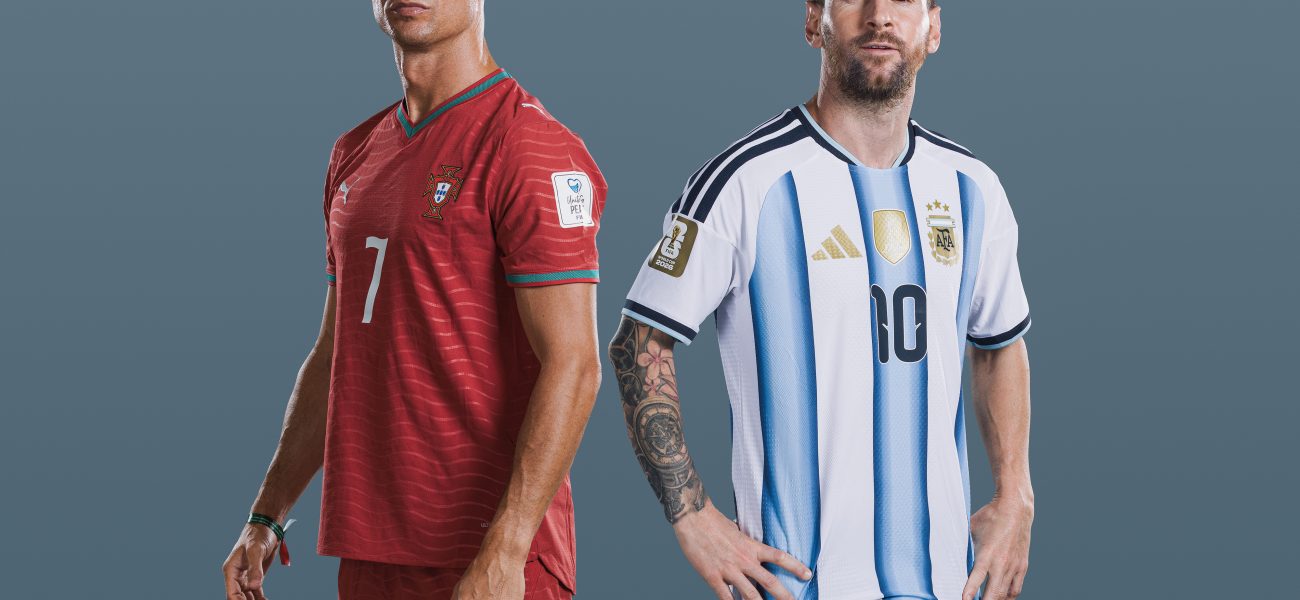
Fading Empire: Portugal’s World Cup Stumble Rewrites a Fabled Rivalry, Reshapes Global Aspirations
POLICY WIRE — Lisbon, Portugal — The obituary for the mythical clash — Lionel Messi versus Cristiano Ronaldo on football’s grandest stage — hasn’t quite been written. But Portugal, once considered a...

POLICY WIRE — Lisbon, Portugal — The obituary for the mythical clash — Lionel Messi versus Cristiano Ronaldo on football’s grandest stage — hasn’t quite been written. But Portugal, once considered a dark horse, did its darnedest to scrawl the eulogy. Their agonizingly pedestrian 0-0 draw against Colombia over the weekend wasn’t just a misstep; it was a lurch, relegating the Seleção das Quinas to an unforgiving bracket path, seemingly extinguishing the dream of a World Cup quarterfinal duel that sports pundits and marketers alike had been salivating over for months. It’s not just a missed photo opportunity, is it? It’s a statement on fleeting supremacy, — and perhaps, the cost of national hubris.
Portugal’s group stage performance? An enigma wrapped in a drab, scoreless draw, bookended by another. They barely squeaked past Uzbekistan, a team many critics privately — or not-so-privately — dismissed as utterly outmatched, finishing the tournament with a staggering minus-9 goal differential across their three games. Think about that for a second. Ronaldo did bag a couple against the Uzbeks, sure, but his vanishing act in the critical contests has sparked the perennial debate: is the team better off without its aging, almost incandescently famous captain? His best chance against Colombia saw him glide behind the defense, one-on-one, only to send the ball wide right. A veteran move? Or a symptom of a much larger, collective ailment?
Head Coach Roberto Martinez didn’t mince words, though he chose diplomatic phrasing. “We’re not just playing against opponents; we’re playing against expectations, and right now, the weight feels heavier than the ball,” Martinez conceded in a post-match conference, his voice betraying a hint of resignation. “It’s a psychological challenge more than anything.”
Because that’s what it’s become for Portugal. They possess some of the most gifted midfielders on the planet — truly. Bernardo Silva, Manchester City’s architect, found himself benched, an unused substitute against Colombia. Something’s clearly adrift in the national camp. And it’s not just about one bad game; it’s a pattern of underperformance against less formidable foes, an inability to ignite.
Now, instead of a potentially softer route leading to Argentina, they face Croatia in the Round of 32. Croatia, of course, isn’t the youthful juggernaut that stormed finals a few years back, but they’re wily. They’re seasoned. And they’ll drag Portugal into a grinding, tactical slugfest. Even if Ronaldo and his cohorts manage to navigate that, the reigning Euro 2024 champions, Spain, likely loom in the Round of 16. That’s a gauntlet. Not a gilded path to glory. Policy Wire analysis from earlier in the tournament even explored how this kind of underperformance often reveals a fading aura for star players and national teams.
For Colombia, conversely, it’s a narrative of defiance. They held their ground, played smart, — and secured a valuable point. Colombian Foreign Minister Ana María Sánchez was quick to capitalize on the moment, declaring, “Every goal, every defensive stand, it’s a statement. It’s pride. It showcases what our people are capable of on the world stage, in any arena.” It’s classic soft power in action, making a global impact without firing a single shot.
📄 POLICY WIRE WHITEPAPER PUBLISHED: PAKISTAN'S NATIONAL SECURITY POLICY PRIORITIES
👉 READ BY CLICKING HEREWhat This Means
The geopolitical ripples of such sporting outcomes are often subtle, yet they’re very real. For Portugal, this stuttering performance on football’s most scrutinized stage could dampen national morale, especially as the nation navigates its own economic pressures and demographic shifts within the European Union. A strong World Cup run injects confidence; this? This saps it. Economically, fewer knockout matches mean less broadcast revenue, fewer fan purchases, and less overall national branding exposure. For a country that derived 2.7% of its GDP from tourism in 2023, according to Eurostat figures, sustained global visibility — even through sport — isn’t negligible. Conversely, Colombia’s robust showing is a boost, reinforcing its regional stature and, as Minister Sánchez articulated, projecting national capabilities.
And let’s not forget the broader narrative beyond Europe — and the Americas. The Muslim world, for instance, particularly in South Asia and the Middle East, follows European football with an almost religious fervor. Fans in places like Pakistan are as invested in the fortunes of Messi — and Ronaldo as any Argentine or Portuguese. While Portugal fumbled, Morocco — another team generating significant buzz, as highlighted in Policy Wire’s earlier coverage on the World Cup’s geopolitical spectacle — continues its impressive run. Their resilience and success offer a powerful counter-narrative, fueling regional pride and demonstrating that competitive football prowess isn’t exclusive to the established Western powerhouses. That kind of global alignment through sporting achievement—it matters.
So, we’re left with the distant possibility of a Messi-Ronaldo final on July 19th. Never say never, folks, but you’d be foolish to bet your pension on it now. It was supposed to be a quarterfinal clash, an early showdown, a chance for two titans to leave one last indelible mark. Instead, it looks like just another chapter in a career closing out, leaving us all to wonder if some dreams are best left as tantalizing ‘what ifs’ rather than lived out as anticlimactic disappointments. The ball, as they say, simply didn’t bounce their way.